Teams launching OKRs in under a week complete 50% more goals. Teams checking in weekly complete 43% more. The right tool makes both habits structural — not dependent on discipline. These nine are reviewed on that basis.
The right OKR tracking tool for a growing team isn't the most feature-rich one — it's the one that gets used every week without adding overhead. Complex platforms with lengthy onboarding cycles, custom configuration requirements, and per-user pricing that scales against you as you hire are the reason most OKR programmes collapse by week four.
The 2026 OKR Benchmark Report found that teams launching OKRs in under a week see up to 50% higher completion rates than those with extended rollouts. And teams that check in weekly complete 43% more OKRs than those reviewing monthly. The tool choice determines whether those habits are structural or optional.
The nine tools below are reviewed through that lens: fast setup, lightweight weekly cadence, and pricing that doesn't punish growth.
9 Easy-to-Use OKR Tracking Tools for Startups
When you’re running a startup, you need a goal-setting tool that’s simple, intuitive, and efficient.
You don’t have time to get bogged down by complex platforms.
That’s where easy-to-use OKR tracking tools come in. These tools are designed to streamline your goal-setting process, helping you align your team, track progress, and hit your objectives—without the headache of complicated systems.
Each of these tools offers unique features to help startups stay on track, drive alignment, and keep progress moving forward. They make tracking and executing your OKRs seamless, enabling your team to focus on what truly matters - growth and success.
If you're in a hurry, here’s a quick overview of each platform, comparing their key features and ease of use.
Recommended reading: 10 Benefits of OKRs
Why Trust This Guide?
I set up OKRs and ran a weekly check-in inside a live account of every one of these nine tools — not a demo, not a sales call. Since this guide ranks them on how easy they are to actually use, I judged each one on the thing that kills most startup OKR programmes by week four: whether setting up your first cycle and keeping the weekly check-in going stays effortless, or turns into a chore nobody does.
I've been working with OKRs for more than 10 years, and I've run goal programs for 60+ organizations. I now run OKRs Tool, used by 300+ teams — so I've seen the switching pattern from the other side, as teams abandon tools that were too clunky to keep them checking in.
Every tool below is scored against the three things the 2026 OKR Benchmark Report ties to completion: automated weekly check-ins, required ownership per Key Result, and setup fast enough to launch in under a week — the same benchmarks that separate the easy-to-use tools on this list from the ones startups quietly drop. It's how small teams run their own cycles on the platform, like Guido's at Firmaway:
"OKRs Tool helped us centralise and track our OKRs in a simple yet impactful way — it's easy to visualise the progress of each area, and the initial setup was super easy."

9 Easy-to-Use OKR Tracking Tools We Recommend
Here are eight of the best OKR tracking tools that are designed specifically to meet the needs of startups looking for simplicity, effectiveness, and scalability:
1. OKRs Tool
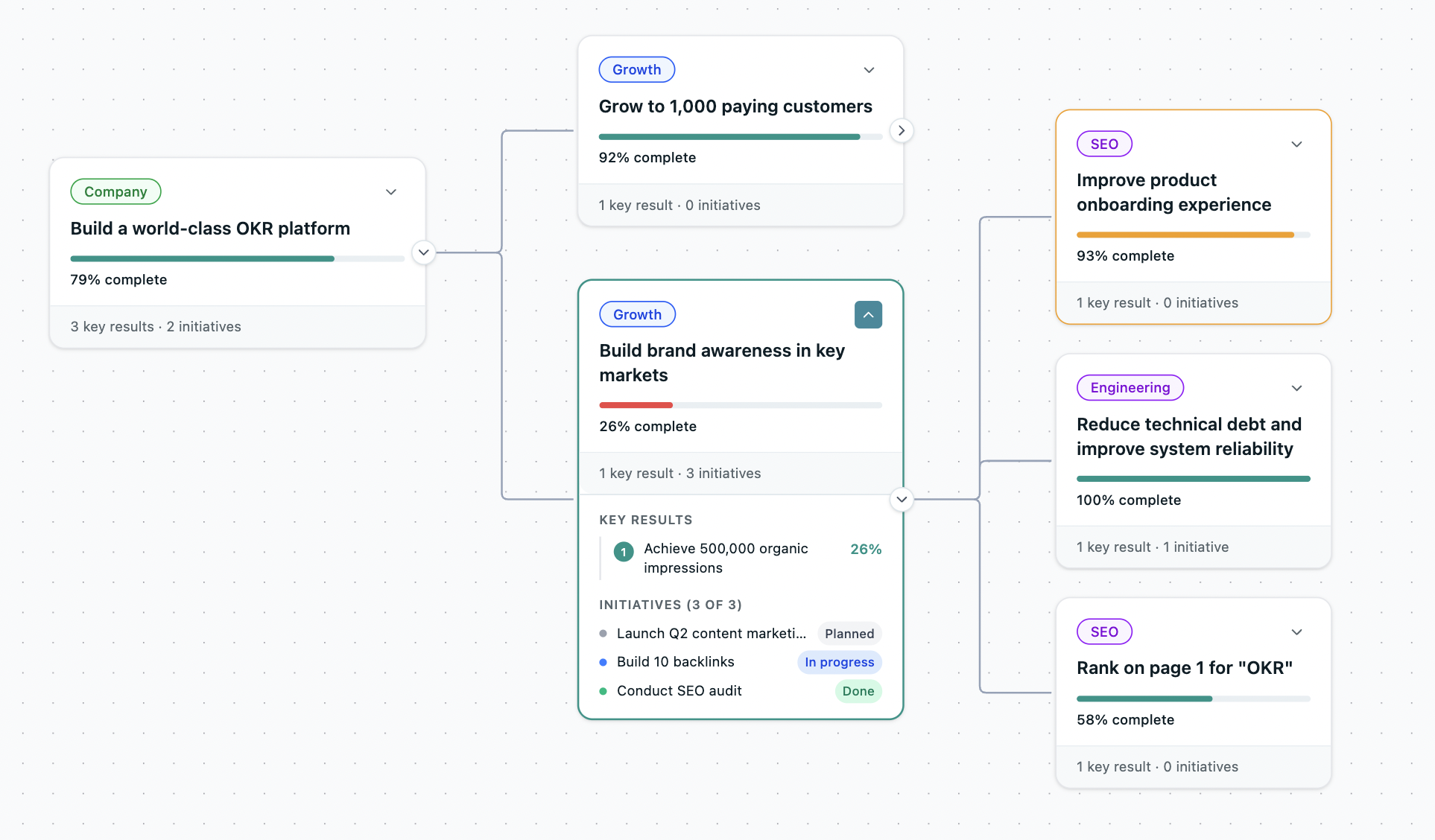
Why It's Easy to Use: OKRs Tool is built around one problem: OKR programmes that die by week four because the weekly update habit never formed. The setup takes an afternoon. The weekly check-in runs automatically via Slack or MS Teams without anyone scheduling it. AI-assisted goal writing gets the first cycle live before the blank page becomes a blocker. Flat pricing means the whole team participates without per-seat costs creating pressure to limit access.
Key Features:
- Automated weekly check-ins via Slack and MS Teams — no scheduling required
- Live alignment map showing every team's Key Results connected to company Objectives
- AI-powered OKR writing and at-risk detection
- Flat pricing — no per-user growth tax as the team scales
- Free for 1–5 users
How It Helps Growing Teams: Teams that check in weekly complete 43% more OKRs than those reviewing monthly. OKRs Tool makes that cadence structural rather than optional — the nudge fires, the update takes five minutes, and the dashboard reflects reality before the weekly meeting starts. Named ownership is enforced at goal creation, which closes the most common failure mode: Key Results with no accountable person.
Pricing: Free for up to 5 users. $49/month flat for 6–50 users. $129/month for 51+.
2. Synergita
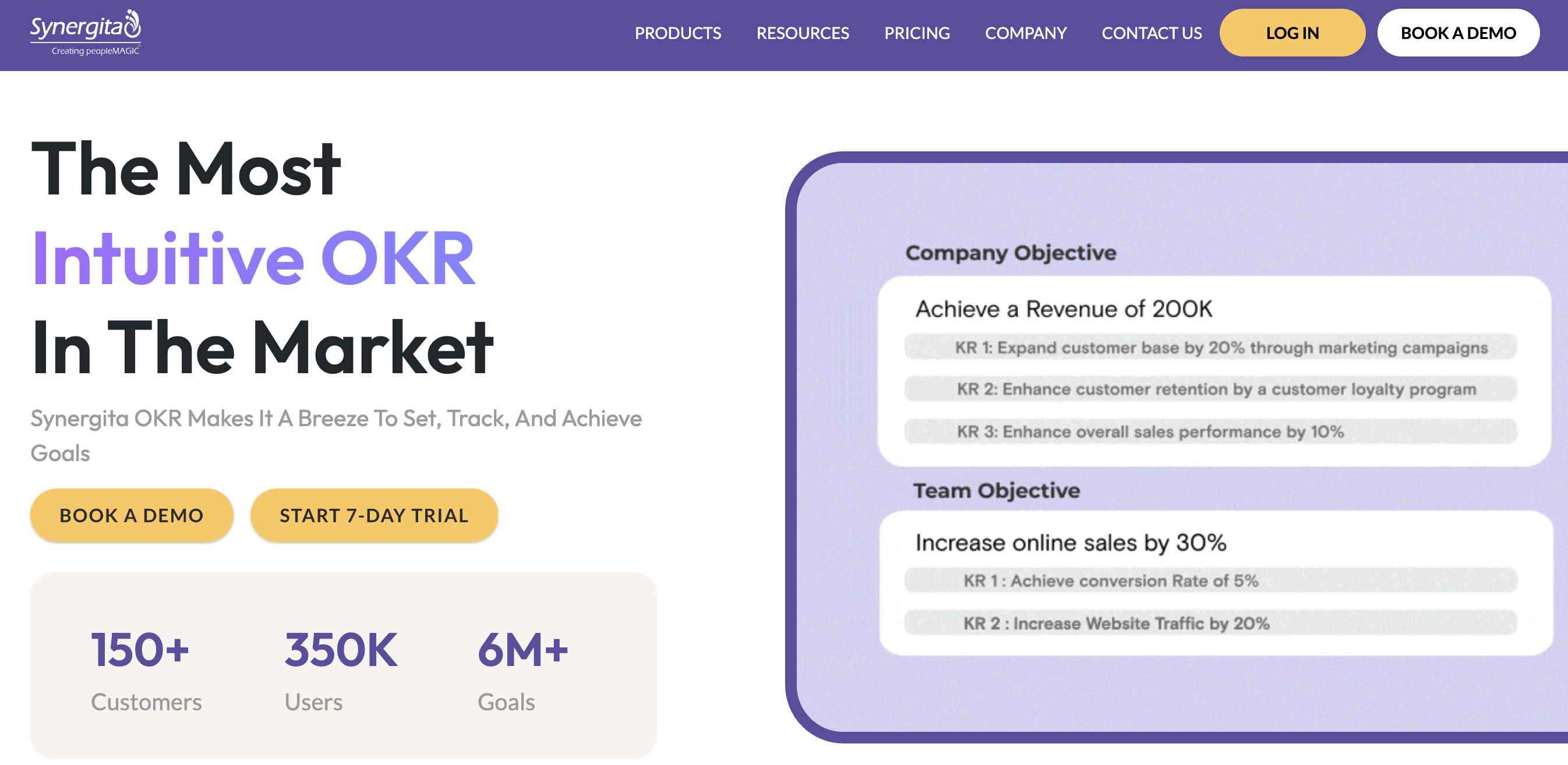
Why It’s Great for Startups: Synergita provides a modern, people-centric performance management suite that helps startups build a strong culture while keeping teams aligned on goals. Its intuitive interface and flexible OKR tools help young companies track progress, support continuous feedback, and drive accountability.
Key Features:
- OKR Management
- 1:1 Meeting Workflows
- Performance Reviews
How It Helps Startups: Synergita makes it easy to set and monitor OKRs while fostering a feedback-rich environment - perfect for growing teams. Startups benefit from streamlined reviews and clear performance visibility, helping everyone stay aligned as the company scales.
Pricing: Free for up to 3 users, then $3 per user for teams more than 10.
3. Google Sheets

Why It’s Great for Startups: Google Sheets is a simple and flexible tool that many startups use for OKR tracking. In fact, our own research found that 65% of companies use Google Sheets to manage OKRs and it's easy to see why. It’s cost-effective and provides an accessible platform for organizing and tracking goals.
Key Features:
- Create and modify your own OKR templates for tracking.
- Easily adapts to any workflow, from goal-setting to tracking.
- Available for free or with an affordable upgrade for additional features.
How It Helps Startups: Google Sheets allows teams to track OKRs in a simple, no-frills way. It’s great for startups just beginning to implement OKRs but in need of a flexible, cost-effective solution. Teams can easily collaborate in real-time and adapt their goals as needed.
Pricing:: Free: For individual users with basic features. Google Workspace: starts at $6 per user/month for business accounts.
4. Workboard
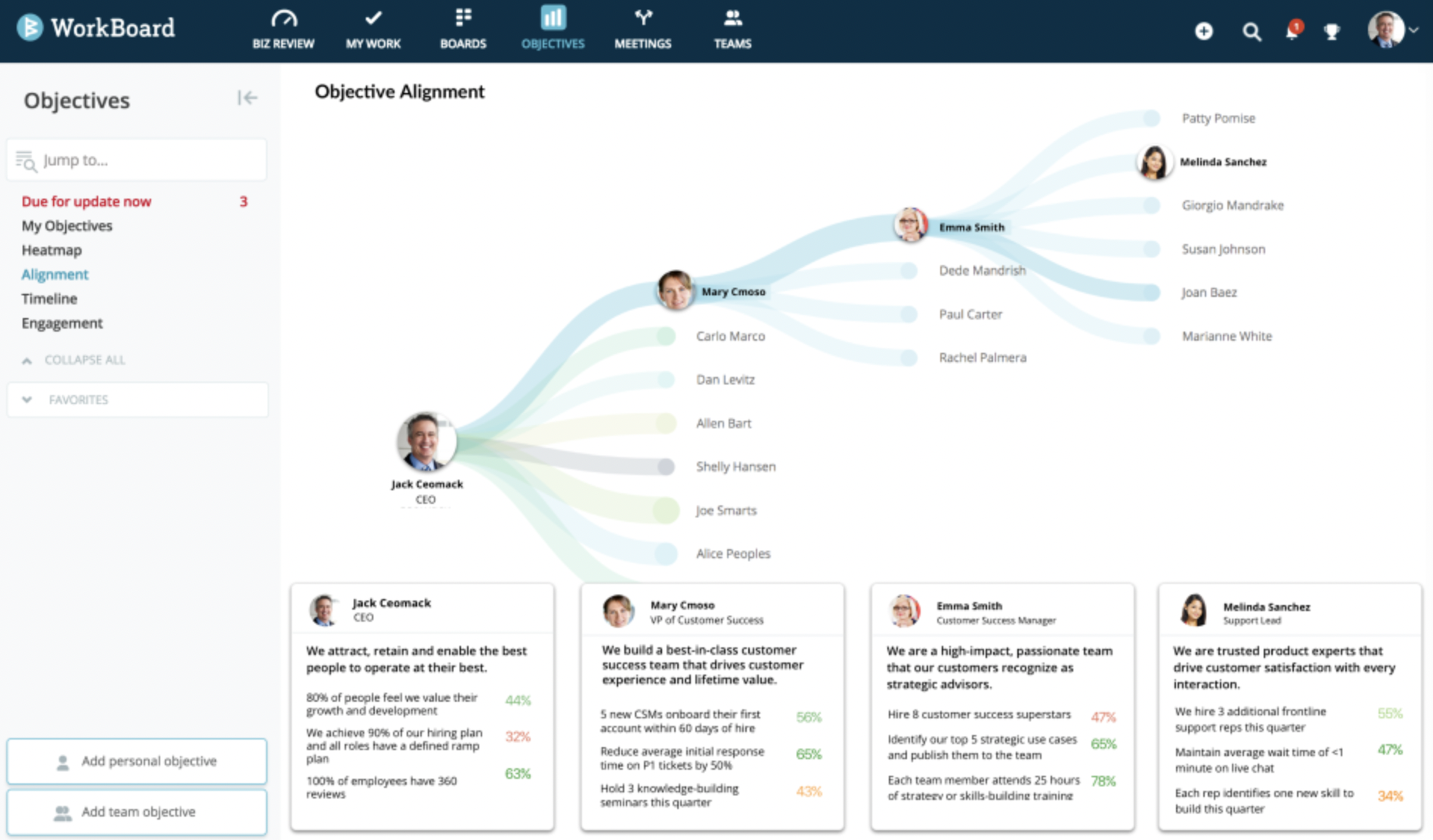
Why It’s Great for Startups: Workboard offers a simple, clean interface that helps startups manage OKRs and track progress. It offers intuitive dashboards that allow you to measure performance, making it easy for your team to see where they stand.
Key Features:
- OKR tracking with customizable dashboards
- Weekly check-ins and OKR progress reviews
- Collaborative goal-setting tools
- Performance reports for data-driven insights
How It Helps Startups: Workboard’s straightforward setup allows you to track goals and get the team aligned quickly. It provides regular check-ins and updates, helping your startup stay focused on what matters most.
Pricing: Up to $90 per month for 10 team members.
Note: Workboard acquired Quantive in May 2025 — if you're evaluating Quantive, you're now evaluating Workboard.
5. Weekdone

Why It’s Great for Startups: Weekdone is perfect for startups looking for a simple, effective way to track goals without the complexity of larger systems. With a focus on weekly progress reports and performance insights, it’s ideal for teams that need to stay on track and adjust quickly.
Key Features:
- OKR and KPI tracking
- Weekly check-ins with progress summaries
- Customizable dashboards
- Simple reporting tools
How It Helps Startups: Weekdone’s focus on weekly reports ensures that you can stay on top of your goals without wasting time on complex processes. It’s an ideal choice for teams that want to quickly track and measure progress.
Pricing: Up to $104 per month for 10 team members.
Discover how OKRs Tool compares to Weekdone in our full comparison here
6. Trello

Why It’s Great for Startups: Trello is known for its flexibility, and when combined with Power-Ups for OKR tracking, it becomes a great tool for managing team goals. It’s a highly visual and customizable tool, perfect for teams that want to track OKRs while also managing daily tasks.
Key Features:
- Customizable boards and lists
- Power-Up integrations for OKR tracking
- Drag-and-drop functionality
- Visual progress indicators
How It Helps Startups: Trello allows startups to set up boards for tracking goals, tasks, and progress. You can easily track OKRs and collaborate with your team using a simple, drag-and-drop interface.
Pricing: Free up to 10 team members.
7. Lattice

Why It’s Great for Startups: Lattice is ideal for startups that want to combine OKR tracking with performance management. It offers a seamless solution to connect team goals with company-wide objectives, making it a great choice as your startup scales.
Key Features:
- OKR and performance management integration
- Continuous feedback tools
- Customizable reports
- Real-time tracking and updates
How It Helps Startups: Lattice enables startups to align personal performance goals with company-wide OKRs. This helps ensure that every team member is working toward the same objectives, making it an excellent tool for scaling startups.
Pricing: Up to $111 per month for 10 team members.
8. Perdoo

Why It’s Great for Startups: Perdoo is an OKR and goal-setting platform designed for growing companies. It offers a comprehensive suite of tools for aligning objectives, tracking performance, and achieving key results.
Key Features:
- Strategy Map
- OKR & KPI Integration
- Performance Reviews
How It Helps Startups: Perdoo helps startups stay aligned by integrating OKRs with KPIs, providing real-time progress tracking, and offering a strategic view of both performance and company-wide goals.
Pricing: Free for up to 5 users, then €8 per user for teams of up to 10.
9. SugarOKR

Why It’s Great for Startups: SugarOKR is a simple and intuitive OKR platform tailored for startups and growing teams. It provides straightforward goal-setting tools with a focus on team alignment and productivity. Designed for small to medium-sized businesses, SugarOKR makes tracking OKRs easy without the complexity of larger systems.
Key Features:
- Simple OKR Setup
- Real-Time Progress Tracking
- Team Alignment
How It Helps Startups: SugarOKR helps startups stay focused on the most important goals by offering an easy-to-use platform that ensures teams are aligned and progress is tracked without unnecessary complexity. It’s perfect for teams that need simplicity and efficiency while scaling.
Pricing: SugarOKR offers a limited free plan. Pricing for their paid plan is available on request.
How to Choose the Right OKR Tool for Your Startup
Ease of setup. The tool needs to be live before the quarter starts — not three weeks into it. Teams launching OKRs in under a week see up to 50% higher first-cycle completion rates. Avoid platforms that require IT approval, custom configuration, or a dedicated onboarding session before a single Key Result is live.
Built-in weekly cadence. Real-time tracking visibility and a weekly check-in mechanism are not the same thing. Visibility shows you where goals stand. The weekly check-in is what keeps them moving. Teams with a weekly check-in habit complete 43% more OKRs than those reviewing monthly or ad hoc — choose the tool that makes the cadence structural, not optional.
Pricing that doesn't punish growth. Per-user pricing that looks reasonable at 10 people becomes a meaningful overhead at 50. OKR software should encourage broad participation — every team member updating progress, not just the ones whose seats were budgeted for. Flat-rate pricing removes the incentive to gate access.
Cascade visibility. As the team grows, the ability to see how every team's Key Results connect to company Objectives becomes more important than ease of setup. 65% of teams admit their goals aren't clearly linked to company strategy — a tool with a live alignment map addresses this structurally.
The Right Tool Is the One Your Team Opens Every Week
The nine tools above cover every stage from first cycle to enterprise scale. For growing teams between 30 and 200 people that need OKRs working this quarter — not after a six-week implementation — OKRs Tool is the fastest path from planning session to live cycle. For teams already in Jira or Microsoft Teams, Oboard and Weekdone remove the context switch that kills adoption. For teams that need OKRs and performance management in one system as they scale, Lattice or Synergita.
The tool choice matters less than whether the weekly check-in happens. Pick the one that makes that habit unavoidable.
Data: The 2026 OKR Benchmark Report (330 organizations).