You read Measure What Matters. Now you have to roll it out.
The book sold the whole company on OKRs. It stops before the part that lands on your desk: writing them, getting every team to adopt them, and grading them at quarter-end. Here's how readers turn the book into a cycle that holds — on one flat price.

The book did its job. The rollout lands on you.
Everyone's inspired, no one's assigned
Leadership is bought in. Turning that into real objectives, with an owner against every result, is the part the book leaves to you.
How many, and how do they cascade?
The famous examples are inspiring, but there's no guide for structuring OKRs across your own teams without it turning into a game of telephone.
You can't tell a good OKR from a KPI
You're writing your first set with no way to check: committed or aspirational, measurable, laddered to anything above it.
It gets cumbersome fast
What began as a clear way to set expectations becomes a process people work around by the second month, and the mandate loses its teeth.
The book makes the case for OKRs. Whether they survive the first quarter is a rollout problem, and it's yours to solve.
It teaches you to write OKRs. It barely covers keeping them alive.
Measure What Matters is strong on crafting objectives and winning the room. It says little about the unglamorous part that decides every rollout: the weekly check-in, the cadence that keeps goals current, and the grading that closes the loop. Lose those and the program fades by the second month, however good the objectives read on day one.
"I read Measure What Matters and it clicked. Managing this in spreadsheets felt very 1980s." — Ryan, Tuff Shed
Three things keep OKRs alive. OKRs Tool gives you all three.
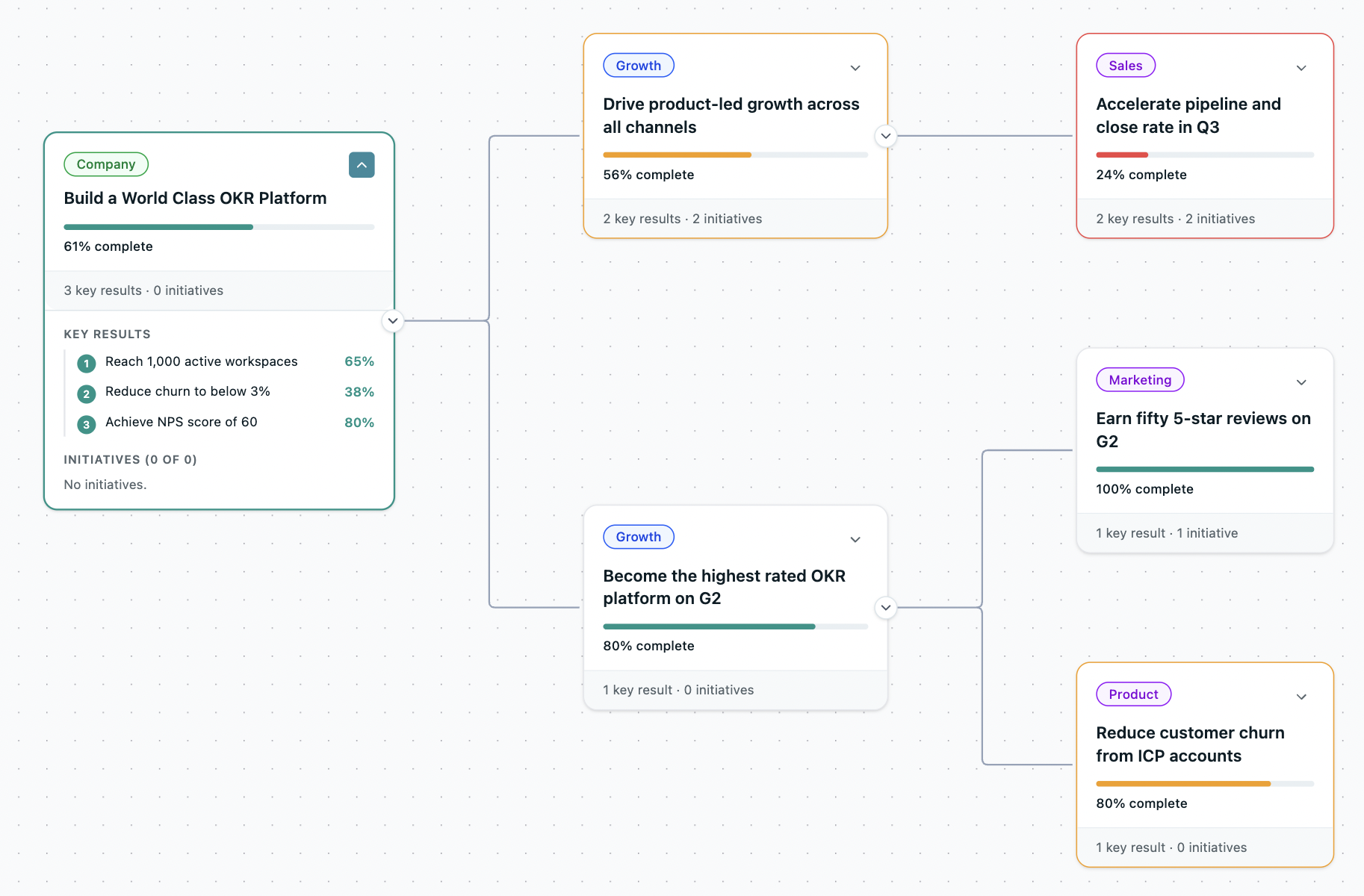
A cascade you can see.
Every team goal laddered to the company's, live on one map — alignment anyone can read, instead of a claim made in a meeting.
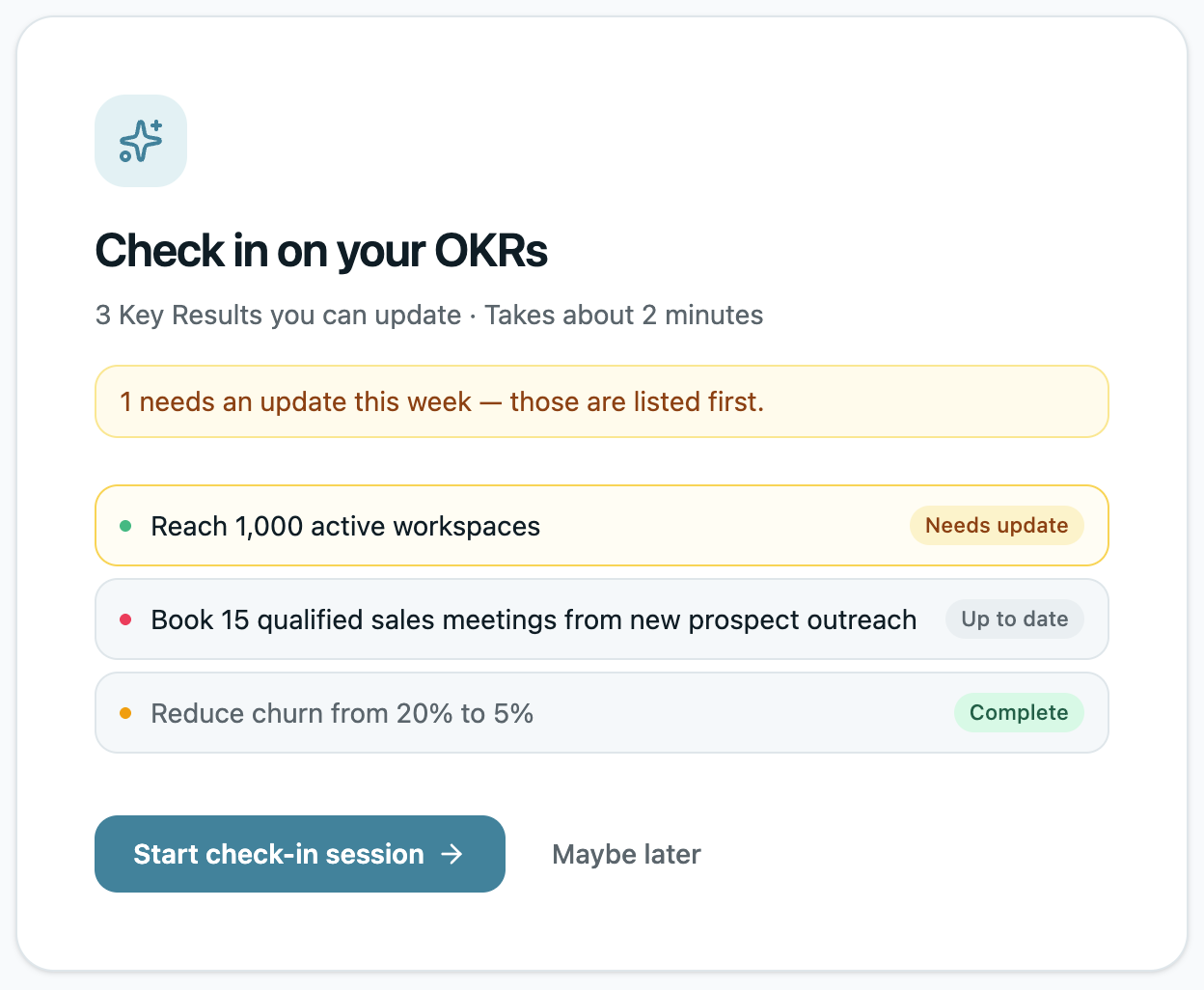
A weekly habit that runs itself.
Each owner is prompted to update their own numbers, and a move rolls up on its own. The tool does the chasing, which is what keeps a rollout alive past week three.
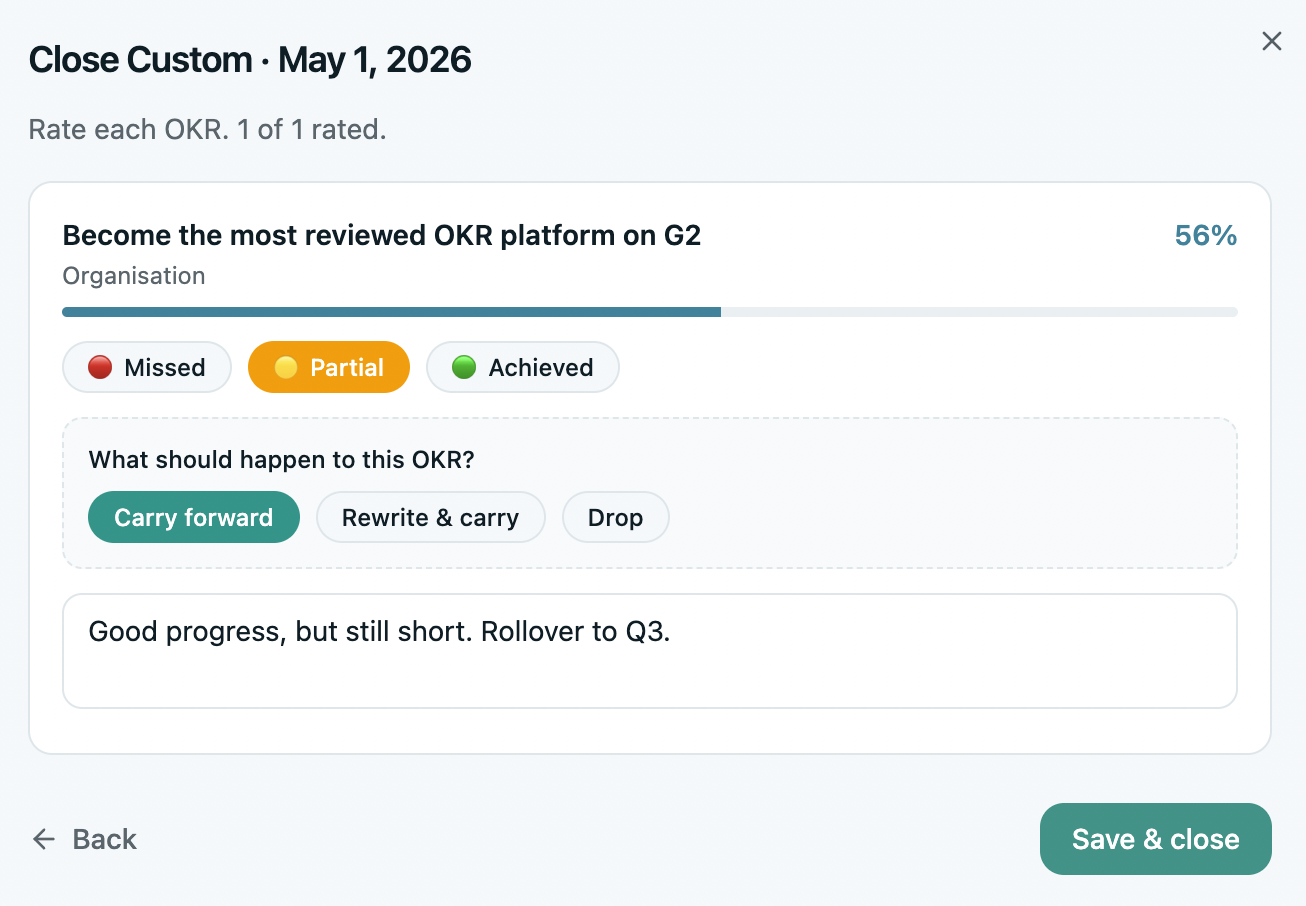
Grading that closes the loop.
Score each key result from 0.0 to 1.0 at quarter-end, run a retro, and start the next cycle from evidence rather than memory.
The book hands you the method; OKRs Tool is where a company runs it — simple enough that the whole team adopts it, on a flat price so inviting everyone never changes your bill.
"Our management team all read the John Doerr book. We're a team of 75 — we needed a simple way to communicate expectations without it becoming cumbersome."
Austin — VP Operations, Mainway Metalworks
A 75-person team whose leaders read the book together, then rolled OKRs out across the company.
"I can set up the tool within a few minutes — I don't need to train people to use it."
"The easiest OKRs platform I've used, and the initial setup was very easy."
"Easier than using an Excel or Google Sheets."
Rolling it out? Start with the plan the book doesn't give you.
Two things that take the rollout from the book to your first graded cycle — ready to use, no fluff.
- The 90-Day OKR Rollout Plan — week-by-week, from securing the mandate to grading cycle one, with the rollout killer to avoid at each stage
- The OKR Rollout Kickoff Deck — an editable deck to launch OKRs to your leadership and teams
Editable and ready to present. Built for a newly-mandated rollout owner.
Roll it out somewhere it keeps running.
Concierge migration brings any OKRs you've started across, flat pricing covers the whole company, and the 60% adoption guarantee means you only keep paying if it sticks. Set up in an afternoon — you could run your first check-in this week.