You know OKRs work. Getting everyone else to say yes is the job now.
You've run OKRs somewhere before, so the framework isn't the question. Selling it to a leadership team that hasn't, and to a room that's watched initiatives come and go, is. A real tool is what signals the initiative is serious when you pitch it, and what keeps it running once you've won the yes. OKRs your whole team keeps updated — on one flat price.
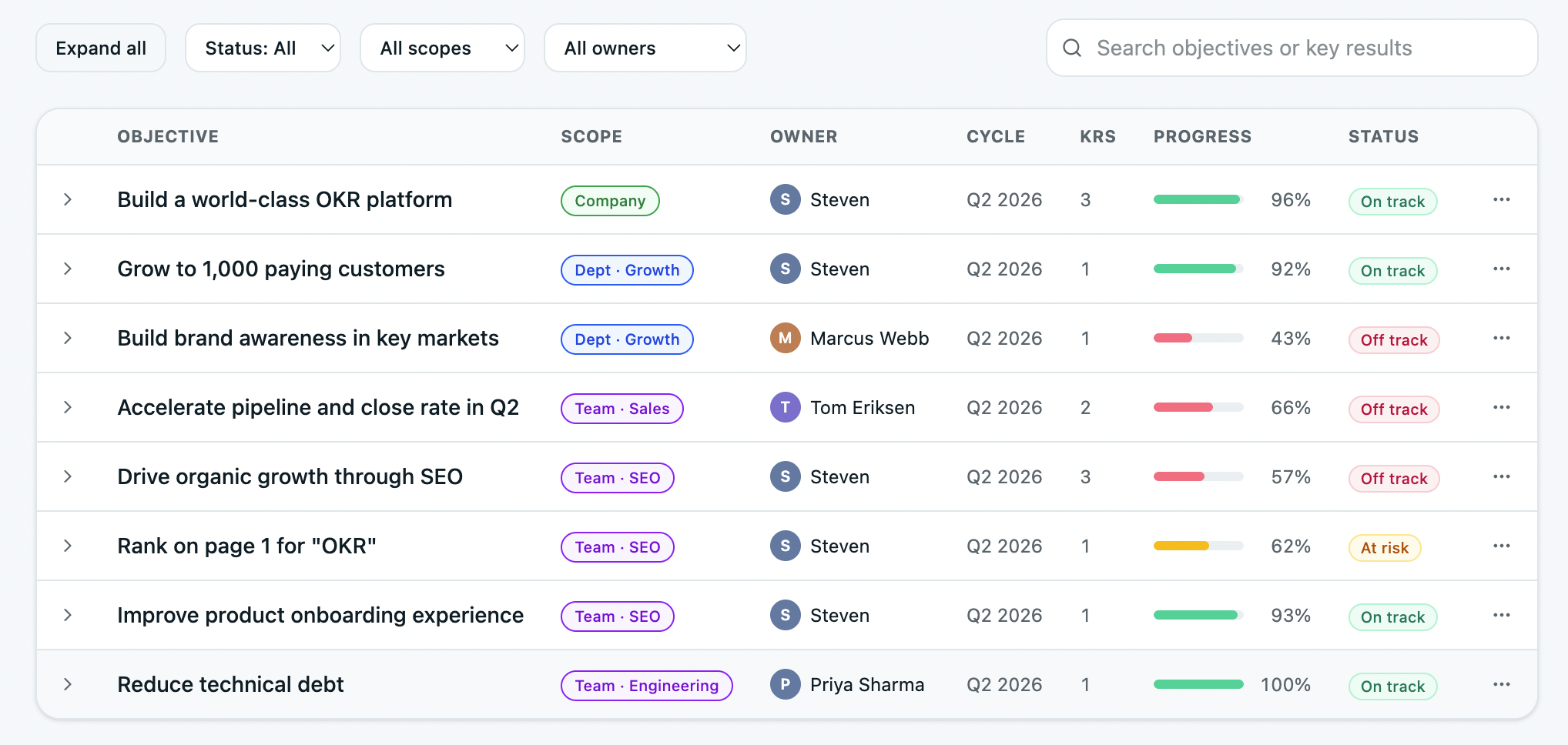
You've done this before. Here, you're starting from zero.
The framework isn't your problem
You know how OKRs work — you've run them. What you don't have yet is a leadership team that's bought in, and that's the thing standing between you and a first cycle.
You're the new person
Your credibility here is a few weeks old. You're asking people to back a change before they've seen you deliver anything.
The room has a graveyard
Most companies carry a pile of half-adopted initiatives. "We tried that and it fizzled" is the first thing you'll hear in the meeting.
The format is part of the message
Pitch OKRs on a shared spreadsheet and the company reads it as another experiment. A real tool tells them you mean it.
Getting OKRs approved is a different job from running them, and winning the yes is the one that's on you first.
OKRs don't stall at the whiteboard. They stall at the yes.
You can write perfect objectives and still get nowhere. The blocker sits upstream of the framework: a leadership team that needs convincing, and a room that's seen frameworks fade. Until the organization believes this one is different, there's nothing to roll out — and the fastest way to signal it's different is to show up with a real tool, not another tab.
Getting a tool signals that this is a new initiative, and that it's worth taking seriously.— an OKR lead reviving a stalled program across a 10,000-person company
A tool that helps you win the yes — and hold it.
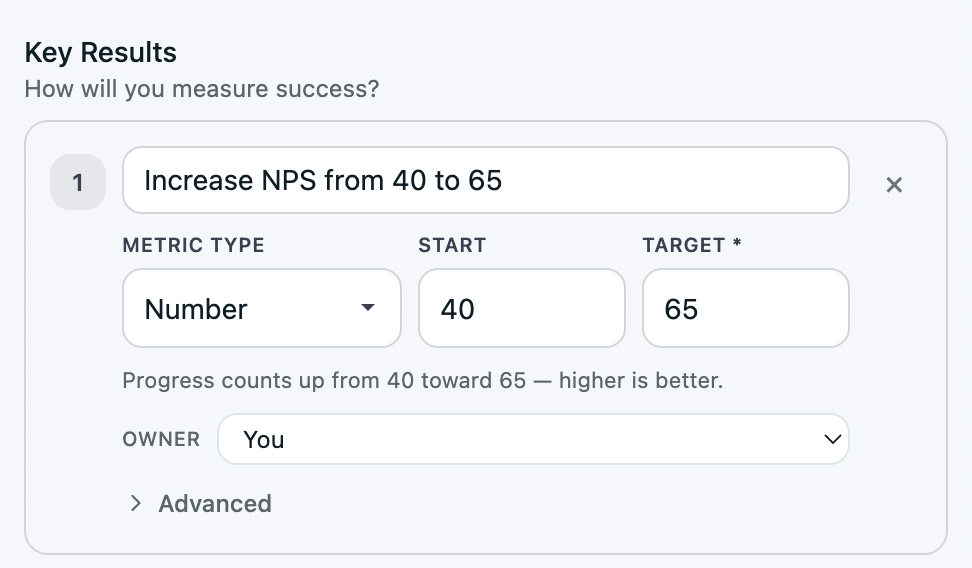
An objective, a key result, an owner.
Create an objective, add a key result, choose how you'll measure it, set the target, and assign an owner. A guided flow that makes a good, measurable OKR quick to write — simple enough that the team adopts it instead of fighting the tool.
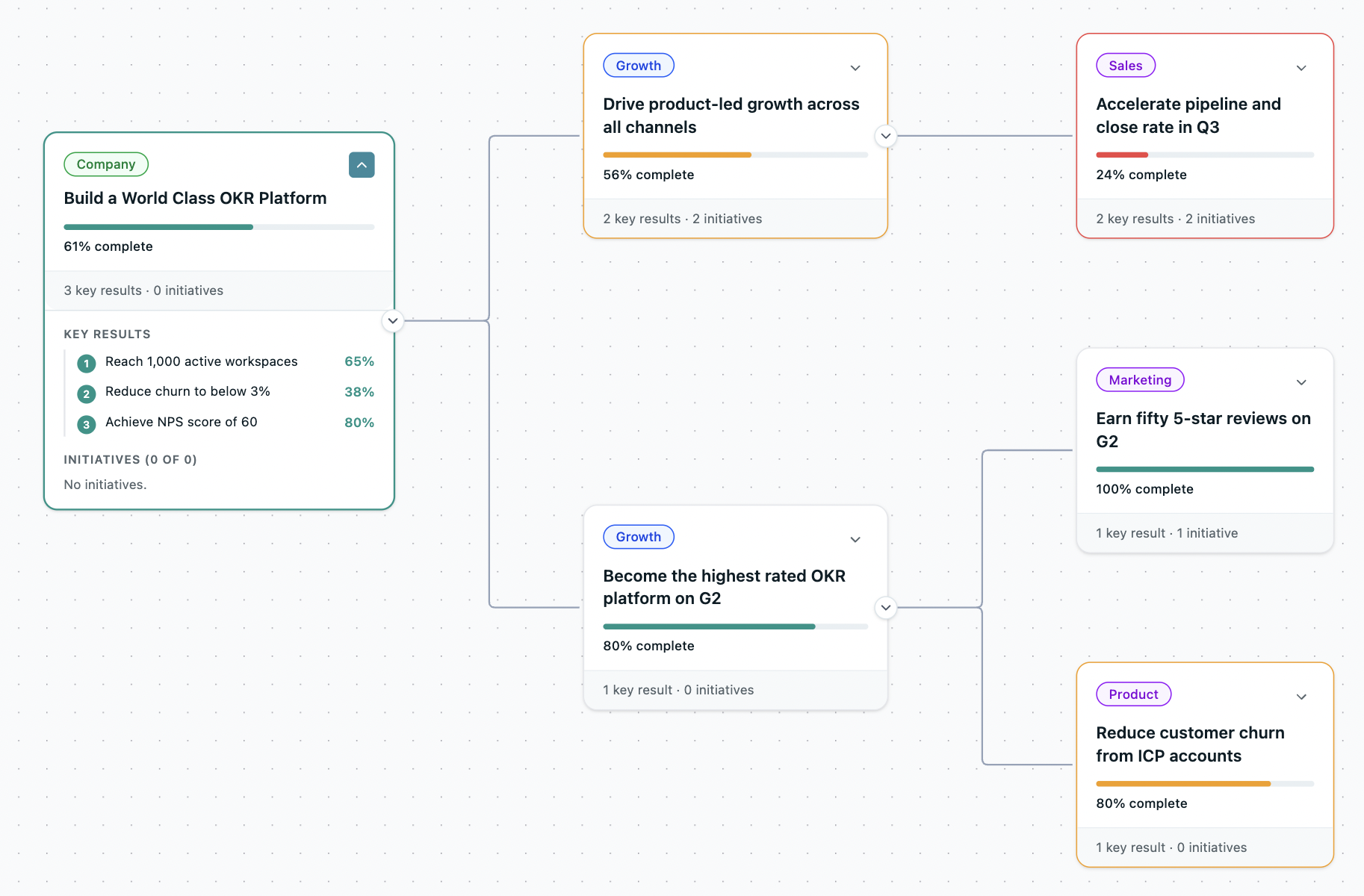
The outcome you're promising, made visible.
What you're selling leadership is focus and alignment — every team's goals laddering to the company's in one view. Show them the picture they'll get, instead of describing it from a slide.
Only 7% of teams say most of their work ladders up to the company's strategy. Strategy Execution Benchmark
What answers "we tried this and it died."
Programs fade when updating them becomes a chore. Each owner is prompted weekly and progress rolls up on its own, so the habit holds without you chasing it — the difference between this rollout and the one they remember.
21% of teams run off-track for a month or more before a leader finds out. Strategy Execution Benchmark
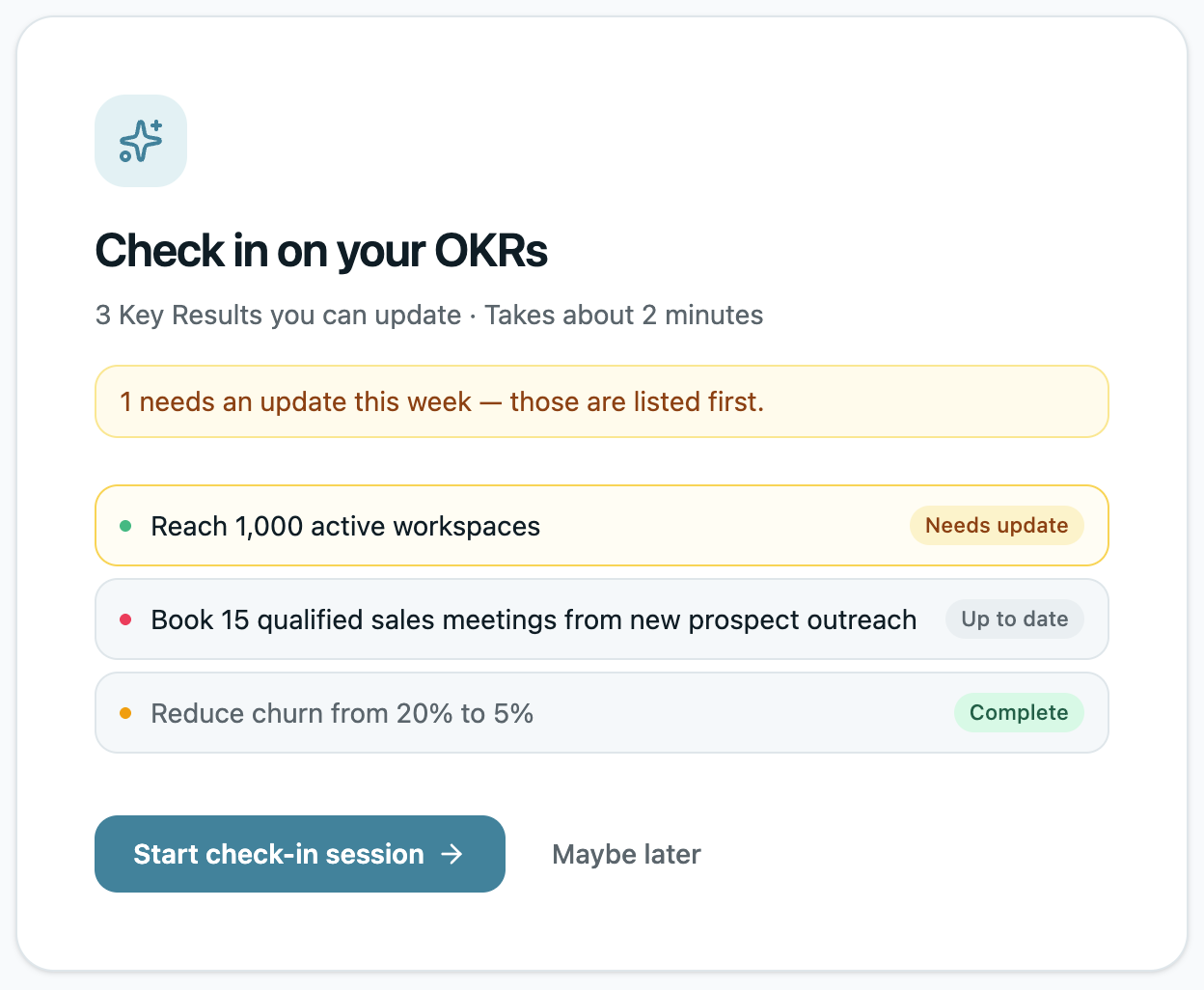
It reaches the people going quiet.
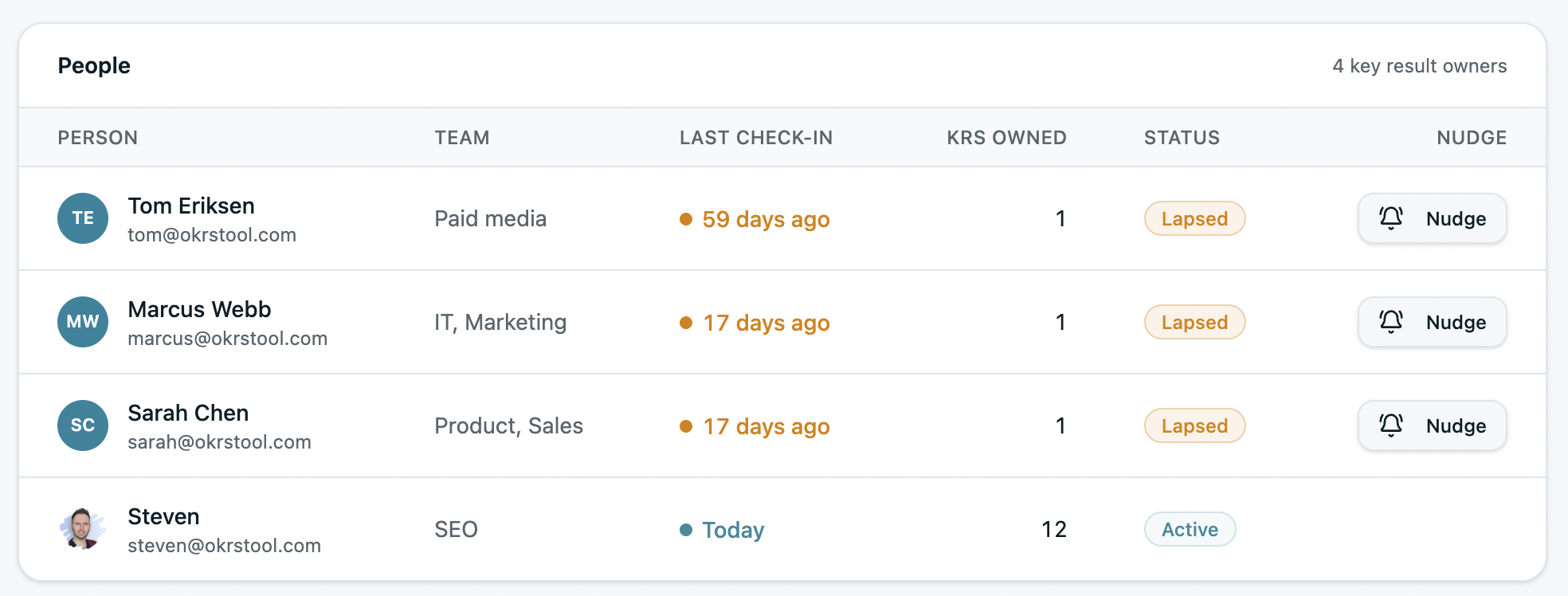
Adoption slips one silent person at a time. When an owner stops checking in, the tool nudges them automatically — so you're not the enforcer, and the program doesn't empty out one person at a time while you're looking elsewhere.
Half of abandoned OKR programs die silently — no one calls it, it just fades. The Death of OKRs
The two hardest moments are winning the yes and surviving the skeptics, and a real tool helps with both — it signals the initiative is serious when you pitch it, and it carries the cadence and adoption that keep it alive once you've won. Flat-priced so inviting everyone never changes the bill, set up in an afternoon, EU-hosted, and backed by independent research that puts the return on a well-run OKR program as high as 25 to 1.
"The management never really defined and followed up goals. I was trained on OKRs, and when I joined, I pushed the management to adopt them. Now we're introducing this to the whole team."
Bertrand Späth — Leadership team, Cardok
Trained on OKRs elsewhere, pushed for them when he joined, and won management's buy-in — now rolling out company-wide.
"I've used the OKR model heavily in my previous jobs to create focus and alignment."
"Getting a tool signals that this is a new initiative worth taking seriously."
"Simple and easy to understand — teams can start without making it too complex."
Walk into the pitch with the yes already half-won.
Three things built for the person introducing OKRs to a company that doesn't run them — the case to send, the deck to present, and the answer to every objection you'll hear.
- The Business Case — a board-ready one-pager that makes the case and asks for the pilot
- The Leadership Buy-In Deck — present OKRs to the exec team and walk out with a yes
- The Objection-Handling Script — the eight objections you'll get, and the line that moves each
The case to forward, the deck to present, the script for the pushback. Built for an experienced champion in a new seat.
Give them a reason to say yes.
OKRs your whole team keeps updated — on one flat price. A real tool signals you mean it, concierge migration brings any goals you've started across, and the 60% adoption guarantee means you only keep paying if it sticks. Win the room, then land the rollout.