The OKR rollout is yours now — and so is the blame if it dies.
It usually goes the same way: the goals get written, everyone nods, and a month later no one has touched them. A mandate is enough to start OKRs, but keeping a whole company using them is the real job — and it just landed on you. Set up in an afternoon, flat-priced, and built to survive past week three. OKRs your whole team keeps updated — on one flat price.
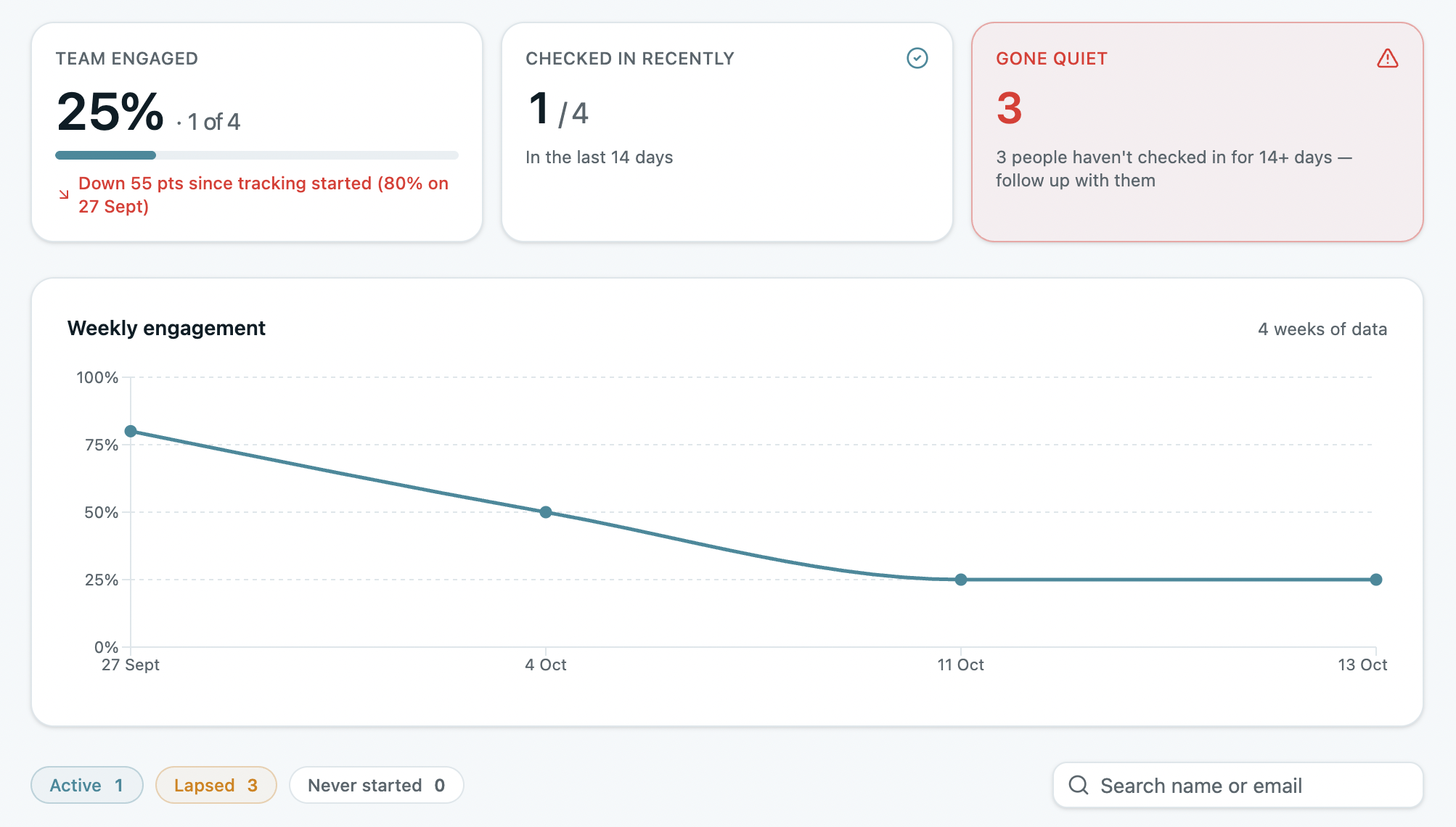
You didn't ask for this. Now your name is on it.
It came with your name on it
Leadership didn't send a memo — they pointed at you. If it works, it was the plan; if it doesn't, it was you.
Your team has seen frameworks fizzle
Most companies have a graveyard of half-adopted initiatives. You're asking people to believe this one is different, before you've shown them it is.
The mandate stops working fast
"Because leadership said so" gets OKRs written. It does nothing to make a busy team keep updating them once the kickoff energy is gone.
A quiet failure is still your failure
This kind doesn't blow up — it fades. And it fades in front of the person who handed it to you and asked for it back, working.
A mandate starts a rollout, but a rhythm is what keeps one alive — and building that rhythm is the real job you were handed.
A mandate gets OKRs written. Adoption decides whether they survive.
The attempts that fail rarely fail for lack of authority. They fail on internal traction: the goals get set, the weekly habit never forms, and by the second month the board is stale and the program is a memory. That gap, between being handed a rollout and landing one, is where your name is most exposed.
We cannot get the traction internally to get OKRs to work.— a rollout that had the mandate and lost the people
Launch it clean, and keep it alive — both built in.
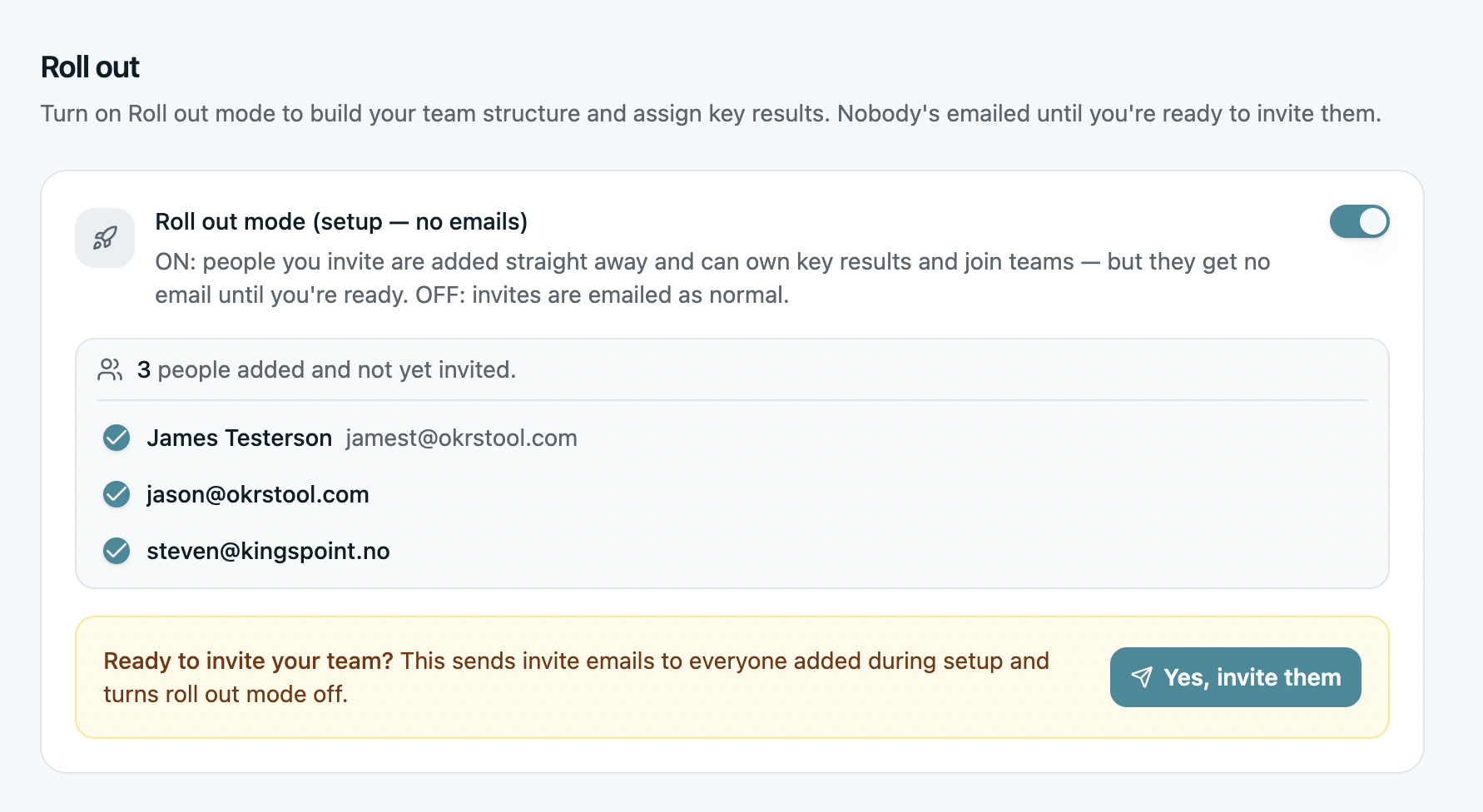
Launch the whole thing in one move.
Build every objective, team and owner first, with no emails going out — then press launch, and the whole company is invited at once. People arrive to a structure that's ready, instead of stumbling into a half-built one, which is how first attempts lose the room on day one.
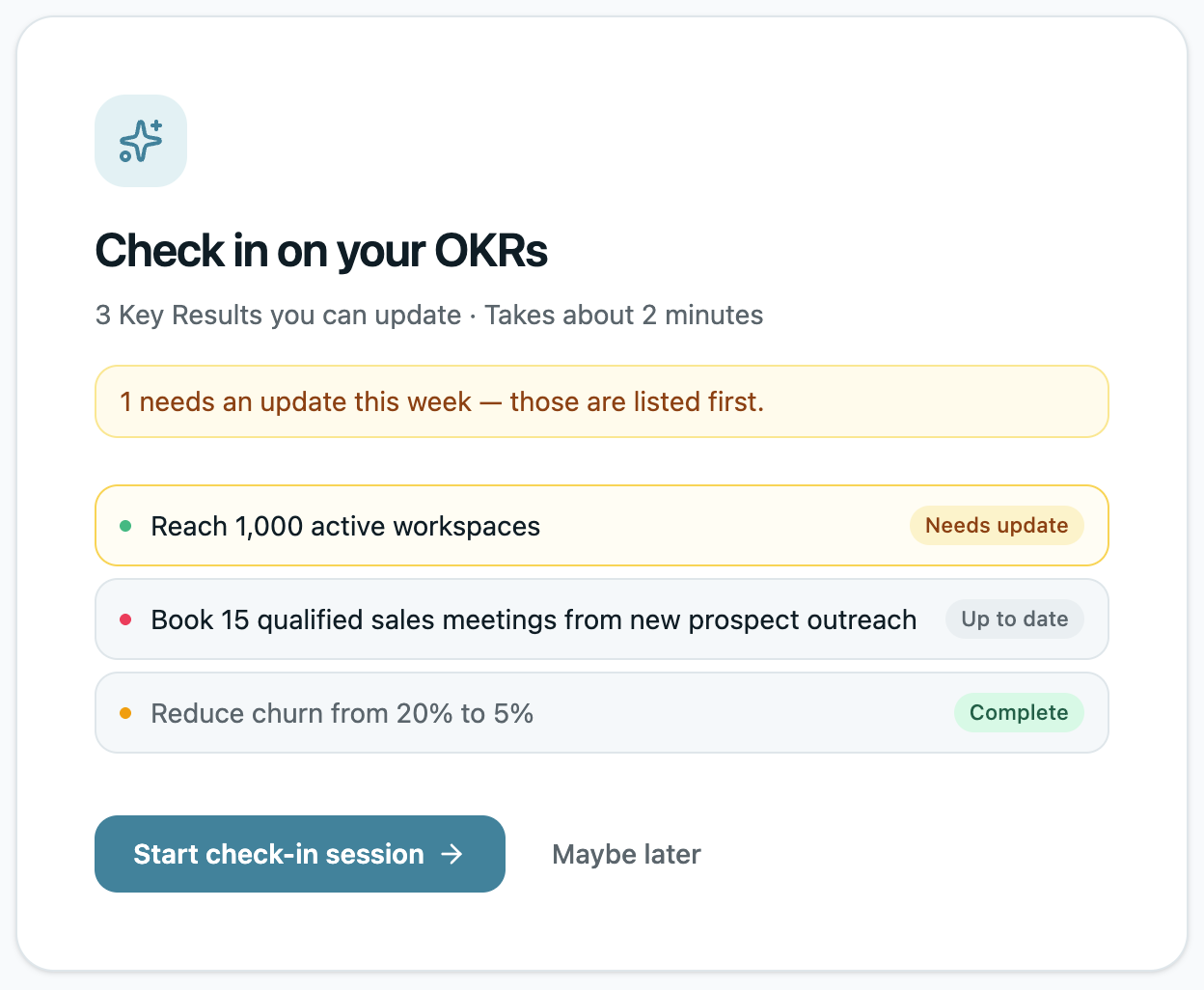
A habit that doesn't depend on you.
Each owner is prompted to update their own numbers every week, and a move rolls up on its own. The tool does the chasing, so the cadence holds whether or not you're pushing it — which is what keeps a rollout alive past week three.
21% of teams run off-track for a month or more before a leader finds out. Strategy Execution Benchmark
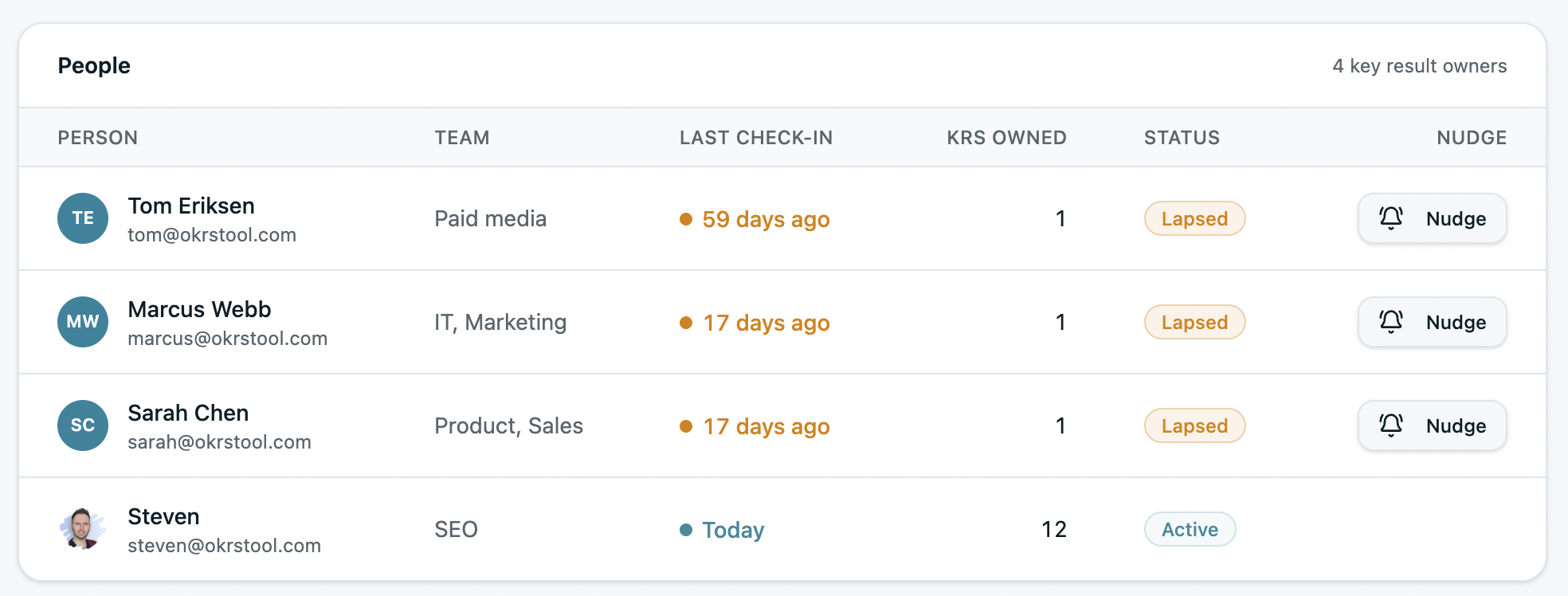
When someone goes quiet, the tool reaches them.
Adoption erodes one silent person at a time. When an owner stops checking in or a key result goes stale, OKRs Tool nudges them automatically — so the board stays alive without you playing enforcer. You step in for the conversations that need you, not the whole list.
Half of abandoned OKR programs die silently — no one calls it, it just fades. The Death of OKRs
The Monday brief, before anyone asks.
Every Monday a summary lands in your inbox: what moved, what slipped, and what leadership will want answers on. Forward it up, or drop it into your own update — so you're ahead of the drift, and ahead of the question "where are we?"
83% of teams get no automatic signal when a priority drifts off track. This is that signal. Strategy Execution Benchmark
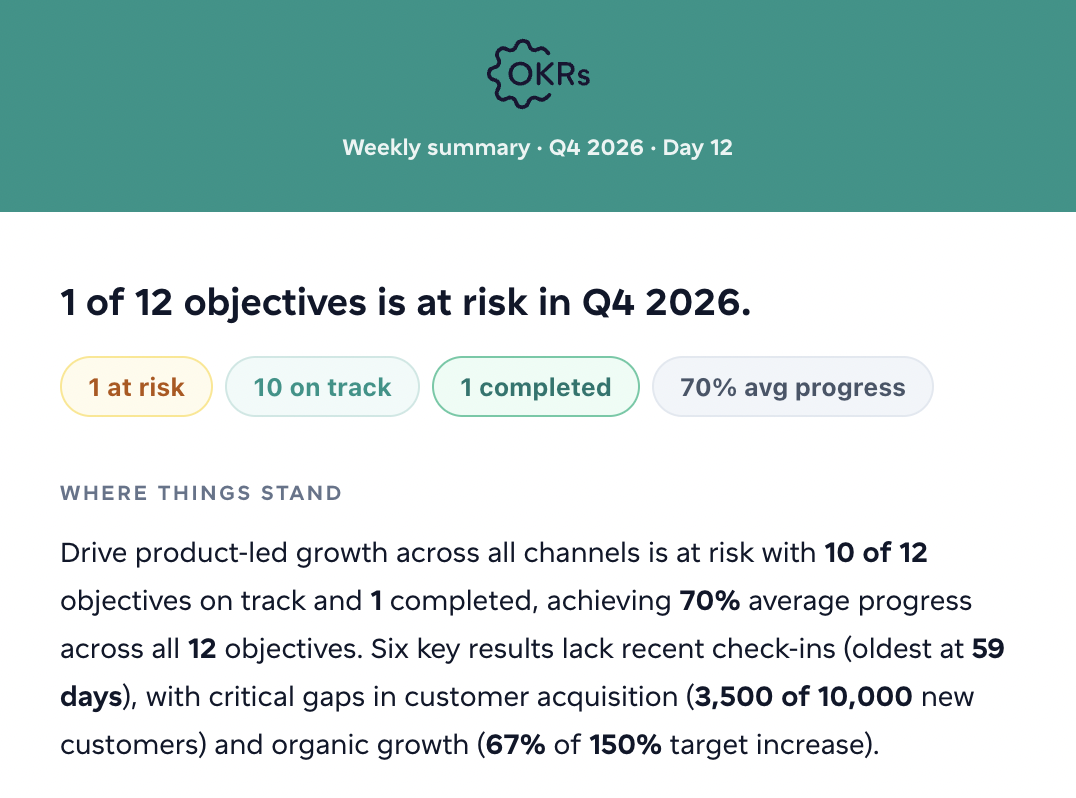
Cadence and adoption are the two areas that sink most rollouts, and they're the two OKRs Tool handles by default — simple enough that the whole team adopts it, flat-priced so inviting everyone never changes your bill, and set up in an afternoon so you can show progress before the next leadership meeting.
"Last week, the CEO assigned it to me to get it built and operational. We are like a leaf on a pond — we kind of go wherever the wind pushes us."
Jeff Wilson — SVP Operations, PUPCO
Given the rollout personally, after the first attempt died in three weeks, with the company set to double in three years.
"I can set up the tool within a few minutes — I don't need to train people to use it."
"The easiest OKRs platform I've used, and the initial setup was very easy."
"Easier than using an Excel or Google Sheets."
Handed the rollout? Here's the kit to not drop it.
Three things built for the person an exec just put in charge — diagnose it, make it stick, and show the boss it's working.
- The Rollout Readiness Check — score where your rollout will crack, before you launch
- The Adoption Playbook — six moves to get a team that didn't ask for OKRs to use them
- The Executive Update — an editable one-pager to report progress up to your sponsor
A scored check, a tactical playbook, and a ready template. Built for a newly-handed rollout owner.
Give it back to them, working.
OKRs your whole team keeps updated — on one flat price. Concierge migration brings any OKRs you've started across, and the 60% adoption guarantee means you only keep paying if it sticks. Cadence and adoption, the two things that sink rollouts, are handled — so you can report progress instead of chasing it.