65% of teams admit their goals aren't linked to company strategy. The failure isn't in the planning session — it's in the eight weeks after it. These 8 platforms are reviewed on the single question that matters: does this tool change what your team works on next Monday?
Strategic planning works well as an event. Leadership aligns on direction, priorities get documented, and teams leave the quarterly offsite with genuine clarity on what matters. The problem isn't the planning — it's what happens in the weeks after. Work moves faster than strategy does. The OKR document stops being opened. By mid-quarter the team is executing whatever feels most urgent rather than what was decided in the room.
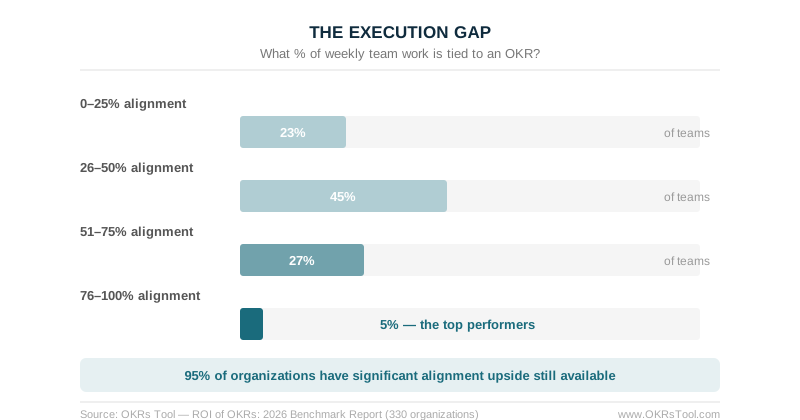
The 2026 OKR Benchmark Report puts a number on this problem: only 5% of teams have more than 75% of their weekly work tied to a strategic goal. 65% of teams admit their goals aren't linked to company strategy at all. Strategic planning tools don't fail because they can't store a strategy. They fail because they can't close the gap between what was planned and what gets worked on every week.
That's the lens this guide uses. Not features. Not UI. Not integrations. One question: does this tool change what your team works on next Monday? Every platform on this list was reviewed and compared — covering pricing, strategic planning approach, execution infrastructure, and what real users report on G2. Tools that required a sales demo are clearly noted.
Quick Summary: Top 3 Picks
What Makes a Strategic Planning Tool Actually Work
Most evaluations focus on the planning side — how well can you document priorities, build strategy maps, set KPIs. That's the wrong question. The right question is how well the tool keeps strategy alive between planning sessions.
The benchmark data points to four things that determine whether a strategic planning tool generates returns or becomes an expensive document.
Alignment visibility. Can every team member see how their work connects to company strategy — without a meeting? 65% of teams admit their goals aren't linked to strategy. The tool either makes that connection structural or it doesn't.
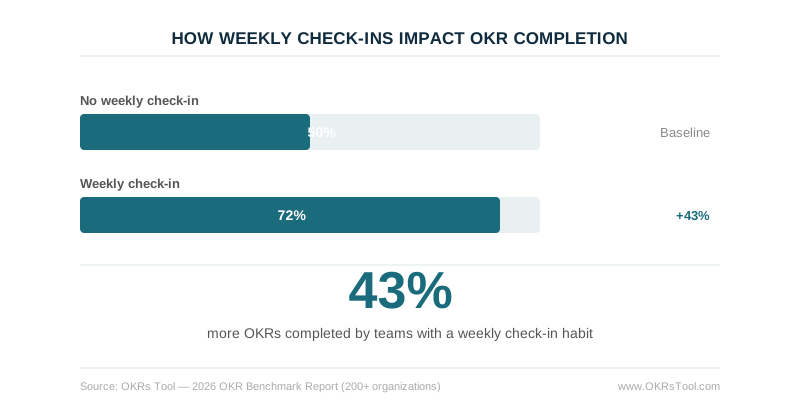
Weekly execution infrastructure. Strategic plans fail between planning sessions. Tools that generate the highest returns make weekly check-ins structurally easy — automated nudges, lightweight updates, no manual chasing. Teams that check in weekly complete 43% more OKRs than those reviewing monthly.
Outcome-based measurement. A strategic plan that tracks activity rather than outcomes produces the appearance of progress without the reality. The best tools enforce outcome measurement from goal creation.
Short feedback loops. Annual strategic plans are obsolete before Q2. Tools that work best run on quarterly cycles with end-of-cycle retrospectives — teams that run them complete 30–45% more goals the following quarter.
Why Trust This Guide?
I've spent more than 10 years working with OKRs and strategy execution — running goal programs for 60+ organizations, and as the founder of OKRs Tool, used by 350+ teams worldwide.
Every platform on this list was reviewed and compared on pricing, weekly execution infrastructure, and real user feedback from G2.
The benchmark data behind that lens: the ROI of OKRs: 2026 Benchmark Report (330 organizations) found only 5% of teams have more than three-quarters of their weekly work tied to a strategic goal, and 65% admit their goals aren't linked to strategy at all.
Teams run their strategy planning and execution on OKRs Tool every quarter, and the pattern in this guide comes from watching what actually closes the strategy-to-execution gap in practice.
Tinaba, an Italian fintech in Milan, is one example: they moved strategy, initiatives, and outcomes out of scattered presentations and spreadsheets into a single framework, and it changed how the whole company talks about progress.
"OKRs Tool helped us create a much stronger connection between strategy, execution, and measurable outcomes. What previously lived across presentations, spreadsheets, and meetings is now centralized in a shared framework that gives leadership and teams a consistent view of priorities and progress."

At a Glance: Pricing and Approach
The 8 Best Strategic Planning Tools
1. OKRs Tool
Best for: Growing teams (50–200 people) running the full strategy-to-execution loop
Most strategic planning tools solve one part of the problem. OKRs Tool is built around the complete loop: strategy sets the direction, OKRs execute it quarterly, and AI surfaces what's drifting before it becomes a miss. Each layer feeds the next.
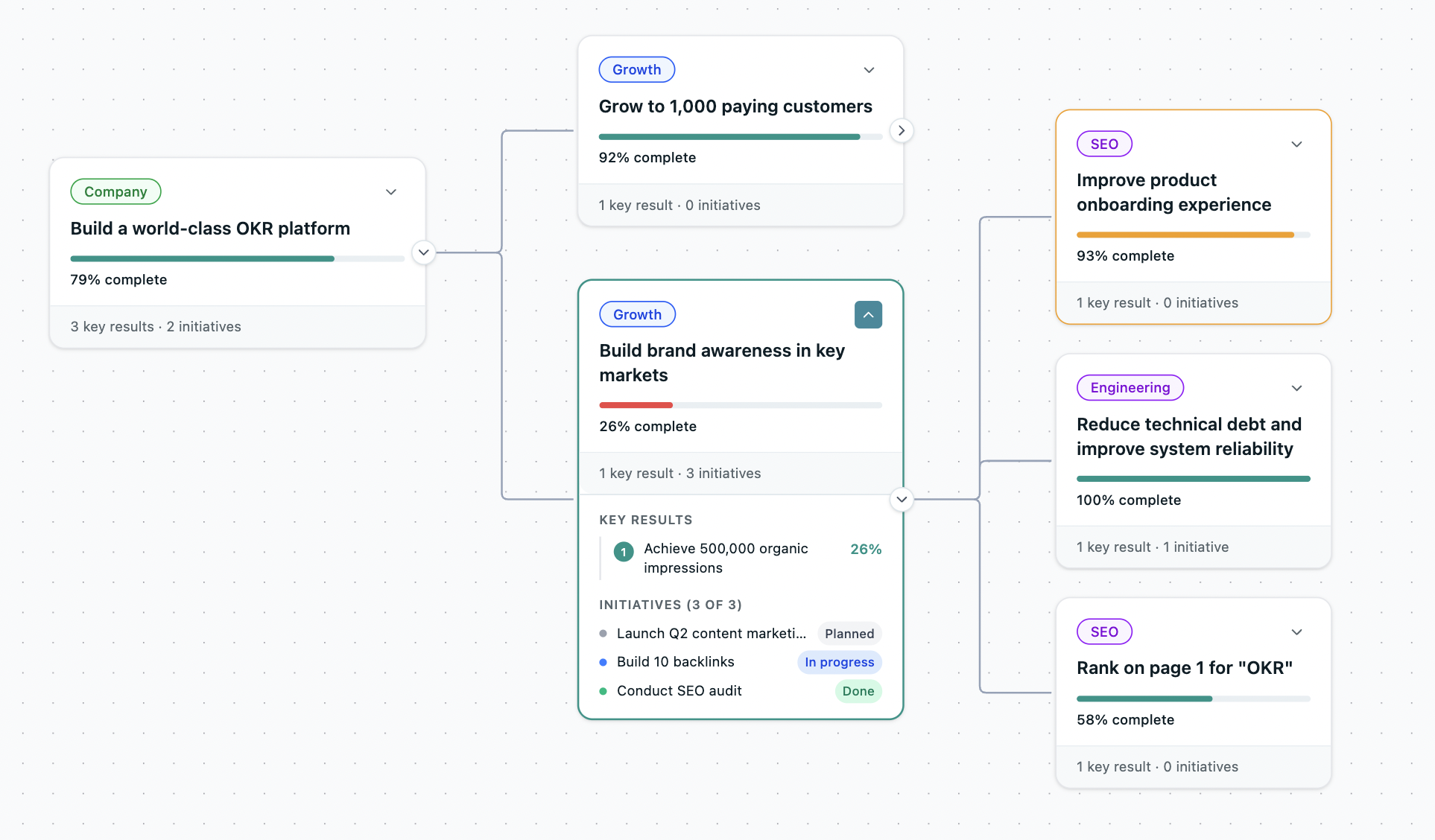
The Strategy section is where the loop starts. The Strategy Canvas puts vision, mission, and strategic themes in a single structured view that every team OKR links back to — replacing the slide deck nobody opens after the offsite. The Strategy Coverage diagnostic flags strategic themes with zero Key Result coverage before the cycle starts, not at the end when nothing can be done about it. The Cascade Map shows top-down how every team Key Result connects to a company Objective — and surfaces the orphan goals that don't.
The execution layer runs underneath. Automated weekly check-ins via Slack and MS Teams keep Key Results moving without manual chasing. Named ownership is enforced at goal creation. The alignment map gives leadership live visibility into what's on track and what's drifting — before the weekly meeting starts.
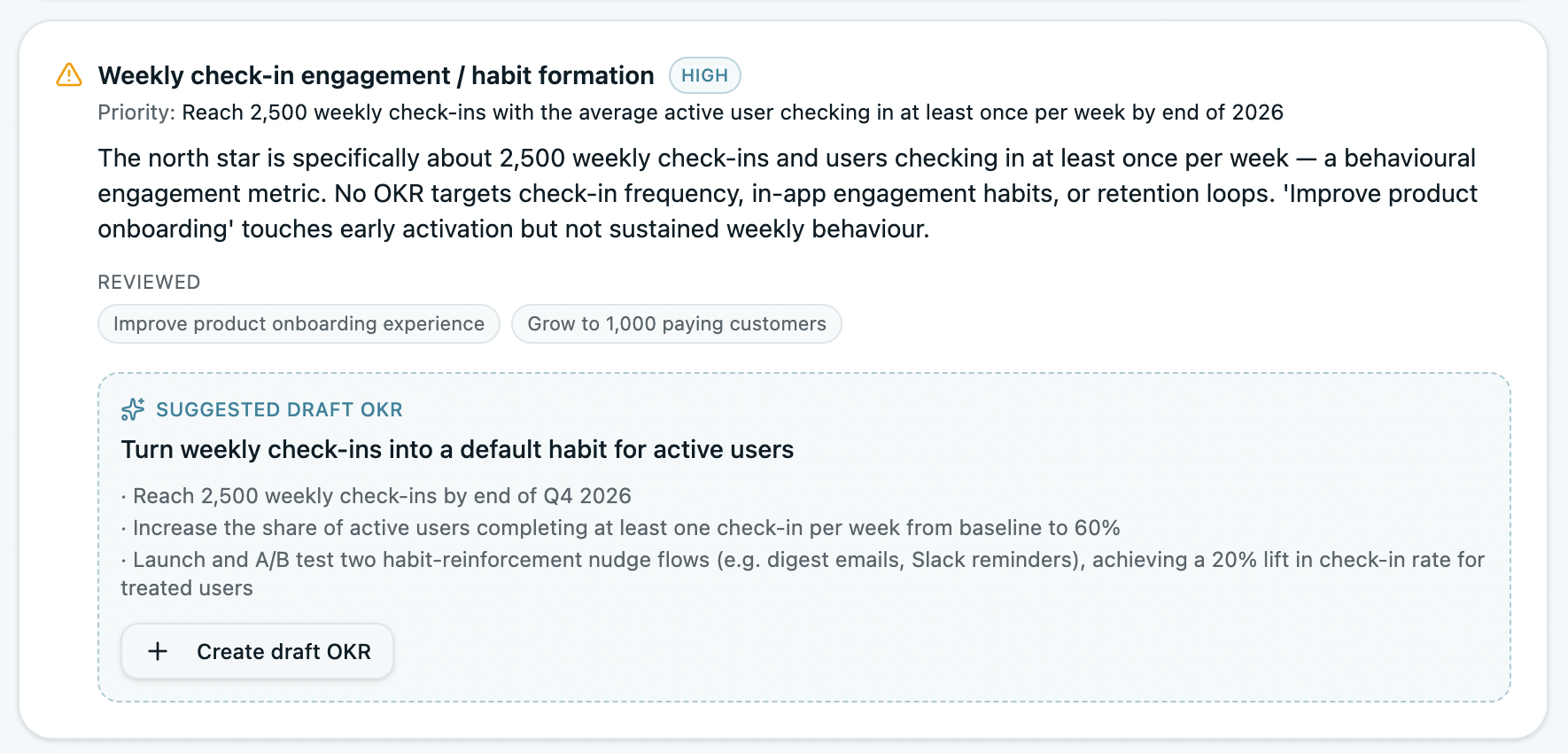
AI closes the loop. Goal writing suggestions, at-risk flagging from trajectory data, and mid-cycle insights surface problems when there are still weeks to act on them — not at the quarterly review when explanation is the only option left.
The benchmark data: organizations using OKRs Tool generate a 1:88 return on investment — more than five times the return of enterprise strategy software against the same revenue baseline. See how it works →
Pricing: Free for 1–5 users. $49/month Scale (6–50). $129/month Expand (51+, SSO + concierge).
G2 Rating: 4.6/5
2. Cascade
Best for: Enterprise teams that need a dedicated strategy execution platform
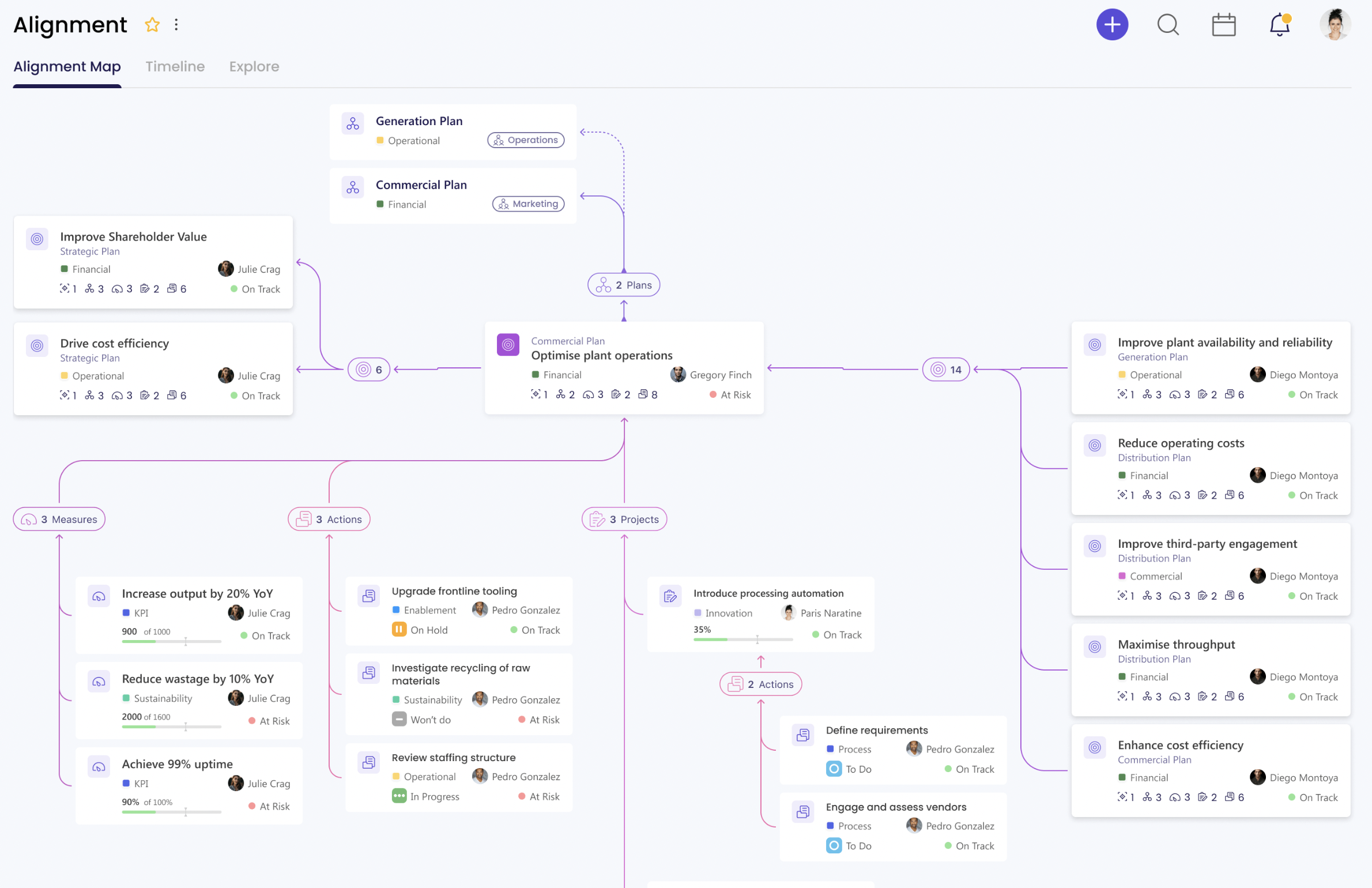
Cascade is a strategy execution platform that goes beyond OKR tracking. It connects high-level strategic themes to focus areas, initiatives, and measurable KPIs — giving enterprise leadership teams the structured execution framework that most strategic planning tools don't provide. The onboarding stands out from any other tool in this category: a few simple questions and a first objective was live before fully entering the app.
Pricing: Custom quote. 14-day free trial, no credit card required. G2 Rating: 4.6/5
3. Perdoo
Best for: Mid-market organizations connecting strategy to OKRs and KPIs in one system
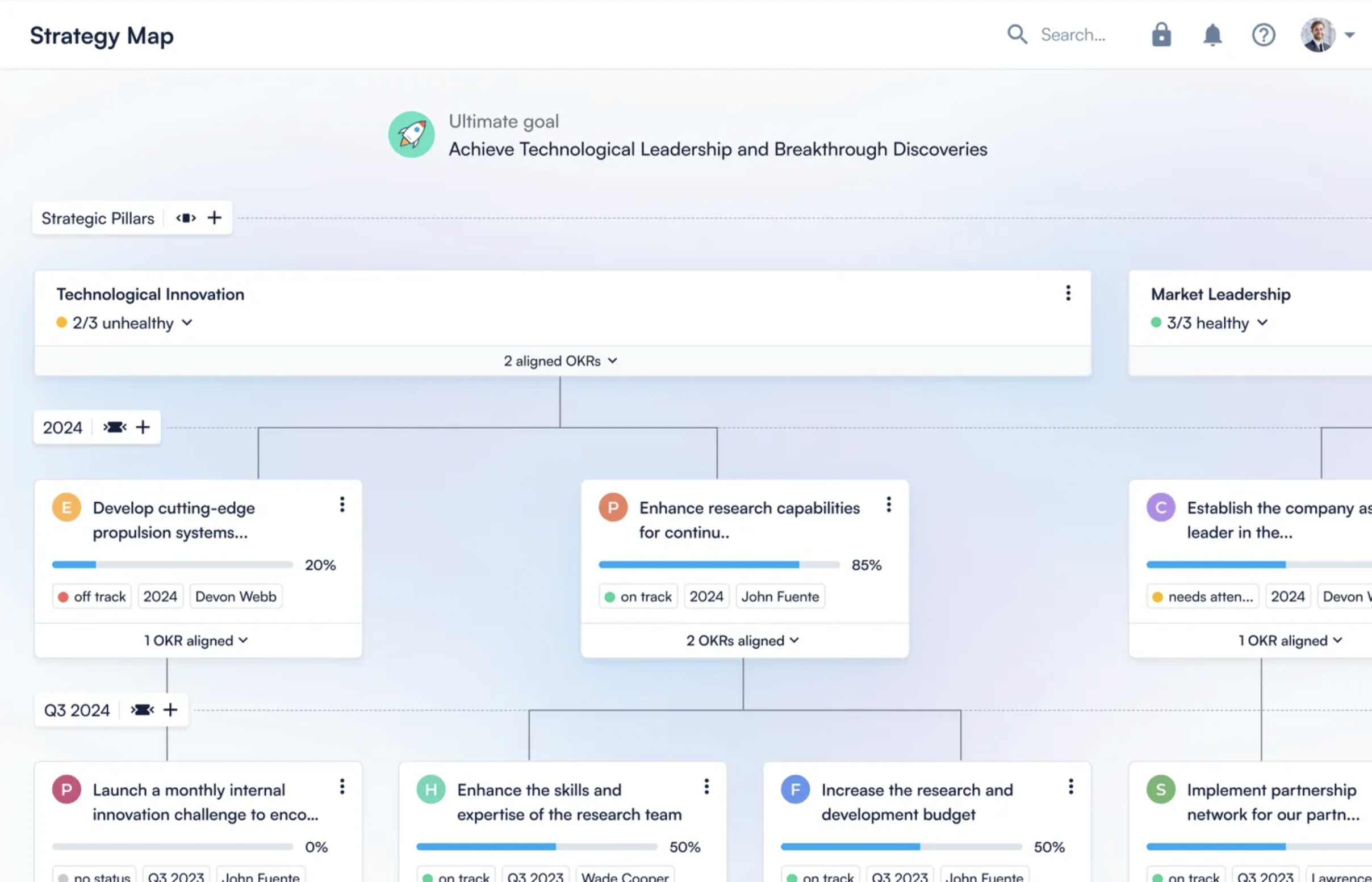
Perdoo is a strategic goal-setting platform that emphasizes the relationship between vision, strategy, OKRs, and KPIs. The strategy map gives leadership a visual view of how every team's quarterly objectives connect to the company's long-term direction. The Kudos feature maintains engagement in the middle weeks of a cycle when motivation typically dips.
Pricing: Free for up to 5 users. From €8/user/month (10-seat minimum). G2 Rating: 4.5/5
4. Mooncamp
Best for: Visual thinkers who want a flexible strategy and OKR platform

Mooncamp is a clean, modern strategic planning tool that treats strategy mapping and OKR alignment as first-class features. The strategy map provides a clear view of how all OKRs across the organization connect without feeling overwhelming — making it easy to assess how each team's work contributes to strategic priorities at a glance.
Pricing: From €6/user/month. 14-day free trial. G2 Rating: 4.7/5
5. Workboard
Best for: Data-driven enterprises that want strategy tracked against live business metrics
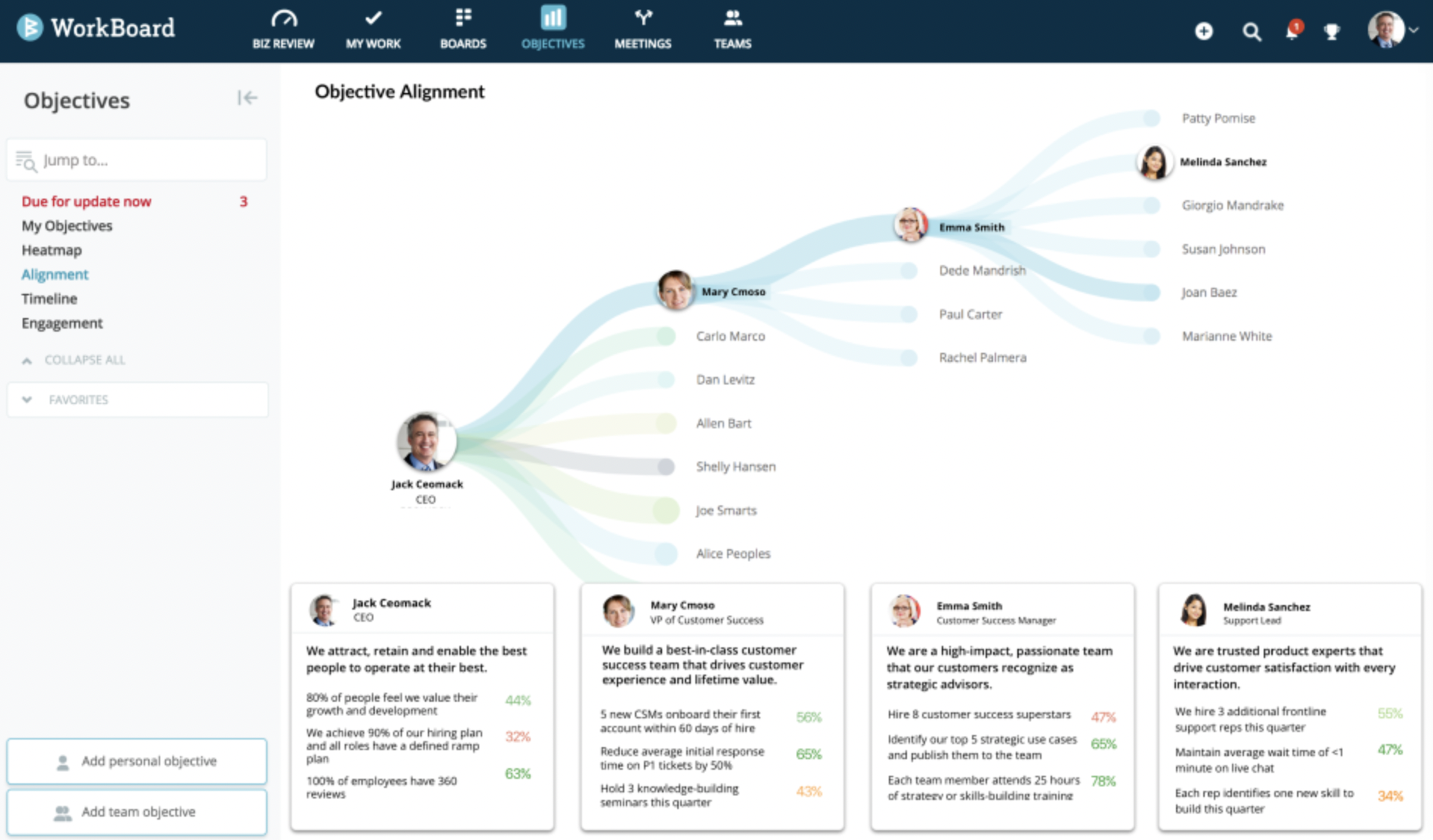
Workboard (formerly Quantive) is a strategy execution platform designed for organizations that want their strategic plan tracked against real business data — not manual updates. With 160+ integrations pulling live KPIs from CRMs, analytics tools, and databases, strategic objectives are always measured against current reality rather than last week's status update.
Pricing: Custom quote. G2 Rating: 4.4/5
6. Businessmap
Best for: Lean/agile teams that want strategy connected directly to daily delivery work
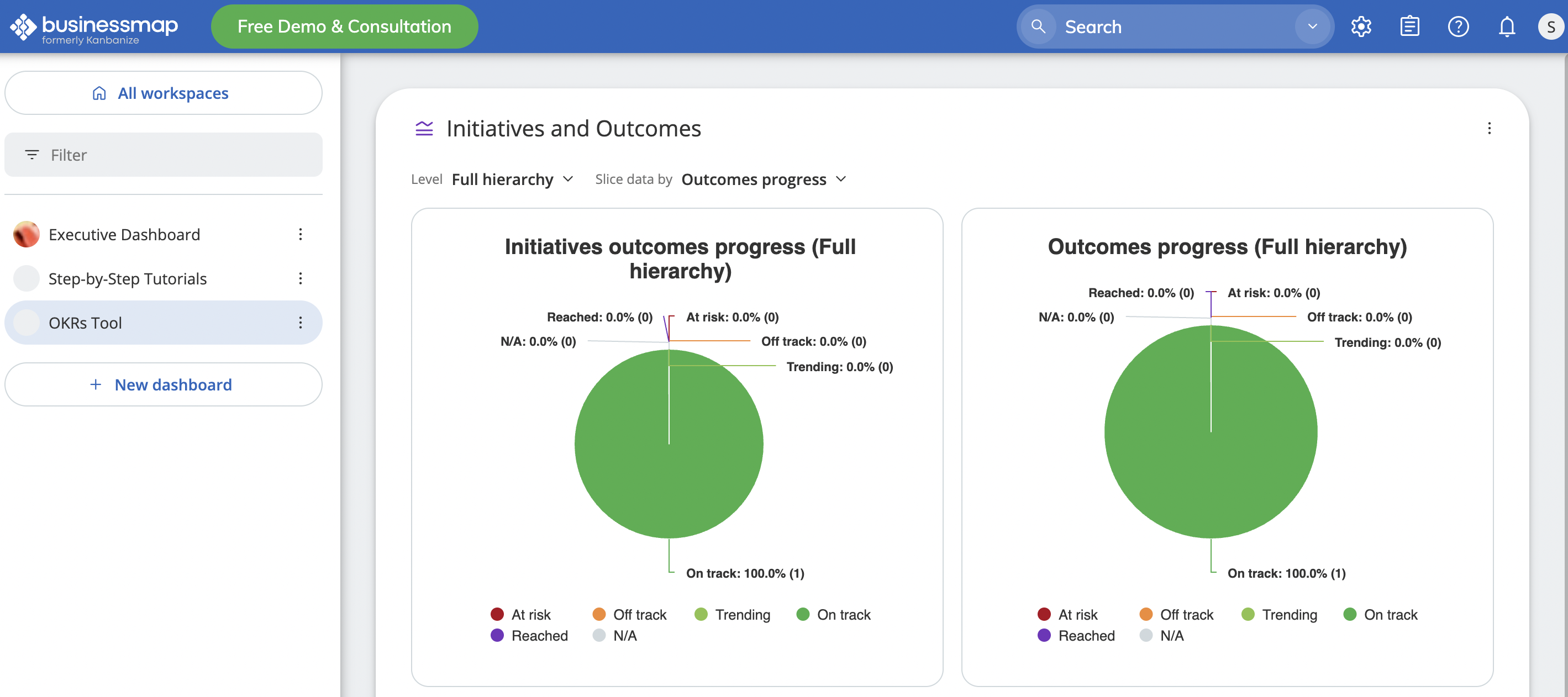
Businessmap (formerly Kanbanize) connects OKRs to Kanban boards, portfolio tracking, and workflow management — meaning strategic objectives are visible inside the tools where work actually happens. For teams running agile delivery alongside strategic planning, the integration of both systems is deeper here than anywhere else on the list.
Pricing: From €10/user/month (minimum 15 users). 14-day free trial. G2 Rating: 4.5/5
7. Futureworks
Best for: Organizations that want strategic planning embedded into weekly meeting workflows
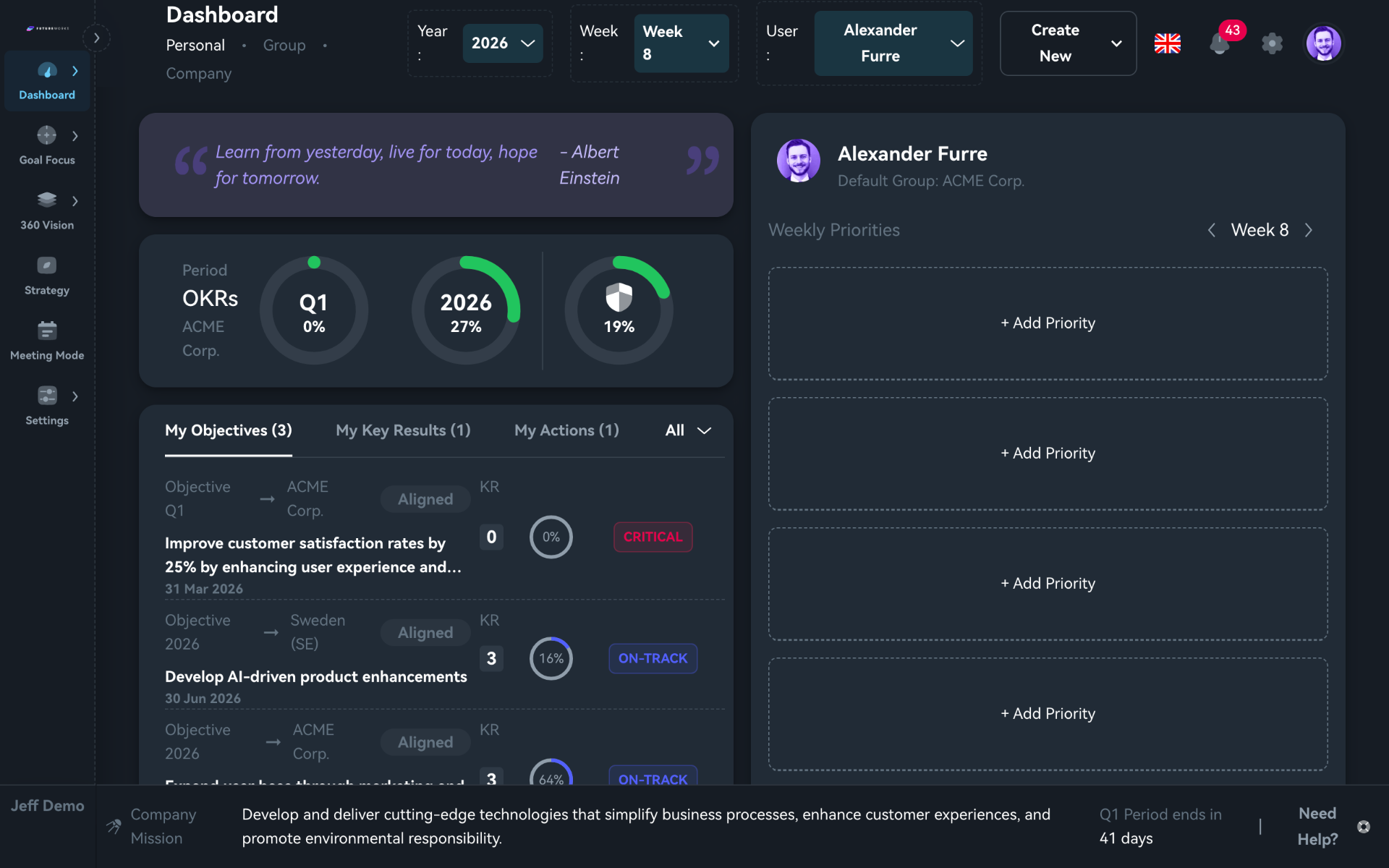
Futureworks is a strategy execution platform that makes strategic planning part of how teams operate week to week. The built-in Meeting Mode runs structured OKR check-ins with live agendas and weekly prompts. The Strategy Map connects vision, goals, and OKRs in one view — ensuring every team sees how their work fits into the bigger picture.
Pricing: Free for 1–5 users. From €13/user/month. G2 Rating: 4.4/5
8. Betterworks
Best for: Large enterprises where strategic planning feeds directly into performance management
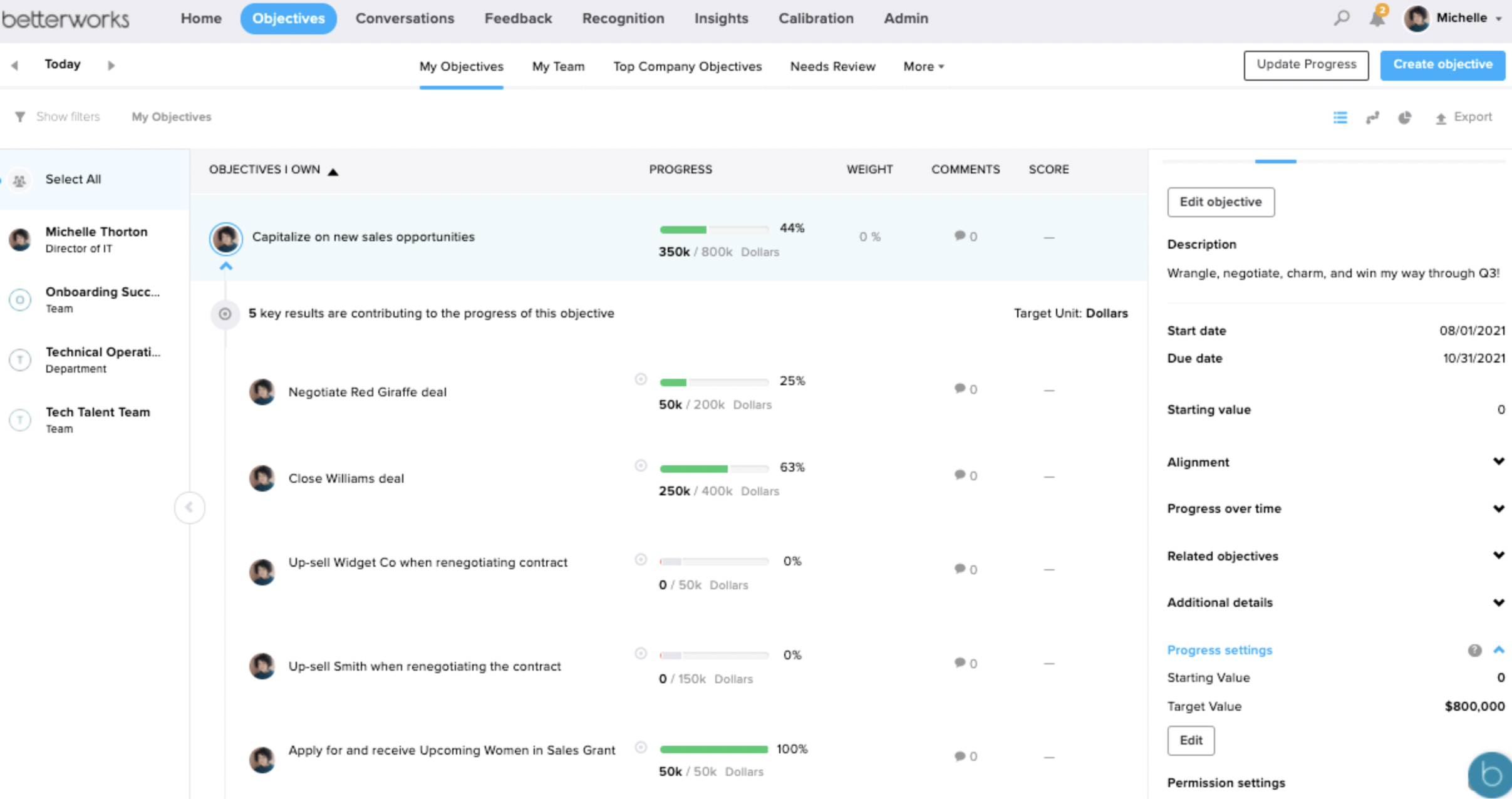
Betterworks is an enterprise-grade performance enablement platform that treats OKRs as the foundation of ongoing strategic conversations — connecting goal-setting with continuous feedback, structured check-ins, performance reviews, and calibration in one system. Note: Betterworks required a sales demo to explore — included based on publicly available information and G2 reviews.
Pricing: Custom quote (suited to 500+ employee organizations). G2 Rating: 4.4/5
Why Most Strategic Planning Tools Fail
The benchmark data points to the same root cause across every failed strategic planning programme: the plan stays in the planning tool and never reaches daily work. Teams with weekly check-in habits complete 43% more OKRs than those reviewing monthly or ad hoc. Teams that skip the weekly rhythm entirely are 3x more likely to abandon their strategic goals altogether. Only 49% of leaders review strategic priorities consistently every week.
The State of Goal Management adds the human layer: 34% of employees say nothing about how they work would change if their goal tracker were deleted tomorrow. That's the precise measurement of a strategic planning tool that has become decorative — maintained as a reporting exercise, influencing nothing.
A strategic planning tool that doesn't drive weekly behavior is an expensive document. The criteria that separate tools that generate returns from those that don't: a built-in weekly check-in mechanism rather than a reminder email; cascade alignment that makes the connection between team work and company strategy structural rather than assumed; named ownership enforced before goals go live; and quarterly cycles with end-of-cycle retrospectives that make the strategy better every quarter rather than restarting from the same baseline.
The Tool That Changes What Gets Worked On Next Monday
The organizations generating the highest returns from strategic planning — 1:25 ROI at the median, 1:88 with the right infrastructure — aren't running more sophisticated planning processes. They're doing basic things consistently: translating strategy into quarterly OKRs, assigning clear ownership, reviewing progress every week, and closing every cycle with a retrospective that makes the next cycle sharper.
For growing teams between 50 and 200 people, OKRs Tool runs the full loop — Strategy Canvas for direction, cascade alignment for visibility, automated weekly check-ins for execution, and AI for mid-cycle intervention. For enterprise strategy execution, Cascade. For mid-market organizations connecting strategy to KPIs, Perdoo.
The right tool is the one that changes what your team works on next Monday. Everything else is decoration.
Data: The ROI of OKRs: 2026 Benchmark Report (330 respondents), The 2026 OKR Benchmark Report (200+ organizations), The State of Goal Management, OKRs Tool (210 full-time employees at growing companies, 2026).