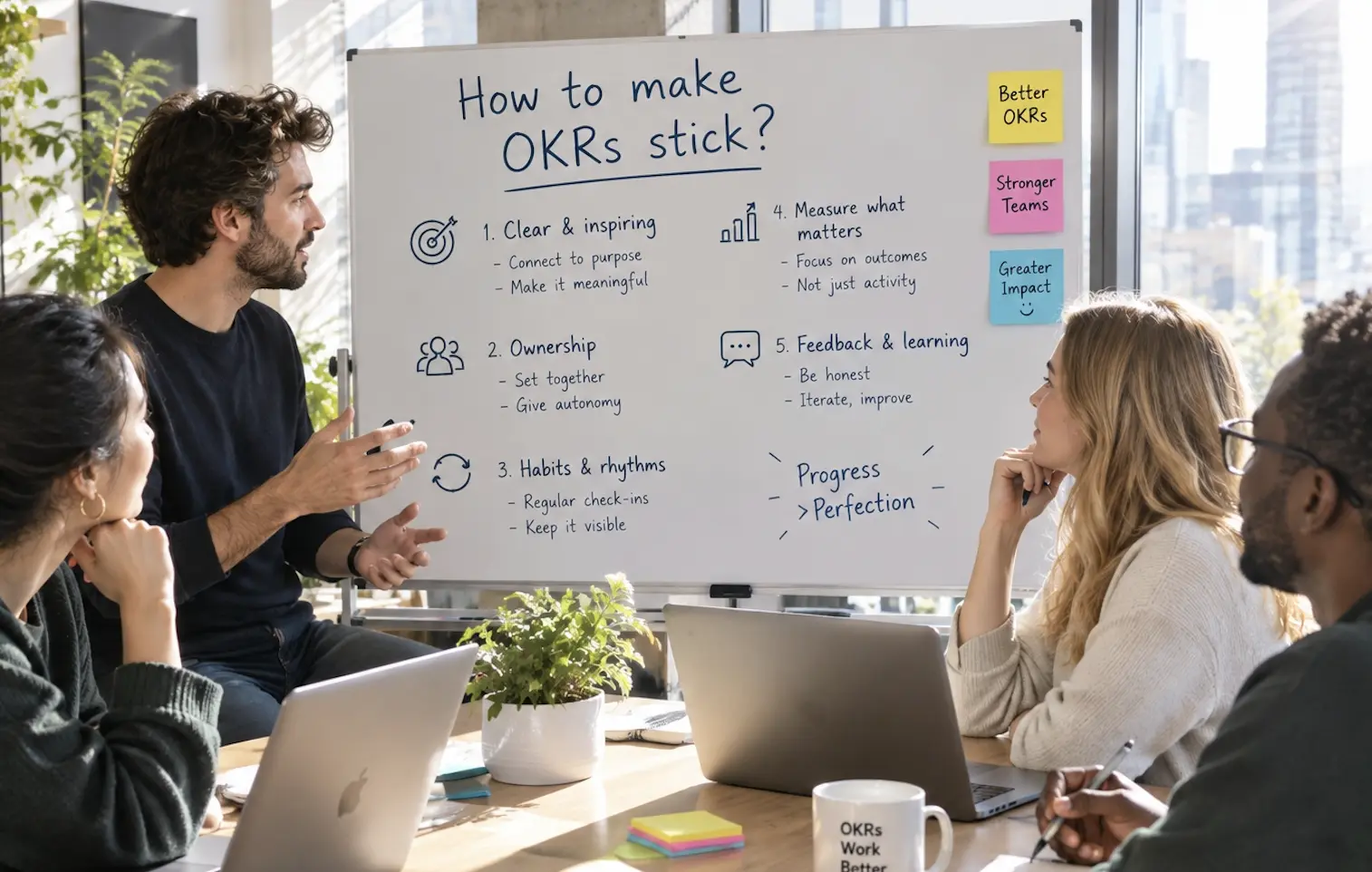
Strategy execution software is meant to close the gap between the plan and the work — but the usual result is strategy stored well and kept alive poorly. Across 180 strategy leaders, only 7% say daily work ladders up to strategy and 83% get no signal when a priority drifts. This guide reviews 10 platforms on whether they close that gap.
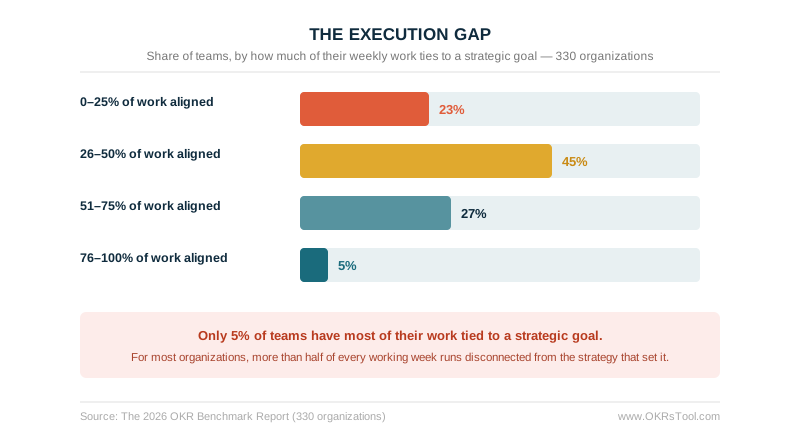
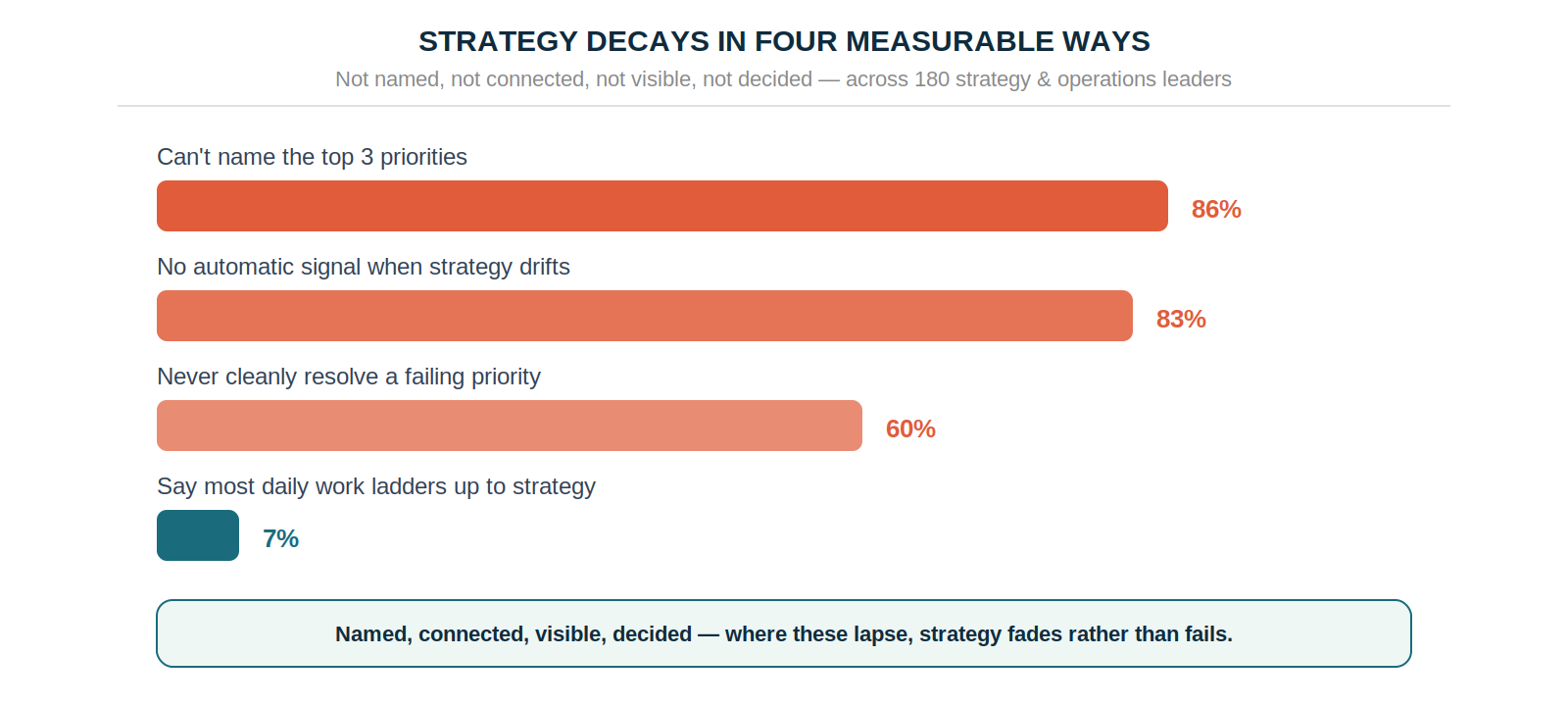
The Strategy Execution Benchmark 2026 puts hard numbers on the execution gap. In 86% of companies, most employees can't name the top strategic priorities. Only 7% of leaders say most of their teams' daily work ladders up to strategy. And when a priority starts failing mid-cycle, 60% of leaders say it's never cleanly resolved — it's quietly dropped or limps to the end of the quarter. Strategy doesn't fail at the offsite. It decays in the weeks after.
Strategy execution software tends to solve the planning problem rather than the execution one. These tools store strategy well and keep it alive poorly through the weekly work of 50 or 200 people — which is why 61% of leaders still run execution on spreadsheets, docs, or nothing central at all. That's the lens this guide uses: not features, not integrations, but whether the tool connects strategy to what actually gets worked on each week.
Every platform was reviewed on pricing, execution approach, and what real users report on G2, with any sales-demo-only tools clearly noted.
Quick Summary: Top 3 Picks
Why Trust This Guide?
I've spent more than 10 years working with OKRs and strategic planning — running goal programs for 60+ organizations, and as the founder of OKRs Tool, used by 300+ teams worldwide.
Every platform on this list was reviewed and compared — pricing, execution approach, and real user feedback from G2. Tools that required a sales demo to evaluate are clearly noted.
The benchmark data: ROI of OKRs: 2026 Benchmark Report (330 organizations). Organizations using purpose-built strategy execution software generate a 1:88 return against the same revenue baseline — compared to 1:25 on spreadsheets and 1:16 on enterprise software. The tool choice is not cosmetic.
That experience isn't just theory. Teams run their strategy execution on OKRs Tool every quarter, and the pattern in this guide — strategy connected to weekly work, ownership enforced, progress visible without a meeting — comes from watching what actually closes the gap in practice. Tinaba, an Italian fintech in Milan, is one example: they moved strategy, initiatives, and outcomes out of scattered presentations and spreadsheets into a single framework, and it changed how the whole company talks about progress.
"OKRs Tool helped us create a much stronger connection between strategy, execution, and measurable outcomes. What previously lived across presentations, spreadsheets, and meetings is now centralized in a shared framework that gives leadership and teams a consistent view of priorities and progress."

What Makes Strategy Execution Software Actually Work
Planning depth — how well you can document strategy, build maps, and set KPIs — is where most evaluations stop. But only 23% of leaders say strategy breaks at translation; 68% say it breaks downstream, in sustaining and measuring. What predicts returns is how well a tool holds strategy together between planning sessions. Six things determine that.
- Alignment visibility. Can every team member see how their work connects to strategic priorities without a meeting? In 86% of companies most employees can't name the strategy at all — so the tool either makes that cascade visible or it leaves the gap wide open.
- Weekly execution infrastructure. Strategy fails between planning sessions, where 17% of leaders can see progress live and the rest wait for a review. Tools that generate returns make weekly check-ins automatic — and teams with the habit complete 43% more goals than those reviewing monthly.
- Named ownership. Half of all goals have no named owner, and teams with clear single ownership see 26% higher completion. Software that enforces ownership before a goal goes live closes that gap structurally.
- Short feedback loops. When a priority is clearly failing mid-cycle, 60% of leaders say it's never cleanly resolved — it's quietly dropped or limps to quarter-end. The tools that work best run quarterly cycles with retrospectives that force a decision; teams that run them complete 30–45% more goals the next quarter.
- AI capabilities. 83% of organizations now use AI in their OKR process. Teams using AI for both goal-writing and mid-cycle analysis accept a low score on a missed goal only 14% of the time, against 35% for writing-only teams.
- Goal honesty. 92% of employees admit to gaming their goals, and 34% say nothing about how they work would change if their tracker were deleted tomorrow. Tools that keep goals visible and watched between reviews remove the conditions that make gaming rational.
At a Glance: Pricing and Execution Approach
The 10 Best Strategy Execution Software Tools
1. OKRs Tool
Best for: Growing teams (50–200 people) that need strategy connected to weekly execution
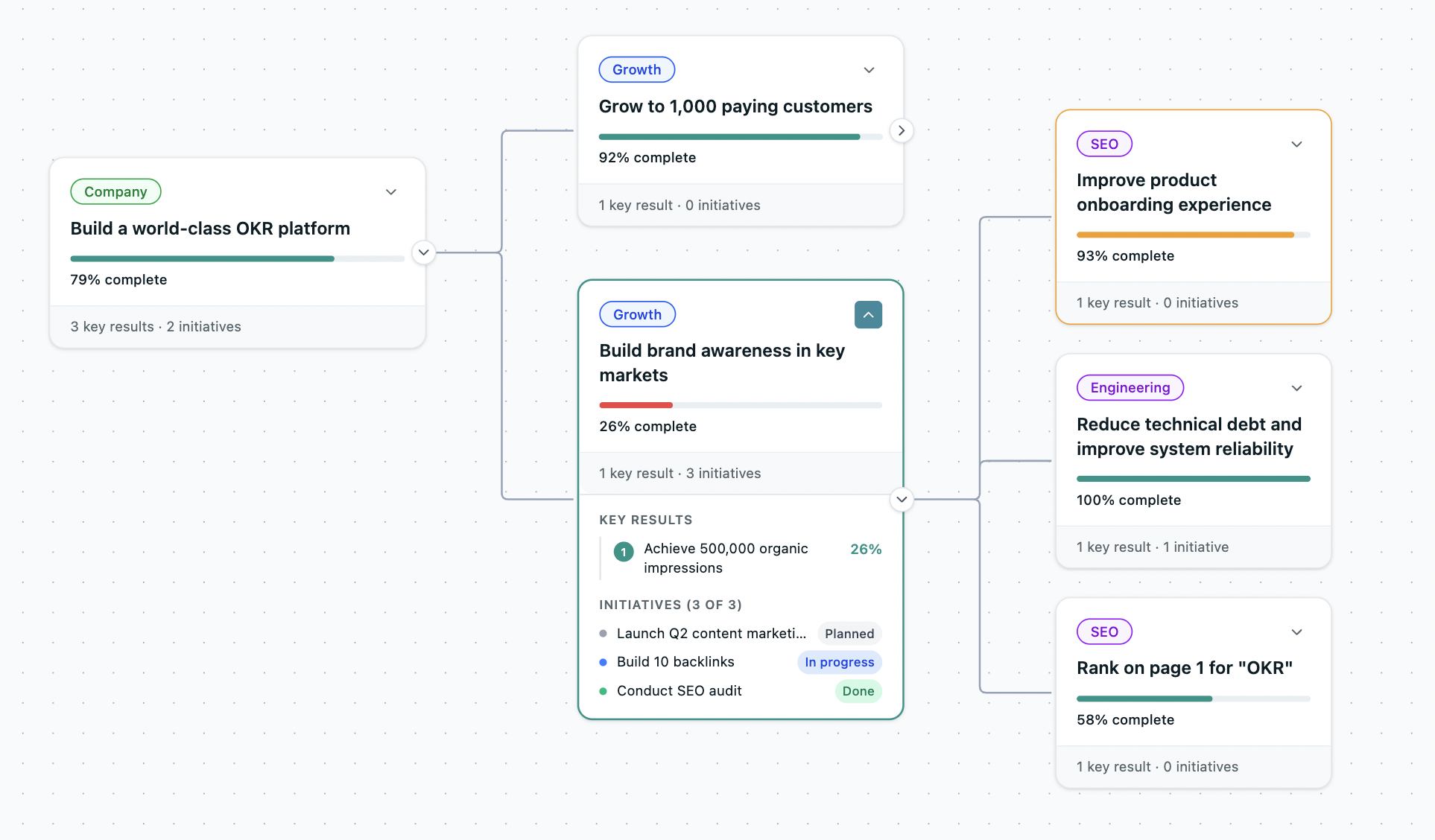
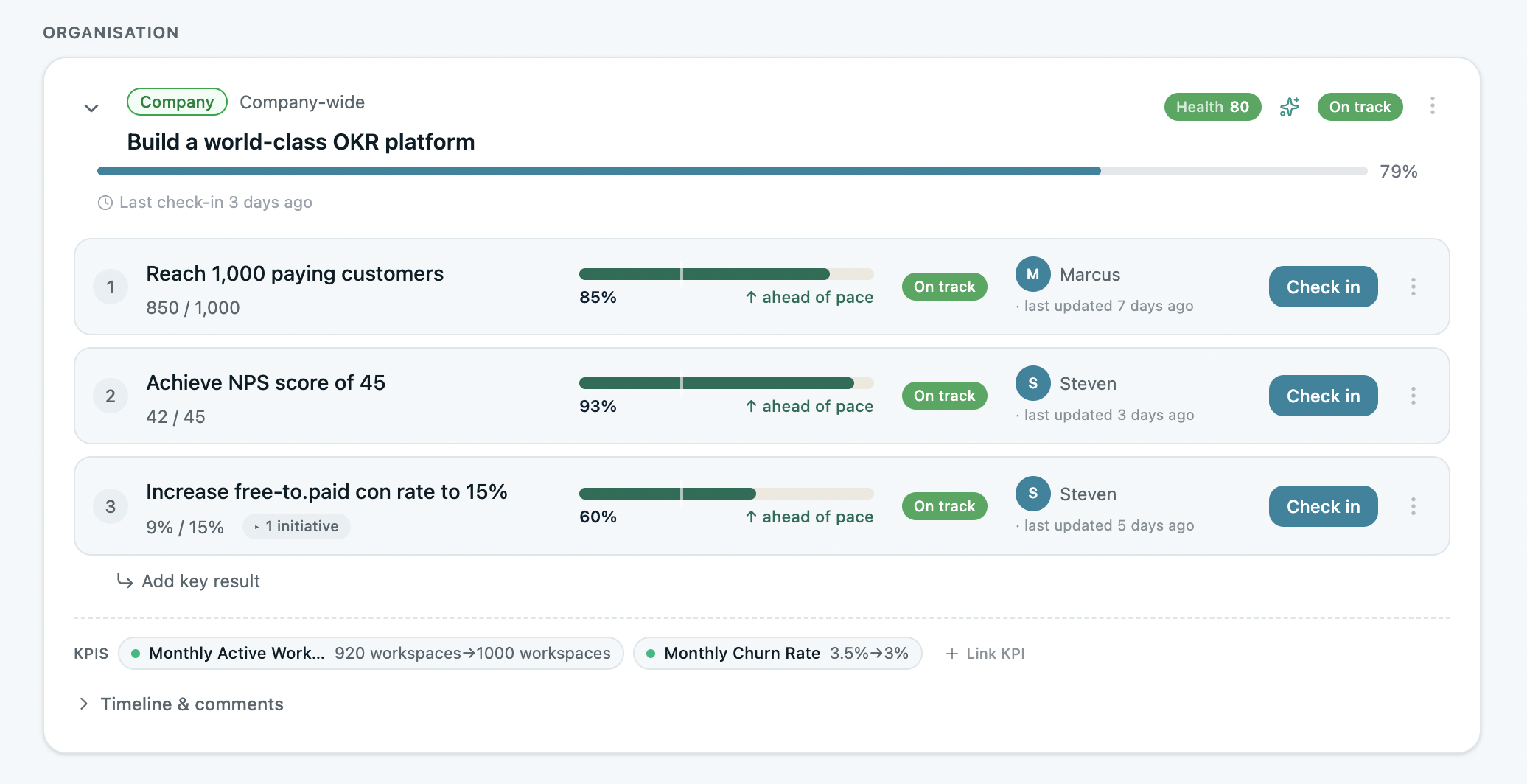
OKRs Tool is built for the specific breakdown point that planning tools miss: the handoff between leadership strategy and team-level work. Strategy lives in a slide deck. OKRs live in a tracker. By June nobody can tell whether the work matches the strategy that started the quarter.
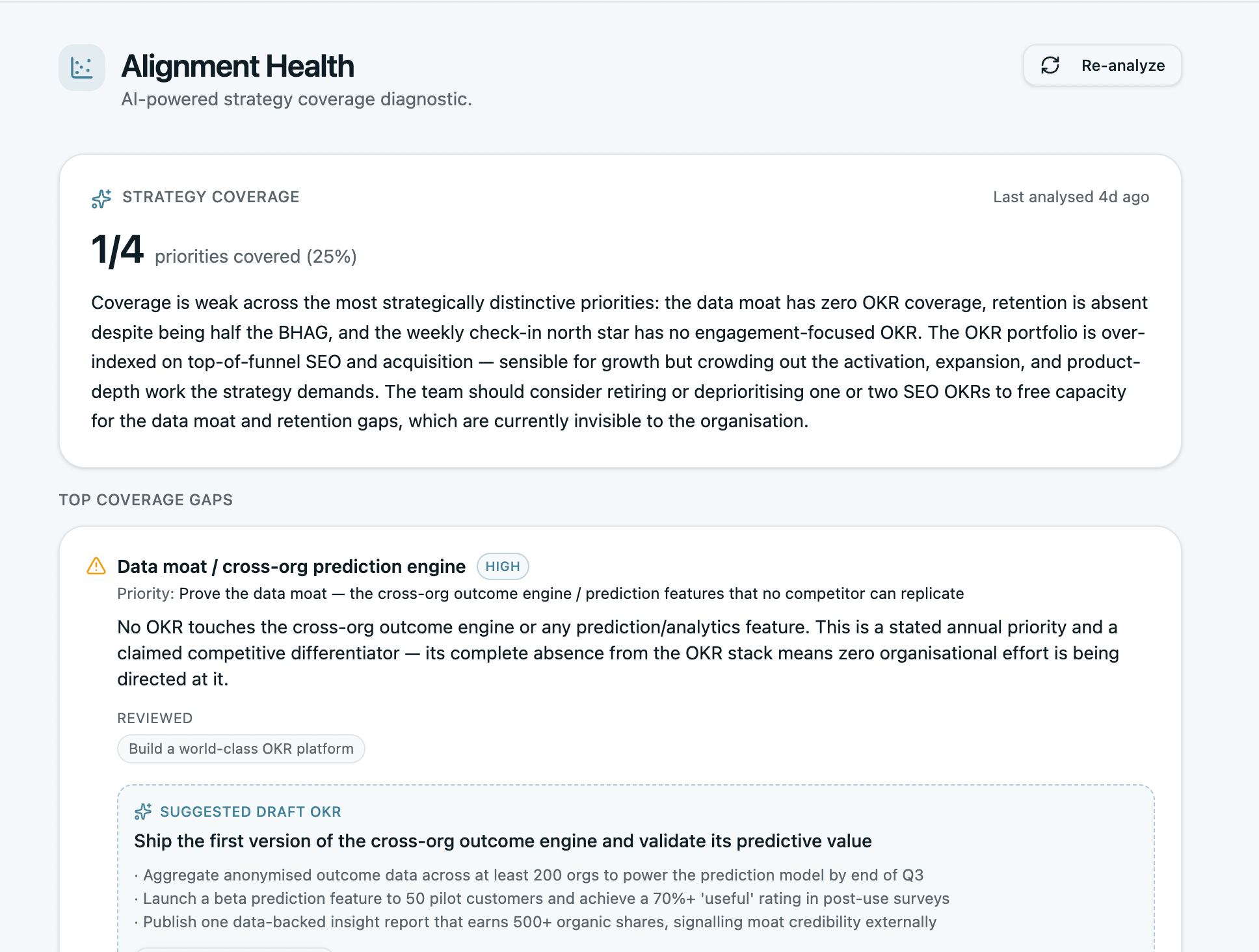
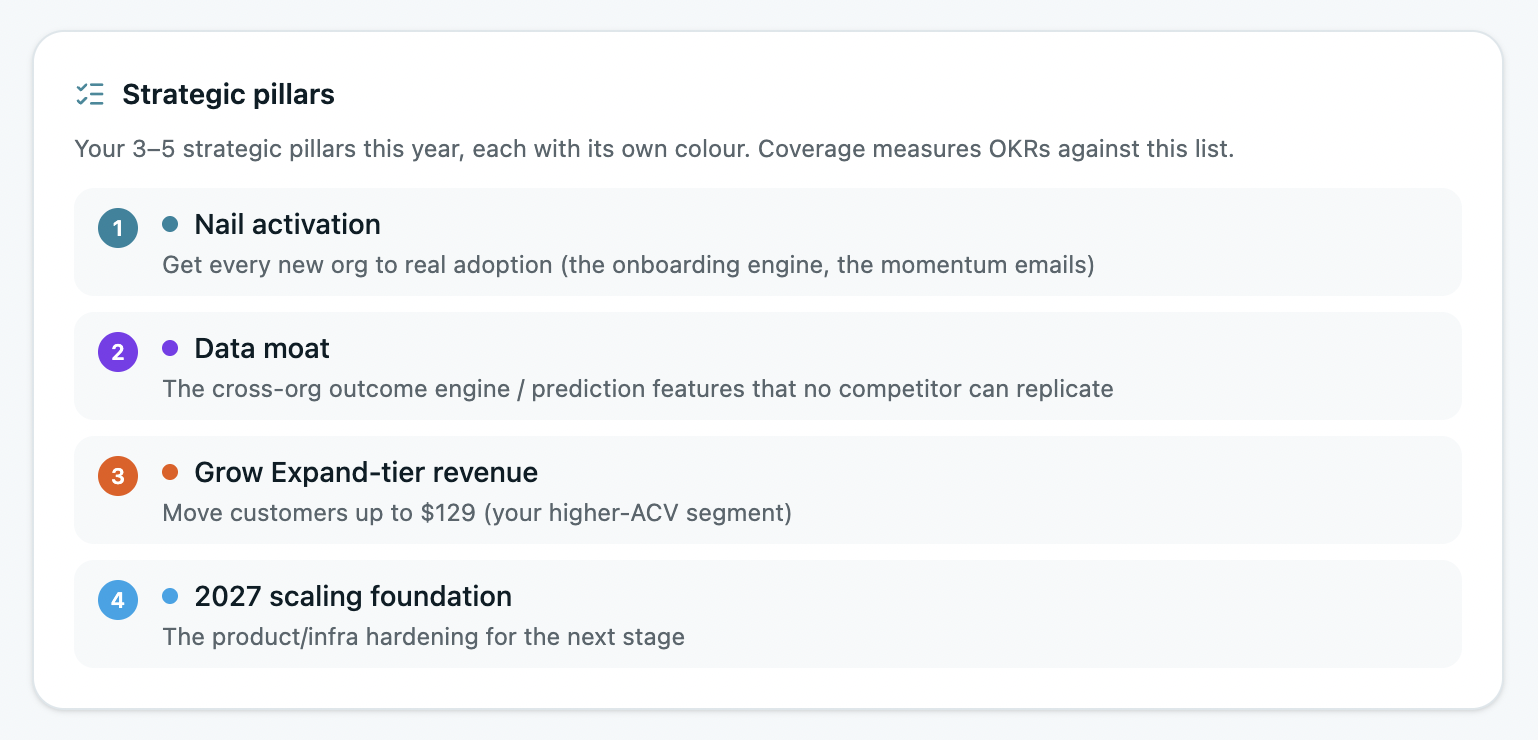
The Strategy section closes that gap with four connected views. The Strategy Canvas puts vision, mission, and strategic themes in a single structured view every team OKR links back to. The Timeline maps which milestones land in which quarterly cycle across multi-year horizons. The Cascade Map shows top-down how every team Key Result connects to a company Objective — and surfaces the orphan goals that don't. The Strategy Coverage diagnostic — unique to OKRs Tool — flags strategic themes with zero KR coverage before the cycle starts, not at the end when nothing can be done about it.
The benchmark data: organizations using OKRs Tool generate a 1:88 return on investment — more than five times the return of enterprise strategy software against the same revenue baseline. Trillium ran their first cycle with 130 employees and zero training sessions. See how it works →
Pricing: Flat pricing. From $129/month - Free 14 day trial. G2 Rating: 4.6/5.
2. Cascade
Best for: Enterprise teams that need dedicated strategy execution infrastructure
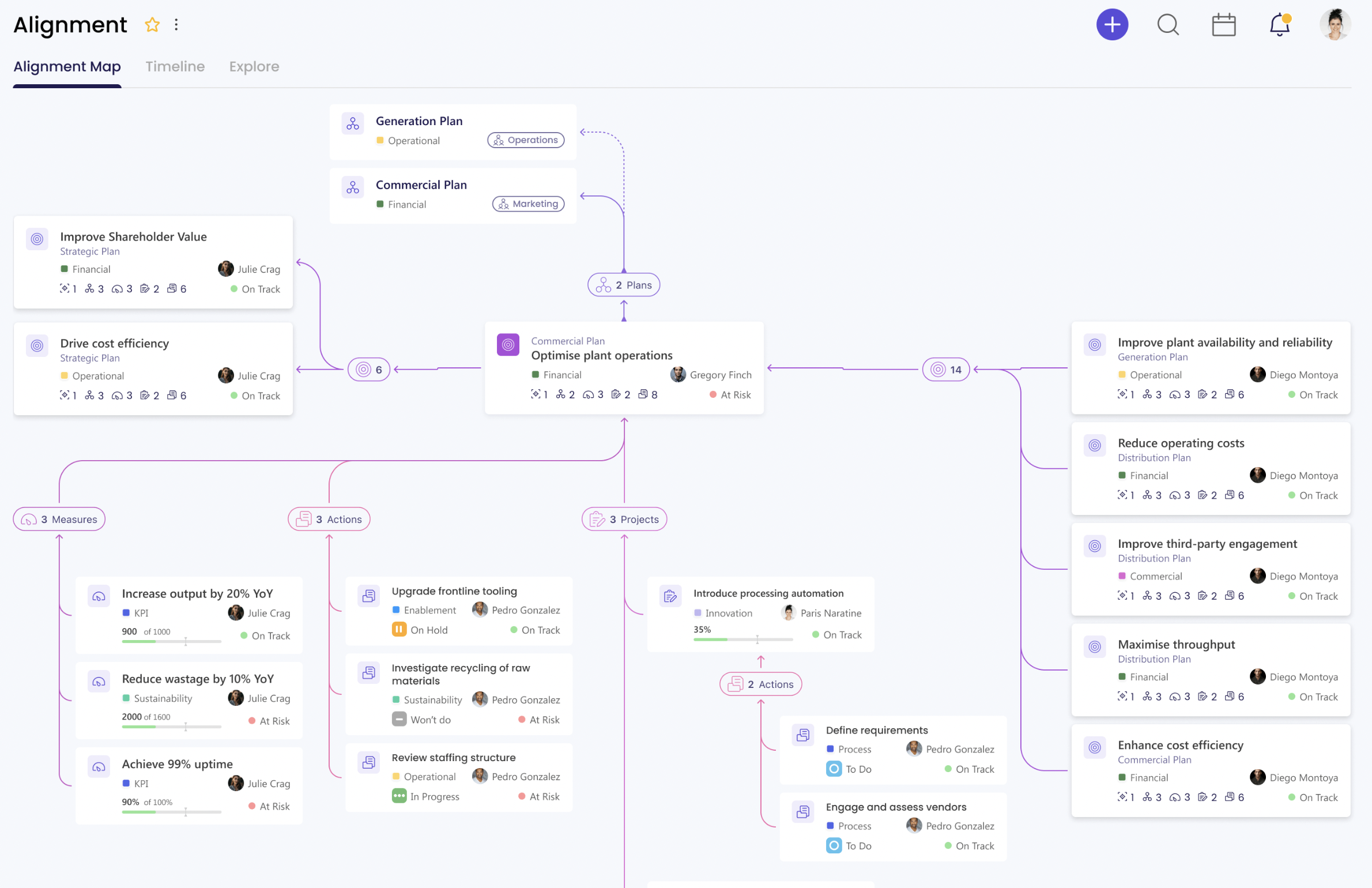
Cascade is a strategy execution platform connecting strategic themes to focus areas, initiatives, and measurable KPIs. It goes beyond OKR tracking into full strategic planning infrastructure — suitable for enterprise organizations with complex multi-level execution requirements.
The onboarding experience stands out from any other tool in this category. A few questions and the first strategic objective is live before fully entering the app.
Pricing: Custom quote (14-day free trial, no credit card required). G2 Rating: 4.6/5
3. Workpath
Best for: EU enterprises with data sovereignty and compliance requirements
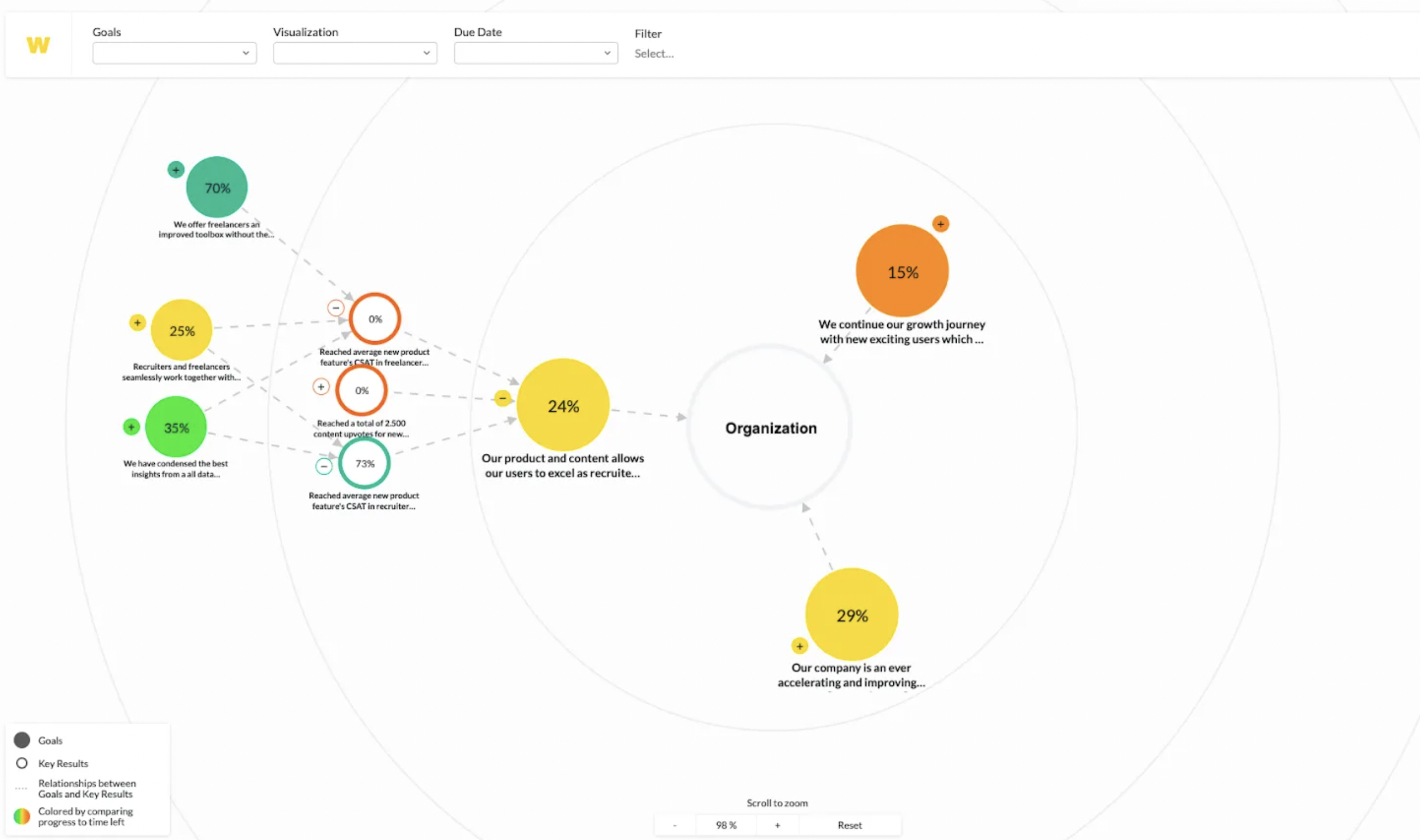
Workpath is the leading EU-based enterprise strategy execution platform — combining GDPR-compliant data residency with ISO 27001 and TISAX certification. For European organizations where data sovereignty is a non-negotiable requirement, Workpath removes the compliance risk that comes with US-headquartered alternatives.
Workpath helps businesses define and achieve their most important goals through better collaboration and strategy execution across departments — working closely with leading researchers and enterprises to guarantee European privacy standards.
The platform supports OKRs, KPIs, and initiatives with a comprehensive analytics suite giving executives visibility into when to adapt focus, budgets, or structures. Weekly check-in functionality structures progress discussions at team and individual level. Multiple methodologies supported — OKRs, Hoshin Kanri, SAFe — making it flexible for complex enterprise environments.
Pricing: From $7/user/month. Custom enterprise plans available. G2 Rating: 4.4/5
4. Perdoo
Best for: Mid-market organizations connecting strategy to OKRs and KPIs
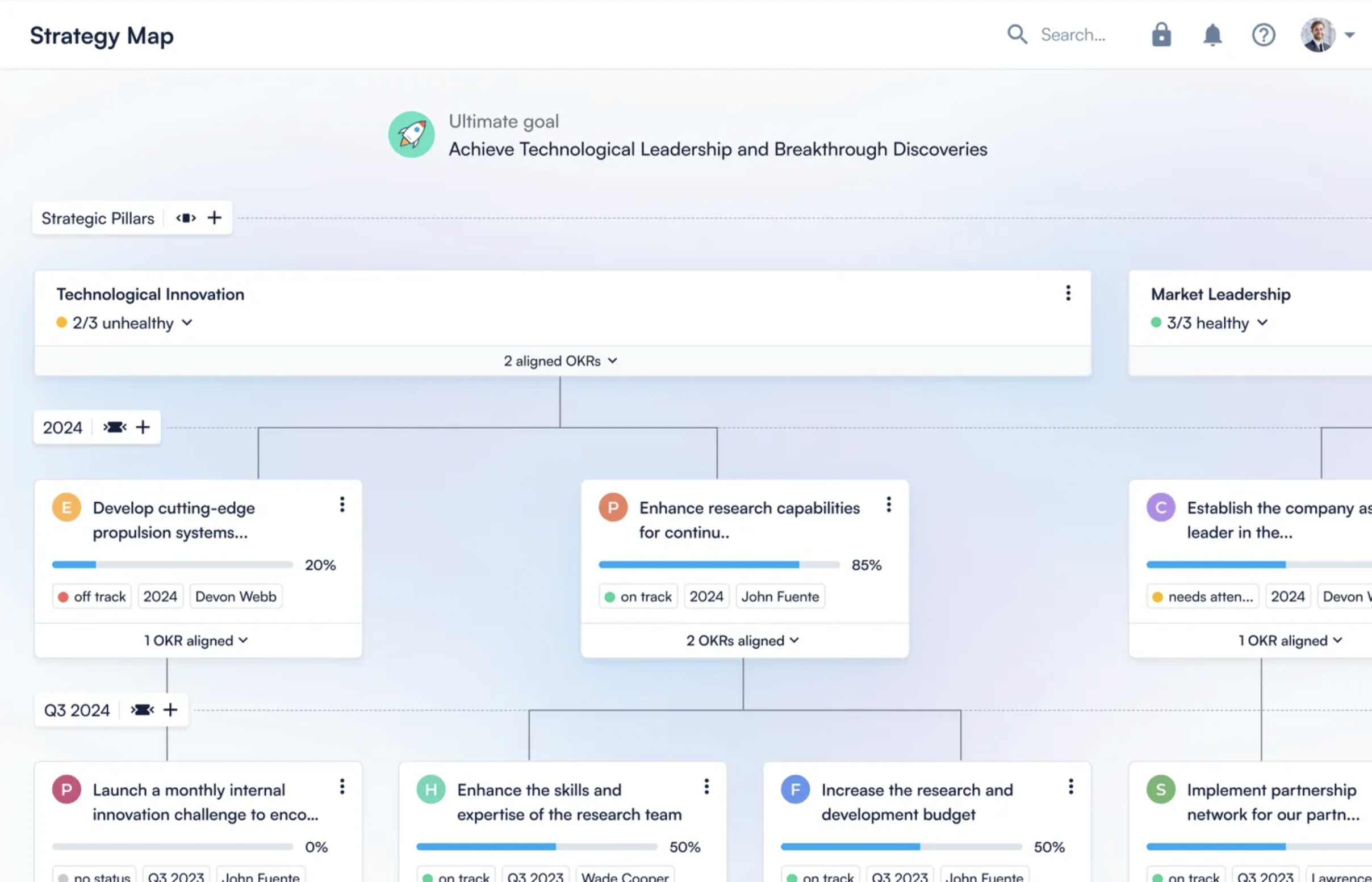
Perdoo connects strategic management to quarterly OKRs and KPIs through a visual strategy map. Every team's objectives connect upward to company priorities — making misalignment visible before it becomes a missed quarter.
The Kudos feature maintains engagement mid-cycle when motivation typically dips. The strategy map gives leadership a clear alignment view without a dedicated meeting.
Pricing: Free for up to 5 users. From €8/user/month (10-seat minimum). G2 Rating: 4.5/5
5. Futureworks
Best for: Nordic enterprises and public sector organizations connecting strategy to weekly execution
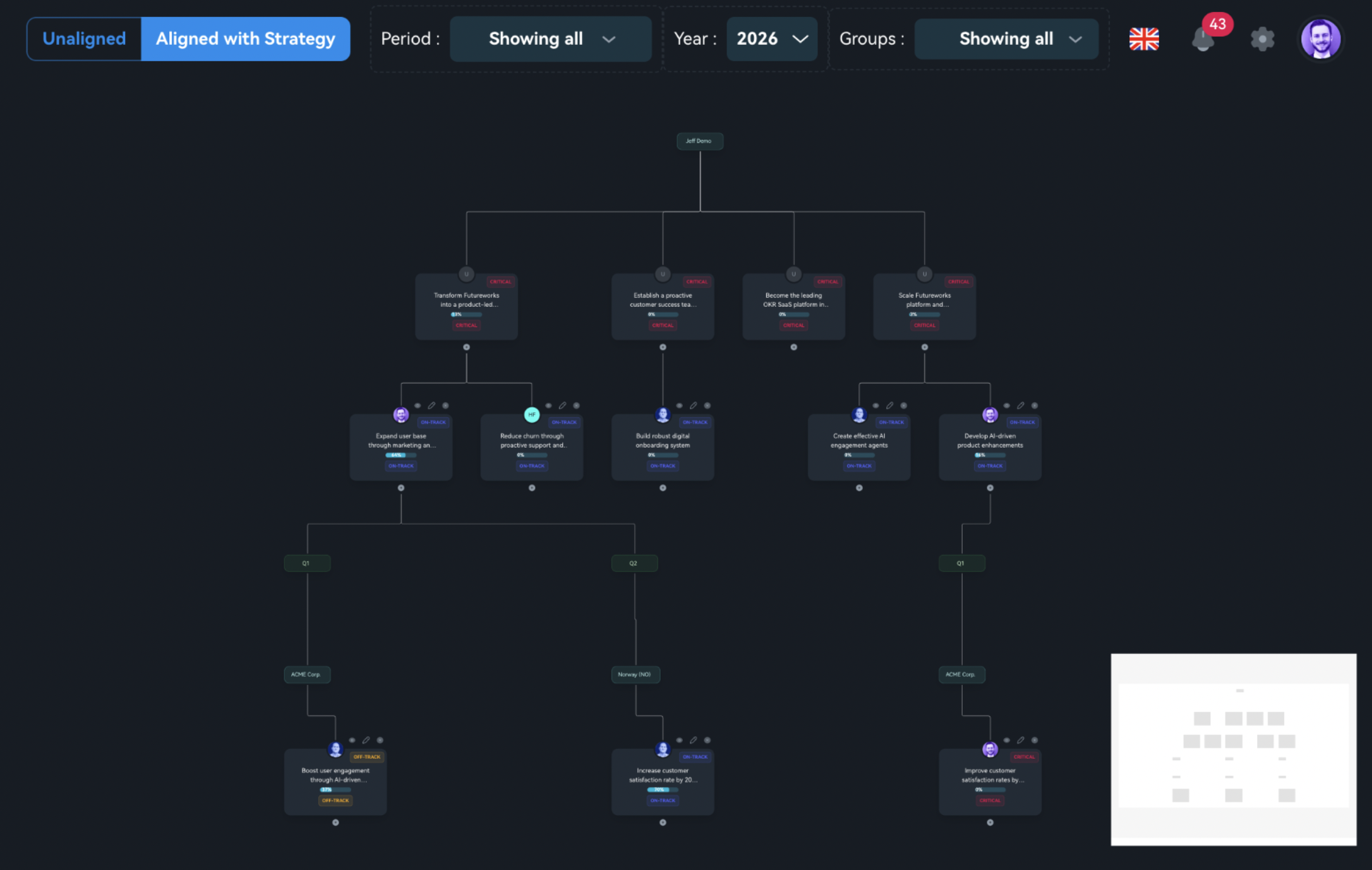
Futureworks connects strategy, OKRs, priorities, and meetings in one shared workspace, so the entire organization moves in the same direction and knows what matters right now. The Strategy Map connects multi-year strategic priorities directly to quarterly OKRs — making alignment visible from the C-Suite to every team.
The platform's Meeting Mode is a standout feature: structured agendas, timed agenda points, and follow-ups that do not get lost — delivered through Slack and Teams. For organizations whose primary execution failure is that the check-in never happens meaningfully, this is a structural fix.
The AI Context Engine translates uploaded strategy documents — PowerPoint, Word, or PDF — into actionable OKRs in seconds, reading meaning rather than just extracting words. Particularly strong for organizations with existing strategy decks that need translating into executable quarterly goals.
Pricing: Free for up to 5 users. From €13/user/month on paid plans. G2 Rating: N/A
6. Betterworks
Best for: Large enterprises where strategy execution feeds into performance management
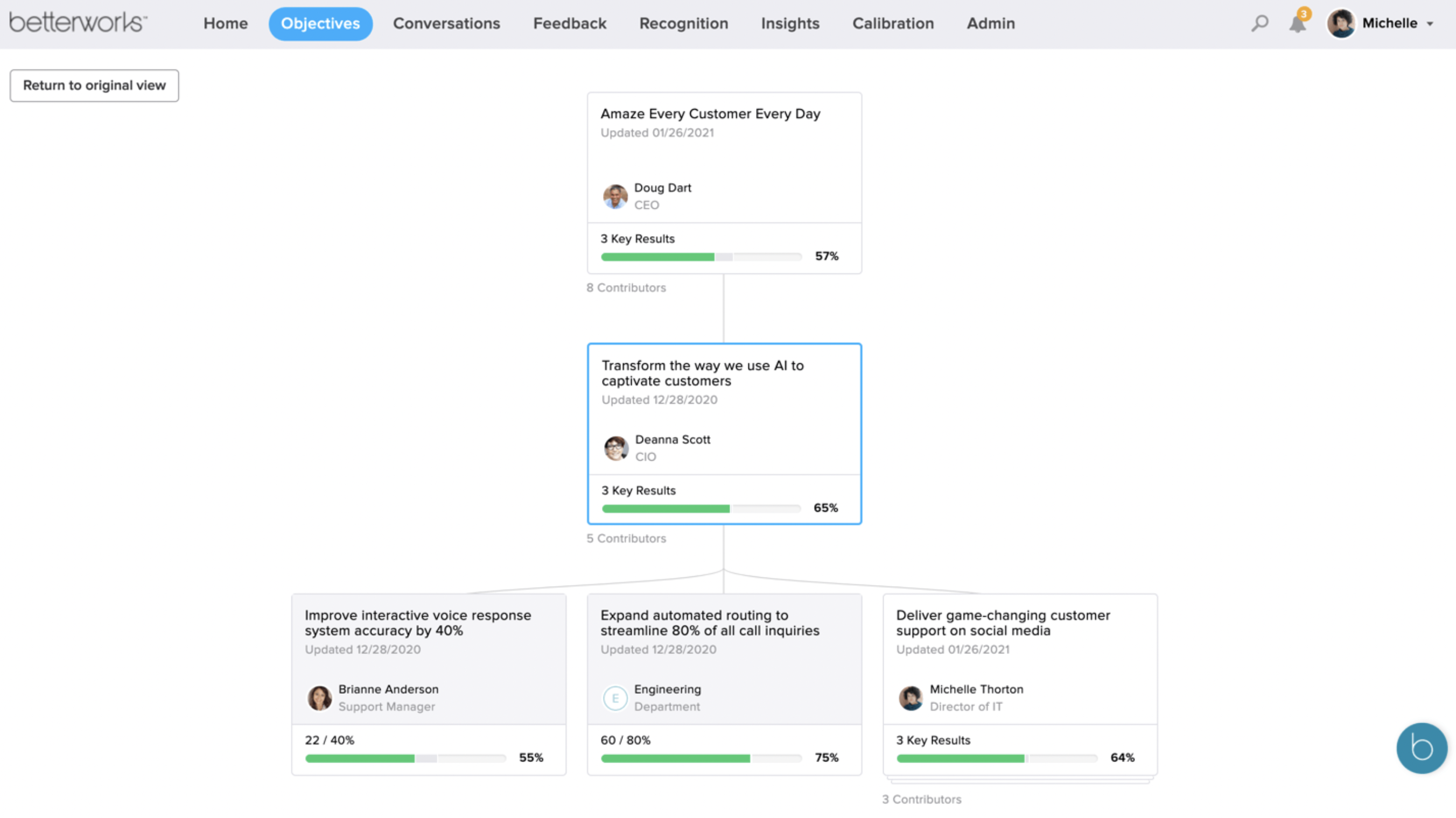
Betterworks is an enterprise-grade performance enablement platform that treats OKRs as the foundation of ongoing strategic conversations — connecting goal-setting with continuous feedback, structured check-ins, and performance calibration in one system.
AI-powered execution risk detection flags at-risk OKRs before they become misses. Manager Command Centre gives leadership consolidated visibility across all teams without a dedicated reporting cycle.
Note: Betterworks required a sales demo — not testable via self-serve. Included based on public information and G2 reviews.
Pricing: Custom quote (suited to 500+ employee organizations). G2 Rating: 4.4/5
7. Businessmap
Best for: Lean/agile teams connecting strategy directly to daily delivery work
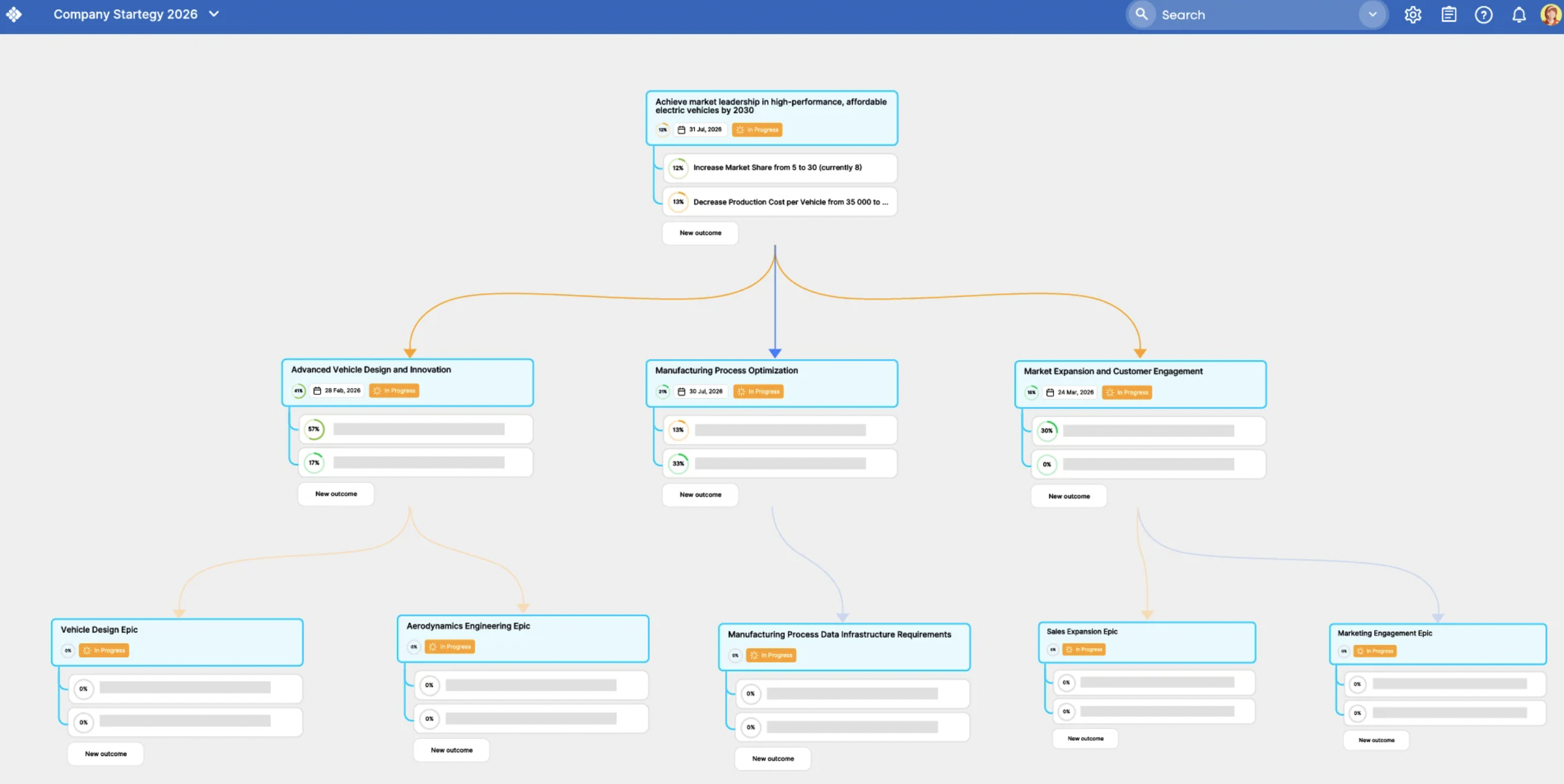
Businessmap connects OKRs to Kanban boards, portfolio tracking, and workflow management — making strategy visible inside the tools where work actually happens. For teams running agile delivery alongside strategic planning, the integration of both systems is deeper here than anywhere else on this list.
The widget library is outstanding — one-click access to workflow performance, initiative tracking, and goal progress in a single configurable view.
Pricing: From €10/user/month (minimum 15 users). 14-day free trial. G2 Rating: 4.5/5
8. Workboard
Best for: Enterprise teams that need executive-level strategy accountability
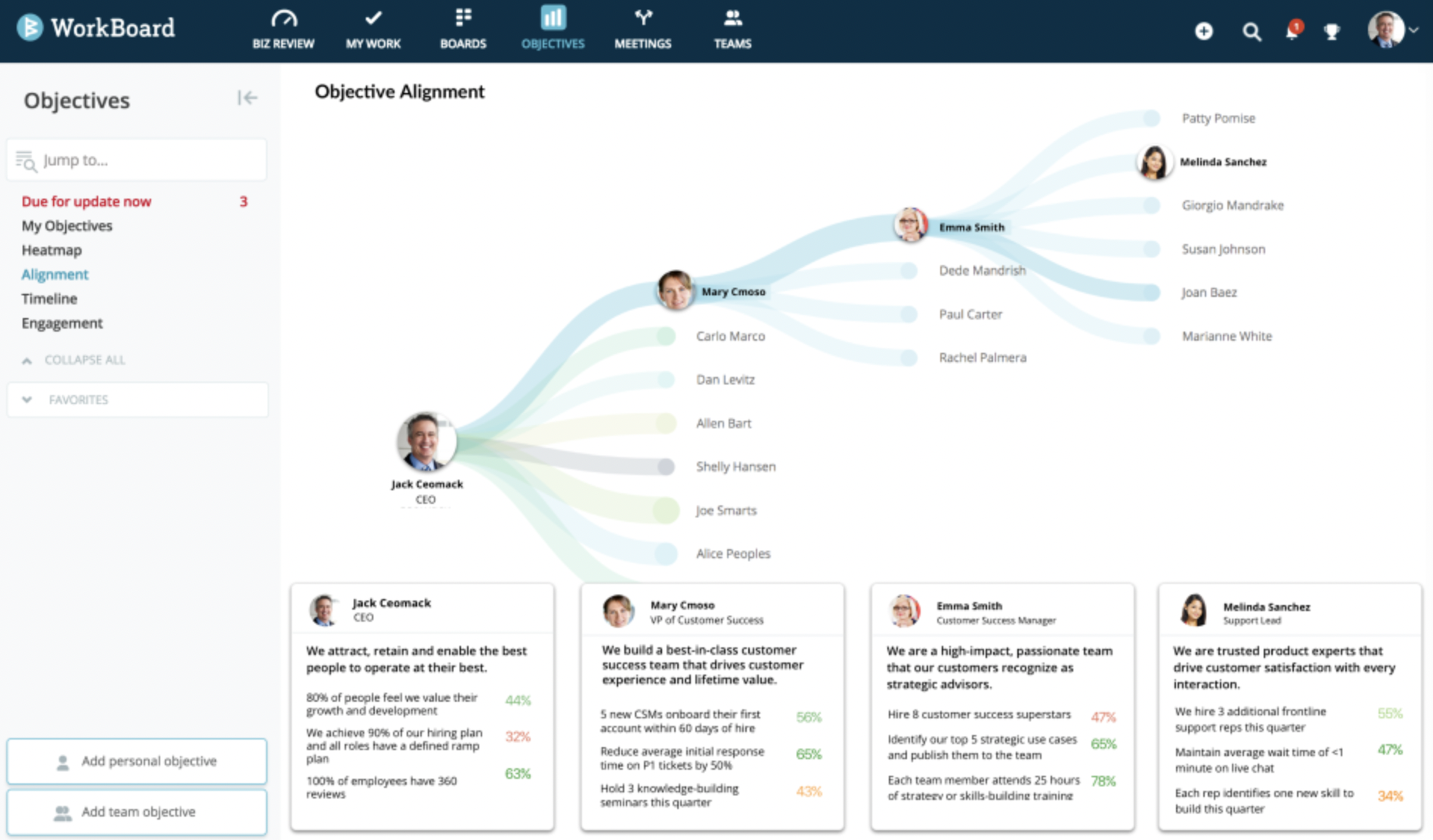
Workboard is built for exec teams rolling out strategy company-wide. Smart goals, executive dashboards, and team accountability loops make it a strong option where OKRs need to operate at the board and C-Suite level — not just the team level.
Note: Workboard required a sales demo — included based on public information and G2 reviews.
Pricing: Custom quote.G2 Rating: 4.3/5
9. Profit.co
Best for: Governance-heavy organizations that need OKRs, performance management, and task tracking in one platform
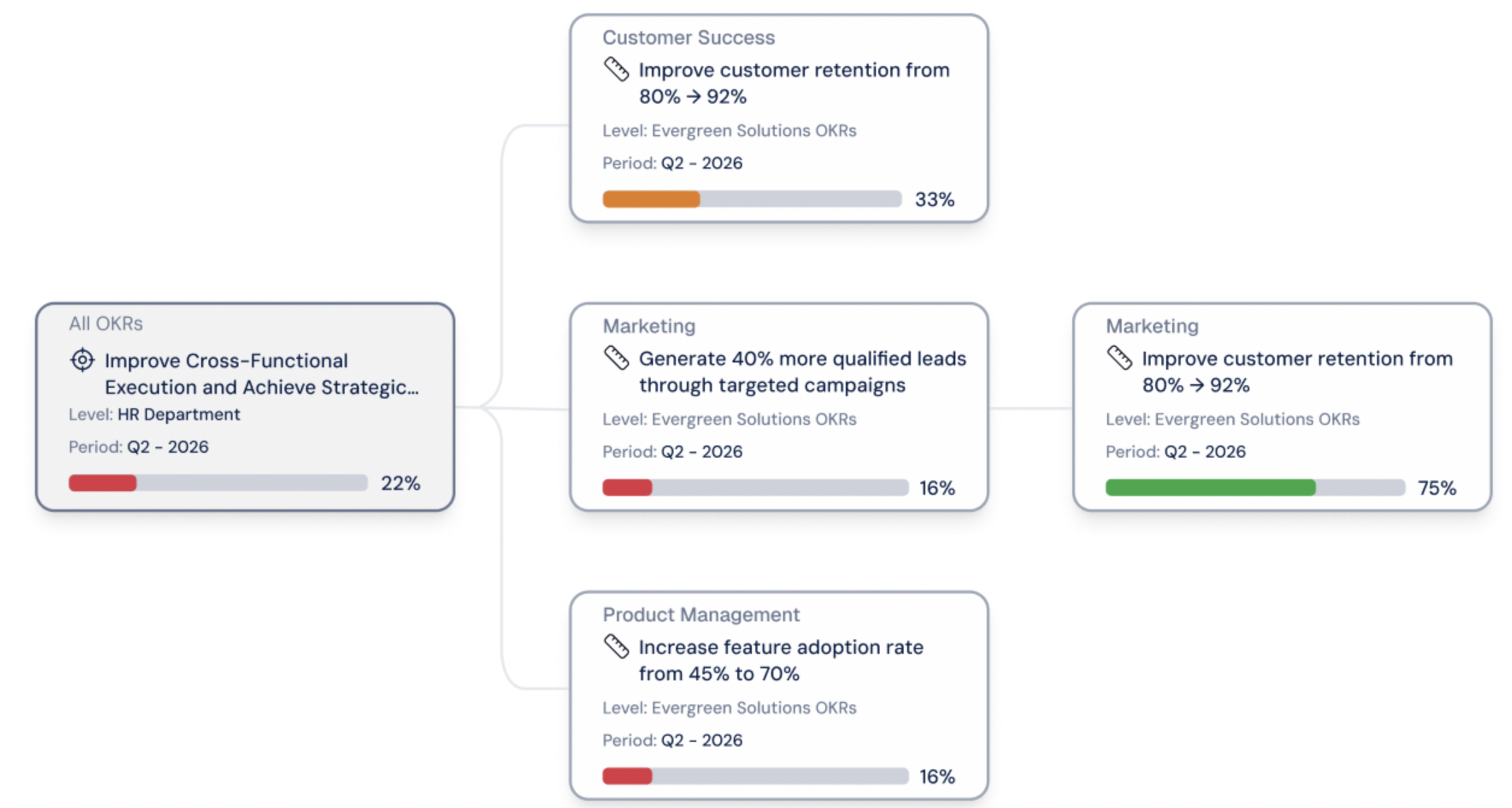
Profit.co is the most feature-complete OKR and performance suite in the mid-market — goals, KPIs, task management, performance reviews, and 1:1 management in one system. For governance-heavy organizations where strategy execution means connecting OKRs to every layer of operational and performance reporting, Profit.co provides structural depth that lighter tools don't offer.
Weighted OKR scoring lets organizations reflect the relative importance of different Key Results in the final cycle score — useful for leadership teams where not every KR carries equal strategic weight. Automated data feeds from integrated systems reduce the manual update burden that kills weekly check-in consistency at scale.
Pricing: Quote-based. Contact Profit.co for pricing. G2 Rating: 4.7/5
10. Spider Strategies
Best for: Mid-to-large enterprises and regulated industries running strategy on balanced scorecards and KPIs
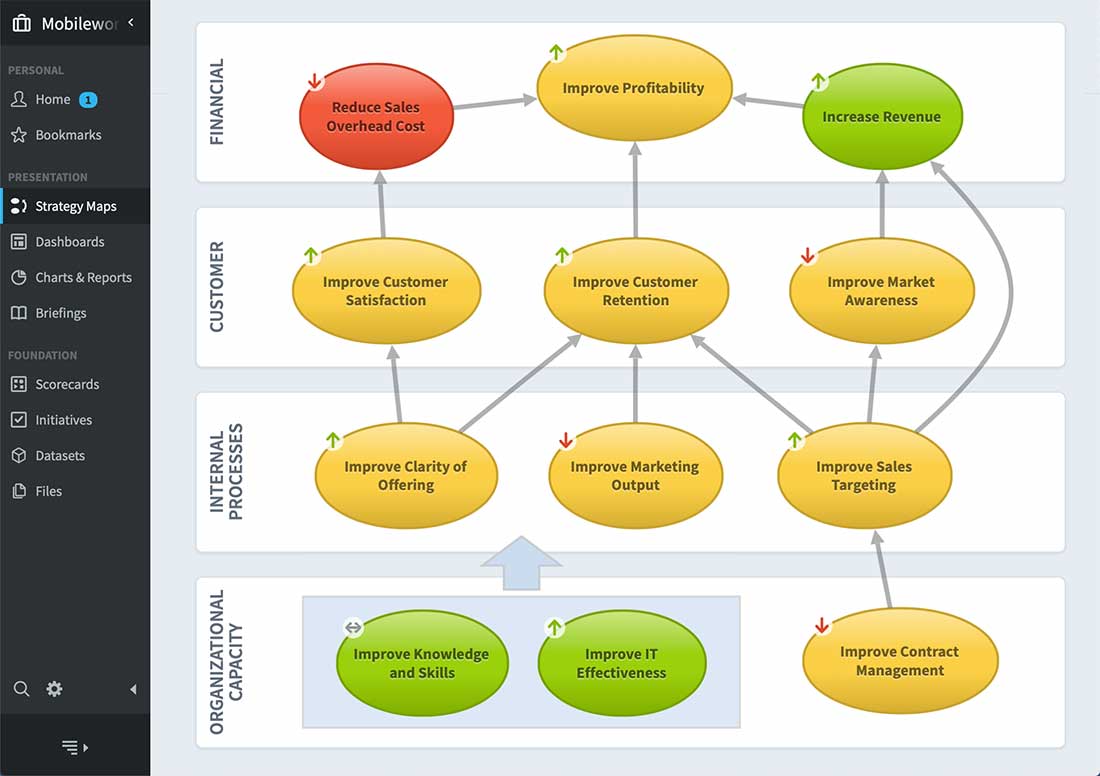
Spider Strategies is a strategy management platform built around balanced scorecards, KPIs, initiatives, and dashboards. It's aimed at mid-to-large enterprises — including government and regulated industries, backed by FedRAMP authorization — where the execution challenge is consolidating fragmented performance data into unified, real-time reporting rather than running lightweight quarterly OKRs.
The platform's strength is turning scattered metrics across departments and systems into automated dashboards, removing the manual data-collection burden that kills reporting consistency at scale. The trade-off is a heavier, reporting-led approach that suits organizations with a dedicated scorecard framework more than fast-moving teams wanting a five-minute weekly check-in.
Pricing: Custom quote. 30-day free trial available. Rating: 4.6/5
Where Strategy Execution Software Breaks Down
The benchmark data points to the same root cause across every failed strategy execution program: the plan stays in the planning tool and never reaches daily work. It's why only 17% of leaders learn a priority is off track from a tool that surfaces it automatically — the other 83% find out at a review, through an escalation, or when a customer tells them, by which point the drift has already happened.
Three questions reveal whether a platform will actually close that gap, before you sign a contract.
Does it have a built-in weekly check-in mechanism? Not a reminder email — a structured update flow that takes under five minutes per person and happens automatically without anyone scheduling it. This is what turns visibility from pull to push, so drift surfaces itself instead of waiting for a review.
Does it enforce ownership? A strategic goal without a named owner is a strategic intent. Software that requires ownership before a goal goes live closes the most common failure mode structurally — not through culture change.
Does it run on quarterly cycles with retrospectives? Annual strategic plans are obsolete before Q2. Quarterly cycles with end-of-cycle retrospectives produce the compounding improvement that makes strategy better every year — teams that skip them complete 30–45% fewer goals the following quarter.
The tool that gets all three right is the one that changes what your team works on next Monday. Everything else is documentation. The full benchmark breaks down all four decay points and the self-assessment behind them
Strategy That Survives Contact With the Quarter
Strategy execution software earns its place only by changing behavior, not by storing strategy. A tool that holds a beautiful plan nobody acts on has solved the wrong problem.
The organizations generating the highest returns — 1:25 ROI at the median, 1:88 with the right infrastructure — translate strategy into quarterly OKRs, assign clear ownership, review progress every week, and close every cycle with a retrospective. The sophistication is in the rhythm, not the planning.
For growing teams between 50 and 200 people, the OKRs Tool platform is the right fit on flat pricing. For enterprise strategy execution with complex hierarchies, Cascade. For data-driven organizations that need automated KPI tracking, Workboard.
The tool that gets weekly check-ins, enforced ownership, and quarterly retrospectives right is the one that changes what the team works on next Monday — everything else is documentation. See how OKRs Tool closes the gap between strategy and weekly work — free for up to 5 users.
Data: Data: Strategy Execution Benchmark 2026 (180 strategy and operations leaders), The ROI of OKRs: 2026 Benchmark Report (330 organizations), The 2026 OKR Benchmark Report (200 organizations), the OKR Intelligence Report 2026 (222 organizations), and The State of Goal Management (210 full-time employees at growing companies)