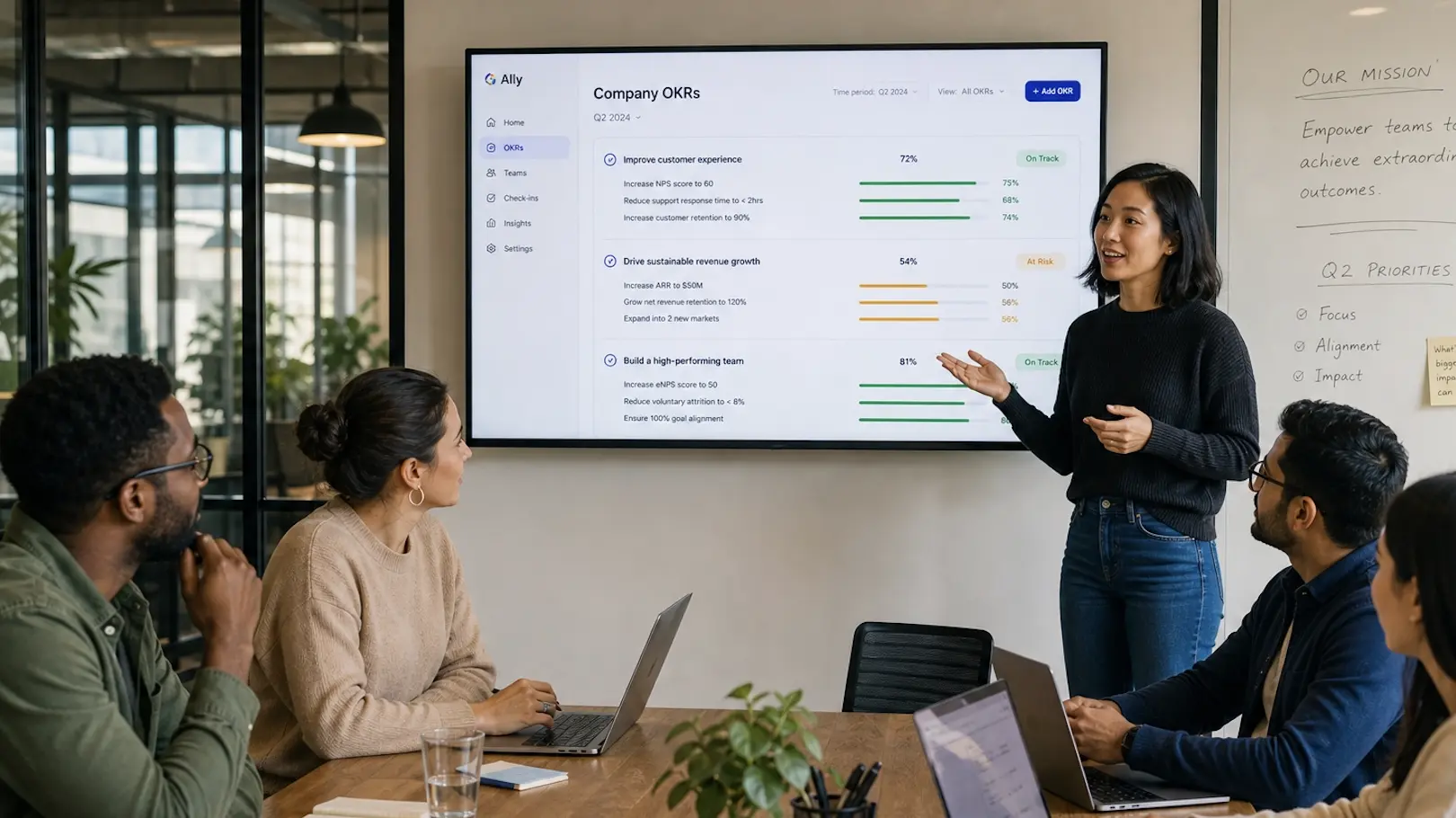
12 OKR platforms tested with real accounts — no demos — and ranked for how well they serve teams from 3 to 50 people. The criteria: setup speed, pricing fit, and whether the tool builds an execution habit or just documents goals.
I've spoken with hundreds of teams in their first or second OKR cycle. The pattern is consistent: the planning session works, the goals get written, and then the quarter starts and nobody updates anything.
The tool is almost never the problem in the first two weeks. It becomes the problem in week five, when updating progress takes more effort than telling your manager in Slack — and people choose Slack.
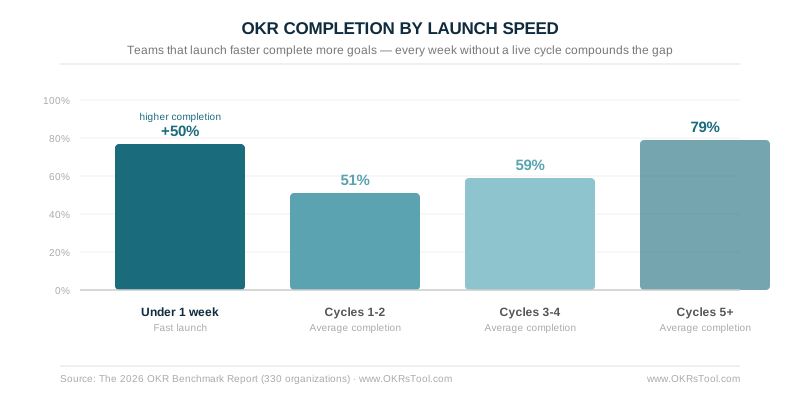
The 2026 OKR Benchmark Report across 330 organizations identifies what actually separates teams that hit 79% completion by cycle five from those that abandon the framework by cycle two: automated weekly check-ins (43% more completions), required ownership per Key Result (26% higher completion), and fast setup (50% higher completion for teams live in under a week).
Every tool on this list was evaluated against those three criteria — with a real account, no sales calls.
At a Glance: 12 OKR Tools for Startups
WHY TRUST THIS GUIDE?
I tested every tool on this list in a live account — not a demo. In each one I set up OKRs and ran a check-in, so the rankings come from actually using the core workflow a startup relies on, not from a feature sheet or a sales call.
Across more than 10 years working with OKRs, I've run goal programs for 60+ organizations and built OKRs Tool, now used by 350+ teams — so I've also seen the switching pattern from the other side, as teams migrate off tools that couldn't keep them checking in.
Each platform here is scored against the three things the 2026 OKR Benchmark Report ties to completion: automated weekly check-ins, required ownership per Key Result, and setup fast enough to launch in under a week. It's the same way small teams run their own cycles on the platform, like Guido's at Firmaway:
"OKRs Tool helped us centralise and track our OKRs in a simple yet impactful way — it's easy to visualise the progress of each area, and the initial setup was super easy."

The 12 Best OKR Tools for Startups
1. Tability
Best for: Small teams that need to build a consistent OKR rhythm without adding complexity
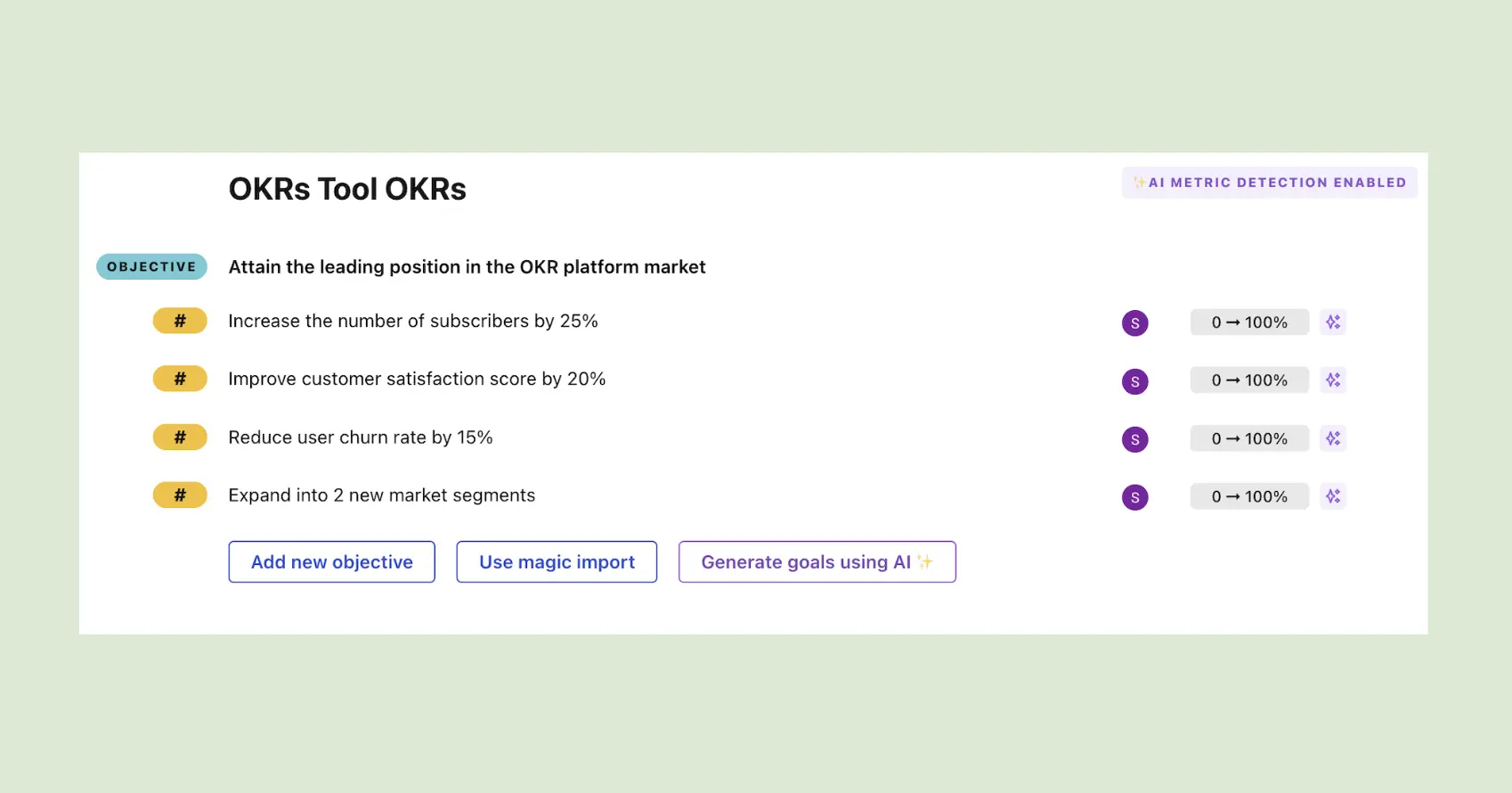
Tability is the most frictionless OKR tool on this list. Sign up, create a goal, connect Slack, and the weekly check-in runs itself from that point forward — no scheduling, no chasing, no meeting required.
The interface is modern, onboarding takes under 15 minutes, and the async nudge design is purpose-built for small teams that can't afford the overhead of a weekly OKR meeting.
The trade-off is depth: no performance reviews, no strategy maps, no KPI layer. If your team's primary need is building the habit of weekly goal tracking before adding more infrastructure, Tability is the right first tool.
If you need more than that — alignment visibility, ownership enforcement, performance conversations — you'll outgrow it within two or three cycles.
Pricing: From $6/user/month. 14-day free trial (credit card required).
2. Weekdone
Best for: Small founding teams that want weekly planning and OKR tracking in the same view

Weekdone is one of the longest-running OKR platforms on the market and it shows — the weekly planning layer, where team members set priorities and update OKR progress in the same dashboard, is a structural differentiator that most newer tools haven't replicated.
For founding teams that want the connection between daily work and quarterly goals to be explicit, that integration matters more than it sounds.
The free tier — up to 3 users — is genuinely usable for a very small team in its first cycle, and the statistics view showing engagement levels and update frequency is a useful accountability signal for team leads.
The limitations become real past 15 people: the interface is dated, per-user pricing at $10/month compounds quickly, and the platform hasn't kept pace with newer entrants on UX quality.
Pricing: Free for up to 3 users. $10/user/month after that.
3. OKRs Tool
Best for: Startups past 10 people that need alignment infrastructure and flat pricing as they scale
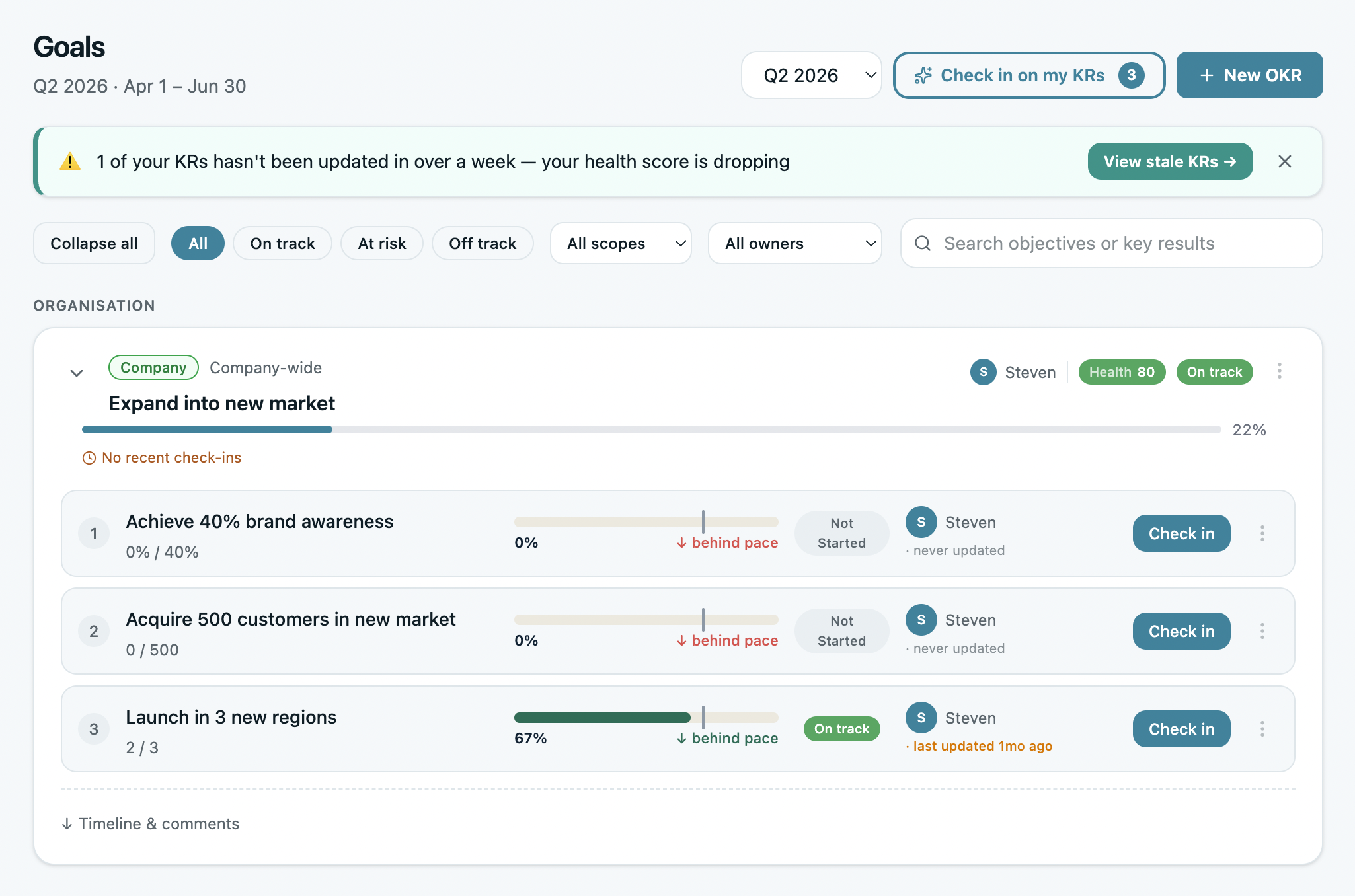
OKRs Tool is the right tool once a startup has outgrown the phase where everyone knows what everyone else is working on.
At 10–15 people, the informal alignment that holds a very small team together starts to break — and the features that matter become structural rather than cosmetic: required ownership per Key Result, automated Slack nudges, and a live alignment map that shows leadership what's on track without a status meeting.
The flat pricing — $49/month for the whole organization regardless of headcount — removes the per-user growth tax that makes most tools expensive exactly when the team is growing fastest.
Free for up to 5 users, which covers the founding team before the tool needs to earn its keep. The ROI data shows organizations using purpose-built OKR software at this stage generate a 1:88 return on investment.
Pricing: Free for up to 5 users. $49/month flat for 6–50. $129/month for 51+.Free trial: Yes — free tier, no credit card required.
4. Loach
Best for: Very small teams (3–5 people) that want to connect weekly priorities to quarterly goals

Loach is built for the phase before a startup needs organizational infrastructure — the 3–5 person team where the primary challenge is maintaining focus on what matters this week versus what matters this OKR cycle.
The weekly planning view surfaces OKR priorities at the start of each week alongside daily work, which reduces the cognitive overhead of maintaining the connection between strategy and execution manually.
Check-ins have their own spot in the sidebar — not buried inside the OKR view — which is a small design decision that makes a real difference for teams building the habit for the first time.
The feature set is thin: OKRs, initiatives, check-ins, a leaderboard. No integrations, no performance layer. For a 3–5 person team in its first cycle, that's a feature not a bug — but it means moving on once the team grows.
Pricing: Free for up to 5 users. €2.99/user/month after that.Free trial: Yes — free tier.
5. SugarOKR
Best for: Founding teams testing the OKR framework with zero setup friction

SugarOKR is the lowest-barrier entry point on this list. No onboarding sequence, no configuration overhead — sign up and have a live goal in under five minutes.
The progress bar slider with colour-coded status labels (On Track, Behind, At Risk, Back Burner) is the kind of simple, intuitive design that gets skeptical team members to actually update their Key Results without needing to be trained.
The free plan is genuine — not a crippled trial — which matters for early-stage teams evaluating the OKR framework before committing to any paid tool.
The limitation: no automated check-in nudges and no way to add a note to a progress update, which means the weekly habit depends on discipline rather than infrastructure. Use it to test whether your team will engage with OKRs at all — then move to something with more execution structure once the habit is proven.
Pricing: Free plan available. Paid plans on request.Free trial: Yes — free plan.
6. The North
Best for: First-cycle teams that need to see what good OKRs look like before writing their own
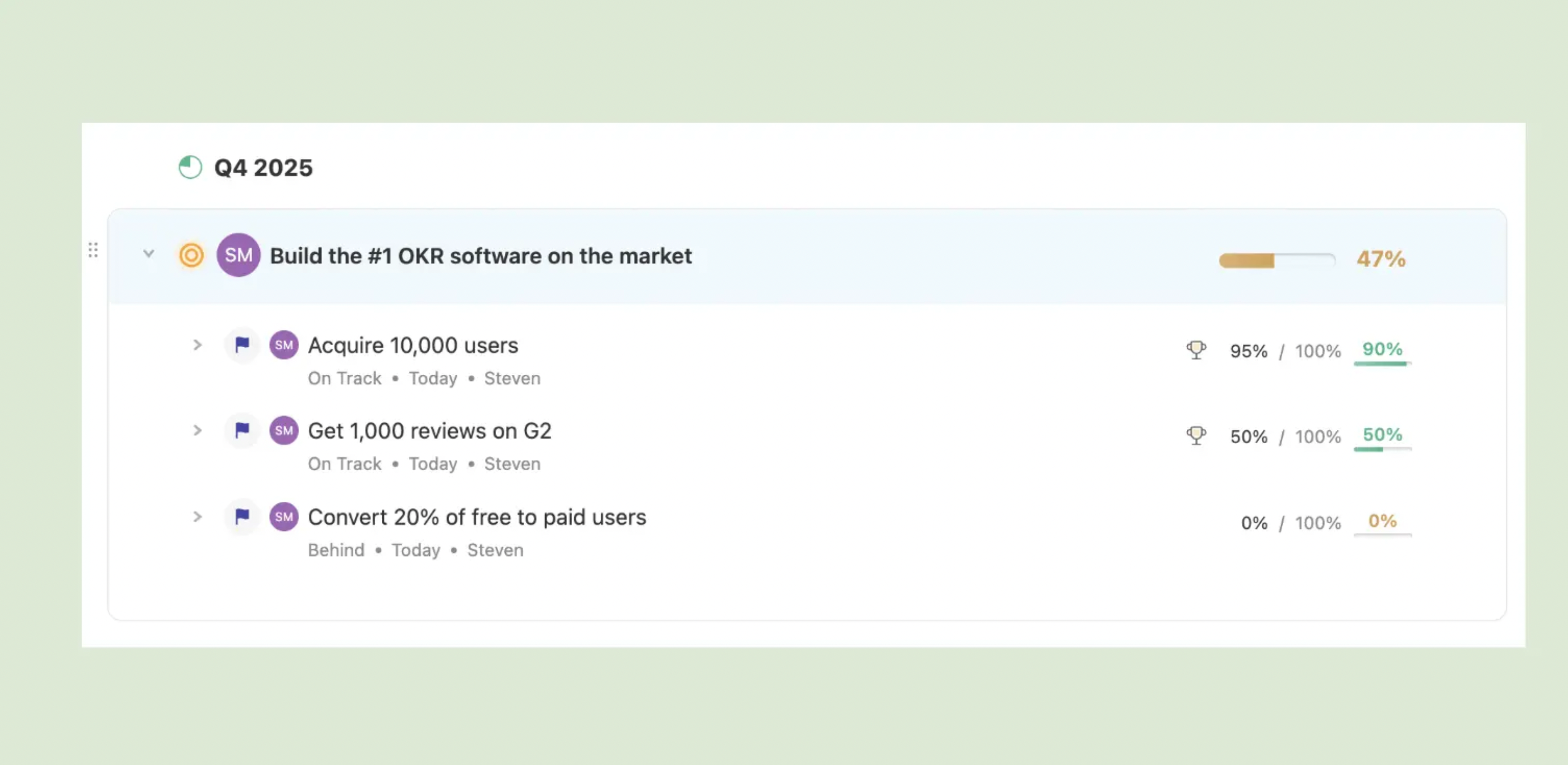
The North's standout feature isn't a feature at all — it's the demo workspace that loads on sign-up, showing a fully populated example of what a real team's OKRs should look like before you've entered a single goal.
For founding teams adopting OKRs for the first time, the blank-canvas problem — staring at an empty goal-setting tool and not knowing where to start — is a genuine barrier to adoption. The North solves it better than any other platform on this list.
The interface is clean and minimal, and the free tier for up to 5 users makes it accessible for small teams evaluating without budget.
The limitation is execution infrastructure: Key Result updates require navigating to an edit screen rather than logging directly, no automated check-in nudges, and limited analytics past the first cycle.
Pricing: Free for up to 5 users. $7/user/month after that.Free trial: Yes — free tier.
7. BOJA OKR
Best for: Bootstrapped teams that want a permanently free OKR tracker with real reporting
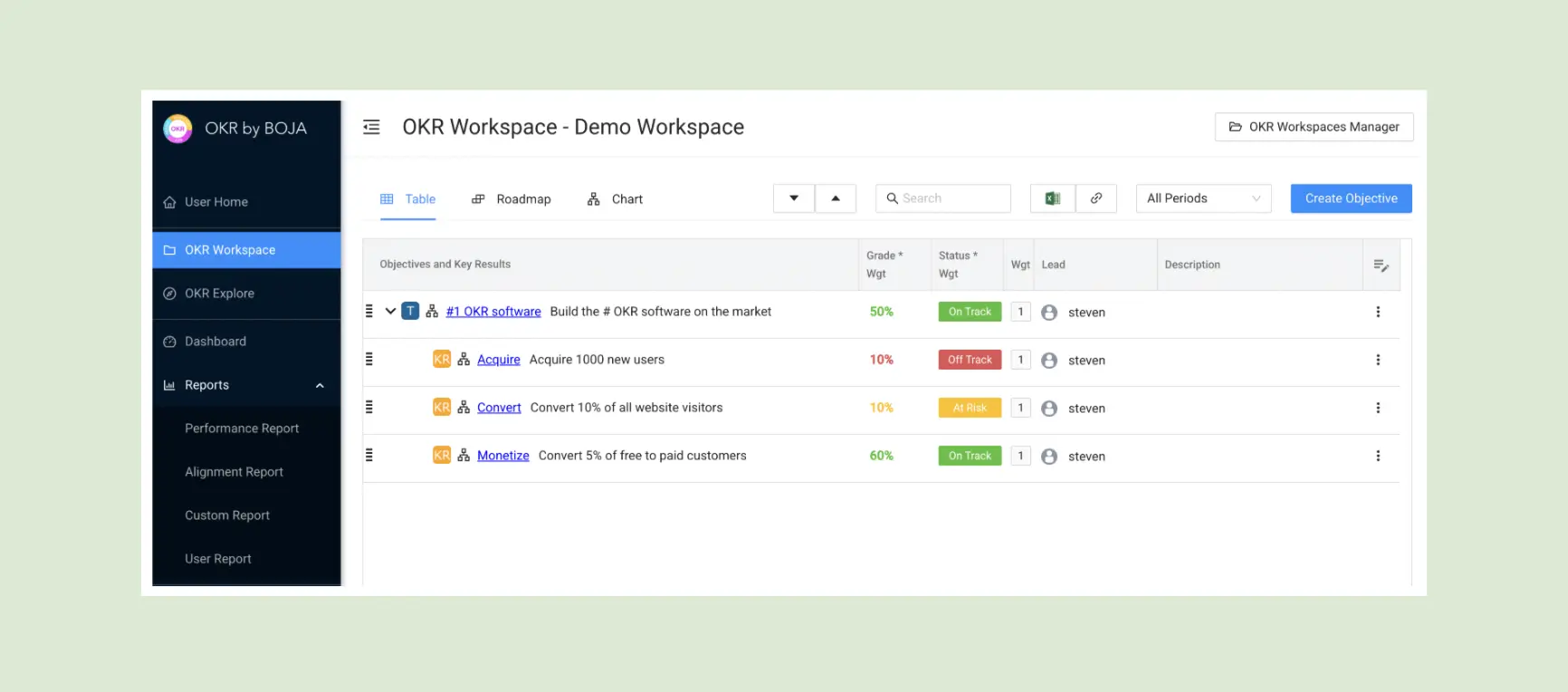
BOJA is the most underrated tool on this list. Free forever — not a free trial, not a limited free tier — with OKR tracking, progress reporting, and a custom report builder that most paid platforms don't match.
For bootstrapped teams that can't justify a software budget in the first year, BOJA provides enough structure to run a real OKR programme without per-user fees or time-limited trials.
The design is dated — the interface looks more like a spreadsheet than a modern SaaS product — and the visual quality creates the impression that the tool is less capable than it actually is.
Worth trying before paying for anything else. If the reporting depth isn't enough and the interface creates adoption friction, that's when a paid tool earns its place.
Pricing: Free forever.Free trial: N/A — permanently free.
8. SimpleOKR
Best for: Teams that want predictable flat pricing and no feature overhead as headcount grows
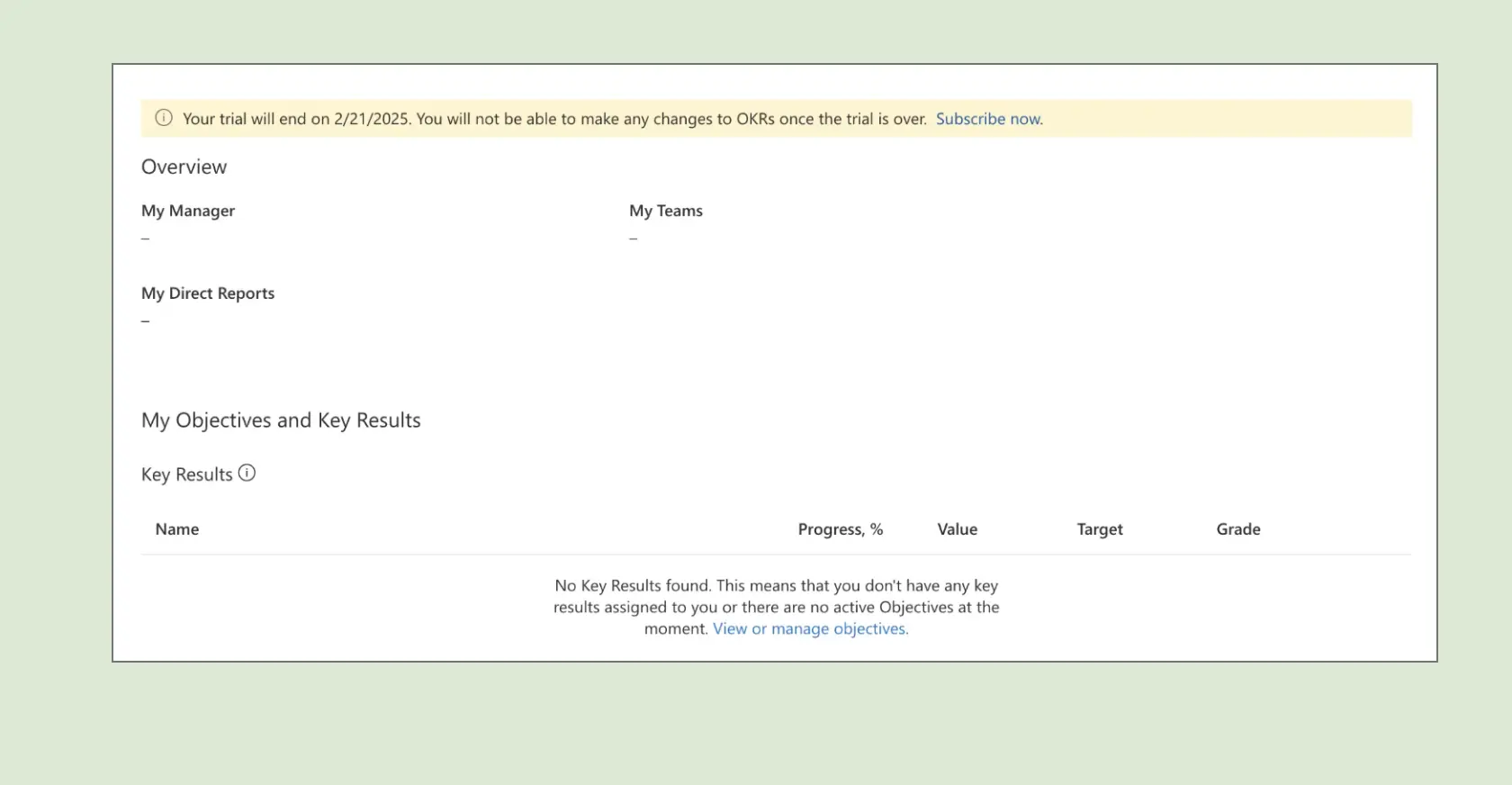
SimpleOKR does one thing well: keeps the cost of OKR software flat regardless of how many people use it.
At $49.99/month for unlimited users, a 40-person team pays the same as a 5-person team — which removes the per-user anxiety that makes most tools feel like a growth tax exactly when the company is scaling fastest.
The interface is minimal and requires no training, which matters for teams that don't have time to onboard people into new software mid-quarter.
The trade-off is real: no automated check-in nudges, no AI features, no alignment map, no performance layer. Not the tool that gets a team to 79% completion — but a solid, affordable place to run structured OKR cycles without worrying about the bill.
Pricing: $49.99/month flat (unlimited users). No free tier.Free trial: No.
9. Range
Best for: Remote-first founding teams that want daily team connection alongside OKR tracking
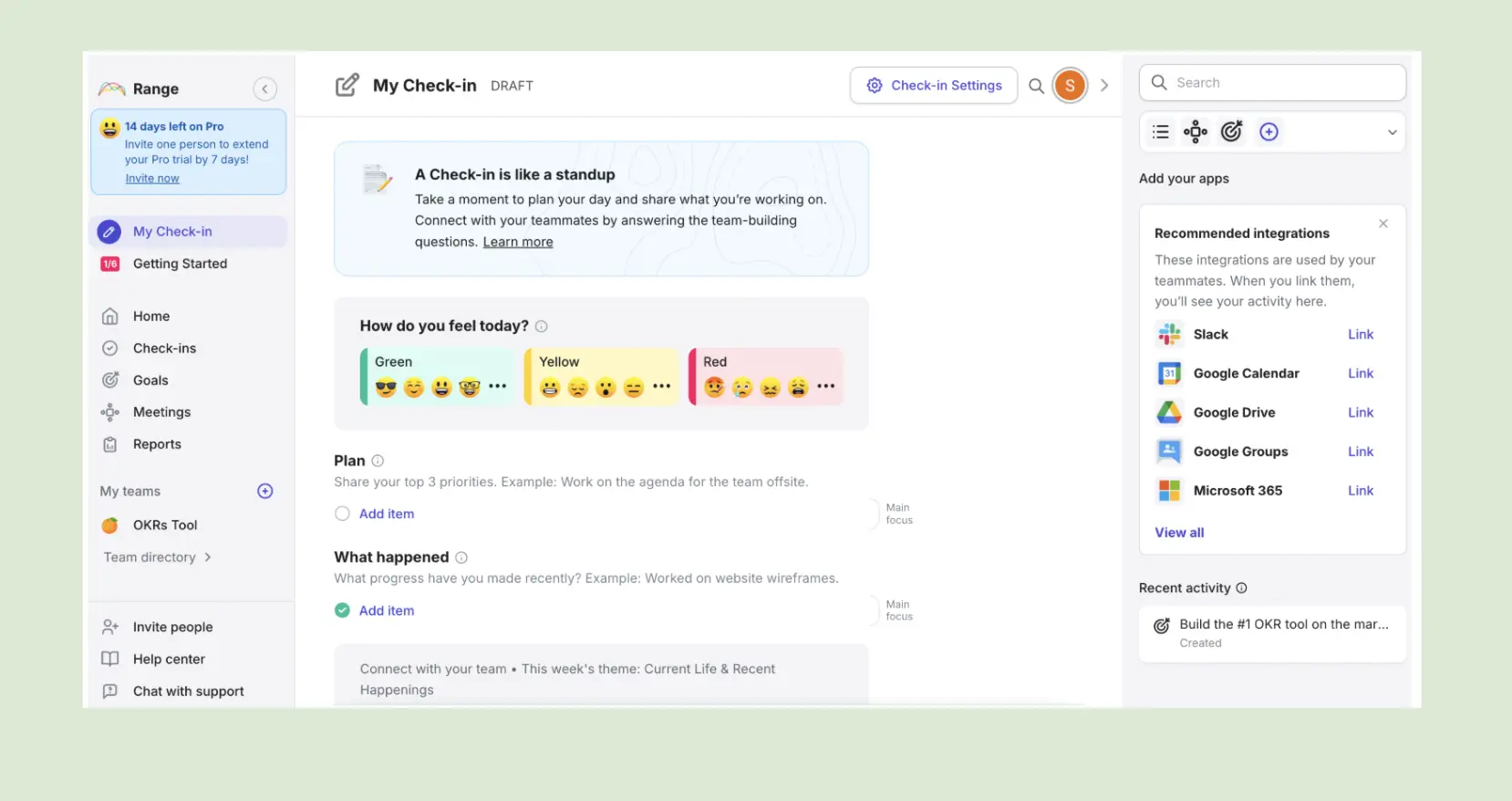
Range is the only tool on this list that treats team connection and goal tracking as equally important problems — and that makes it genuinely useful for distributed founding teams where maintaining culture is as hard as maintaining focus.
The async check-in format — team members log what they're working on, how they're feeling, and any blockers — builds a daily rhythm of visibility that most OKR-only platforms don't attempt.
The free tier for up to 12 users is the most generous on this list, which makes it accessible for a remote founding team without any tool budget.
The OKR layer is lighter than purpose-built platforms — no cascade enforcement, no ownership gating, limited analytics. For teams where the primary need is goal tracking depth and alignment visibility, Range is insufficient as a standalone OKR tool.
Pricing: Free for up to 12 users. $8/user/month after that.Free trial: Yes — free tier.
10. Effy AI
Best for: Startups running their first performance reviews alongside OKRs

Effy AI is the right tool for the moment when a startup first needs to connect goal delivery to a performance conversation — the 10–20 person inflection point where ad hoc feedback stops scaling and structured reviews become necessary.
The AI-generated review templates reduce the time to run a structured review cycle from hours to minutes — producing well-structured, context-relevant questions without requiring an HR function to design them.
360 feedback collection, structured rating scales, and follow-up prompts make performance conversations data-led rather than based on recollection.
The OKR layer is basic — functional for simple goal tracking but not sufficient for teams that need cascade visibility or automated check-in infrastructure. Best positioned as the performance review tool alongside a dedicated OKR platform, not instead of one.
Pricing: Free for up to 5 users. Paid plans available for larger teams.Free trial: Yes — free tier.
11. Futureworks
Best for: Teams that want the weekly check-in to happen in a structured meeting rather than an async update
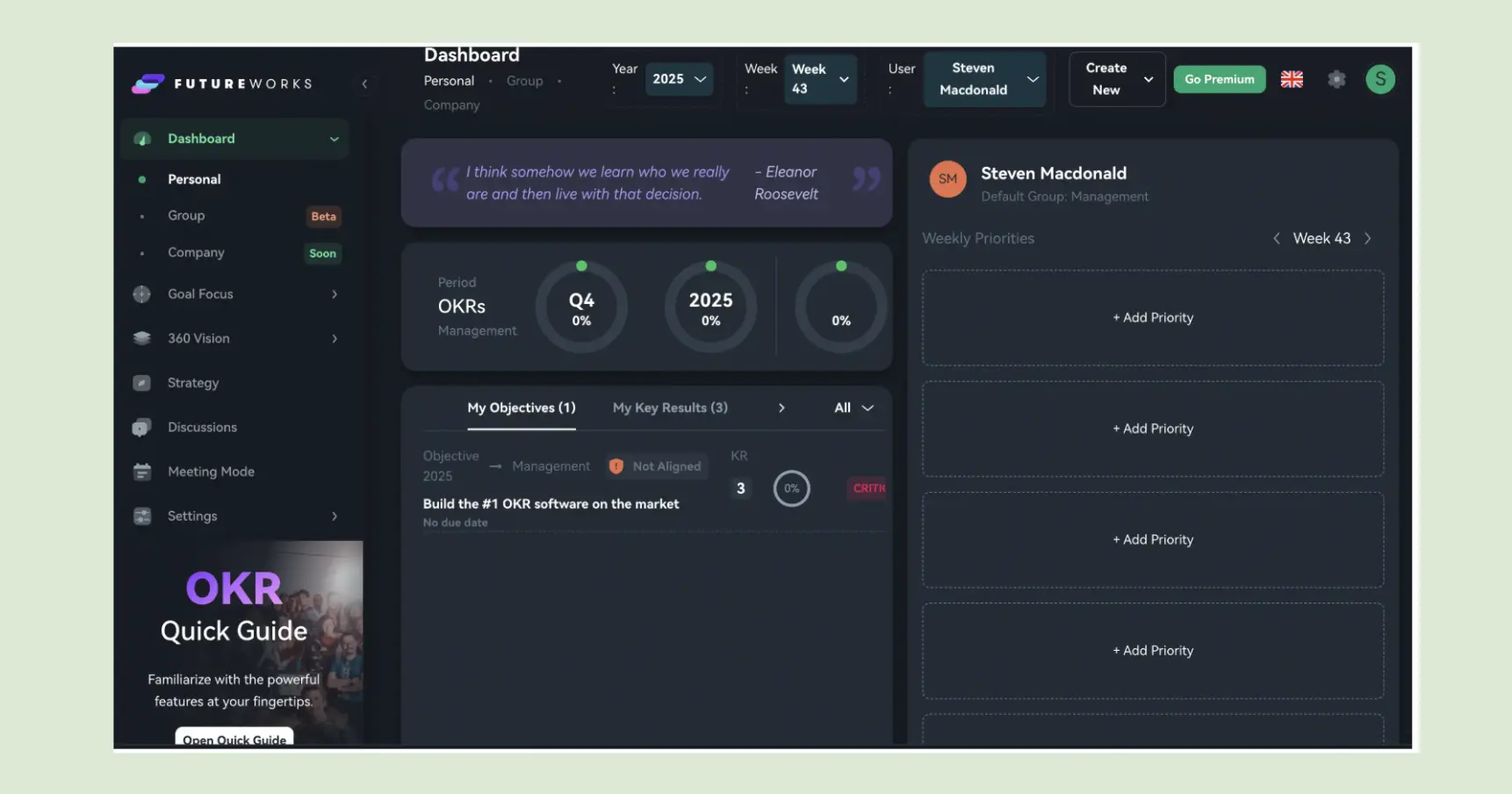
Futureworks takes a different position from every other tool on this list: the weekly check-in isn't an async update — it's a facilitated meeting with a structured agenda, timed points, and follow-ups delivered through Slack and Teams.
For founding teams where the weekly meeting is already happening and the challenge is making it more strategic rather than eliminating it, Futureworks provides the structure that turns a status call into a proper OKR review.
The AI Context Engine — which translates uploaded strategy documents into actionable Key Results — is a useful first-cycle accelerator for teams starting from an existing strategy deck rather than a blank page.
Free for up to 5 users, with paid plans starting at €13/user/month — which is on the higher end for a startup tool. Best suited for teams with Nordic or European roots where meeting culture and data sovereignty are higher priorities than async-first design.
Pricing: Free for up to 5 users. From €13/user/month on paid plans. Free trial: Yes — free tier.
12. Google Sheets / Microsoft Excel
Best for: Pre-software teams evaluating the OKR framework before committing to a tool
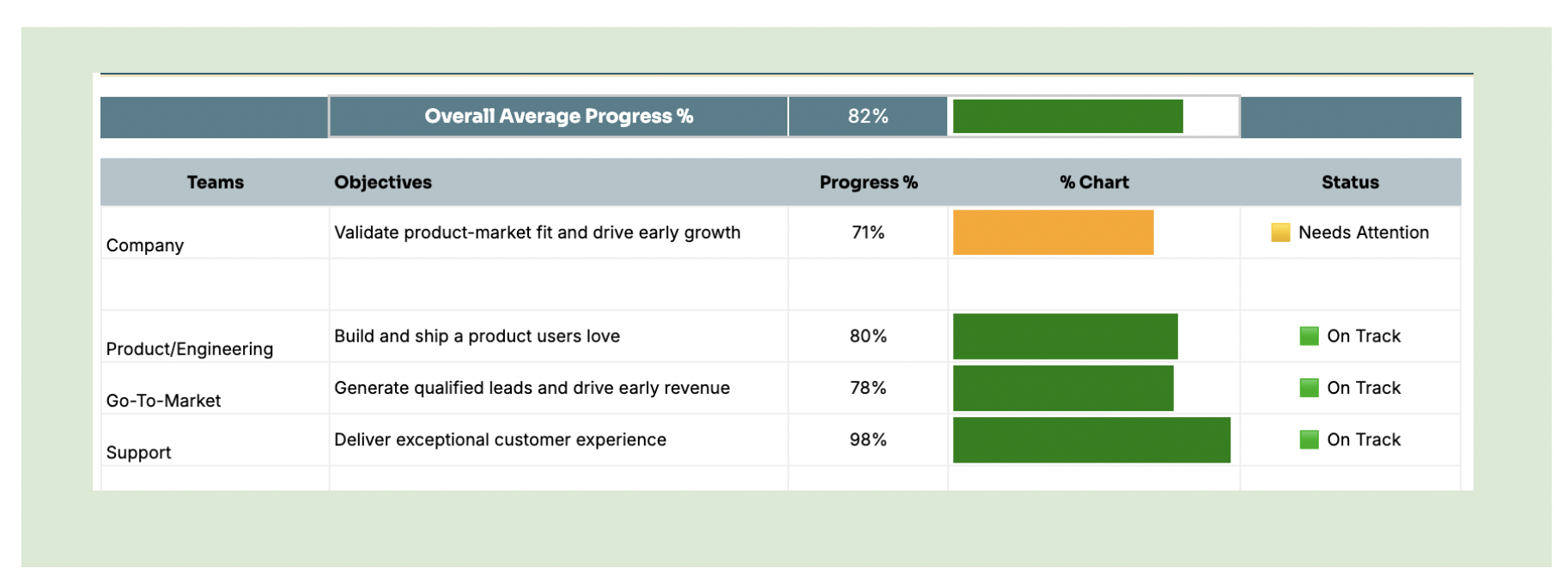
Every startup on this list started here. Spreadsheets are free, familiar, and fast — and for a 5-person team running OKRs for the first time, the framework matters more than the infrastructure.
The free OKR template gets a first cycle live in under 30 minutes without any software decision.
The limitations appear predictably around cycle two or three: no automated reminders, no alignment visibility, no at-risk flagging, and manual compilation of end-of-cycle data.
The benchmark data is clear on what happens next: organizations that move to purpose-built software generate a 1:88 return vs 1:25 on spreadsheets. Start here. Move on before the habit breaks.
Pricing: Free. Free trial: N/A — free forever.
How to Choose
The right tool depends on where your team is in the OKR journey.
In cycles 1–2 with fewer than 10 people, the framework matters more than the tool. Tability, Loach, SugarOKR, or a spreadsheet all get you to a live first cycle. The goal is proving the habit works before investing in infrastructure.
Past 10–15 people, alignment starts to break down without structural support. That's when automated check-ins, required ownership, and a live alignment map start generating returns. OKRs Tool or Weekdone are the right moves at that stage.
For remote-first teams where daily connection is as important as quarterly goals, Range fills a gap that pure OKR tools don't attempt.
For teams that need performance reviews alongside OKRs — without building an HR function — Effy AI or OKRs Tool's built-in review layer handle that without a second platform.
Final Thoughts
The most expensive OKR software decision a startup makes is waiting too long to make one.
The OKR maturity curve compounds from 51% completion in cycle one to 79% by cycle five. Every cycle spent in a spreadsheet that breaks down by week six is a cycle that doesn't compound.
Pick a tool from this list that your team will open next Monday. Start. The platform can be upgraded when the habit is established. The habit can't be established without starting.
Data: The ROI of OKRs: 2026 Benchmark Report (330 respondents), The 2026 OKR Benchmark Report (200+ organizations).