
75% of organizations now tie OKR outcomes to performance decisions. This guide ranks 10 OKR tools on one test: do they pull real execution data into the review, or bolt a separate HR process on top?
Performance reviews built for HR departments run on ratings and calibration cycles. Growing teams need something different — a review that reflects what the quarter's OKRs actually delivered.
If your team already uses OKRs, performance reviews shouldn't be a separate system. They should be a natural reflection point in the OKR cycle — what worked, what didn't, and what to focus on next.
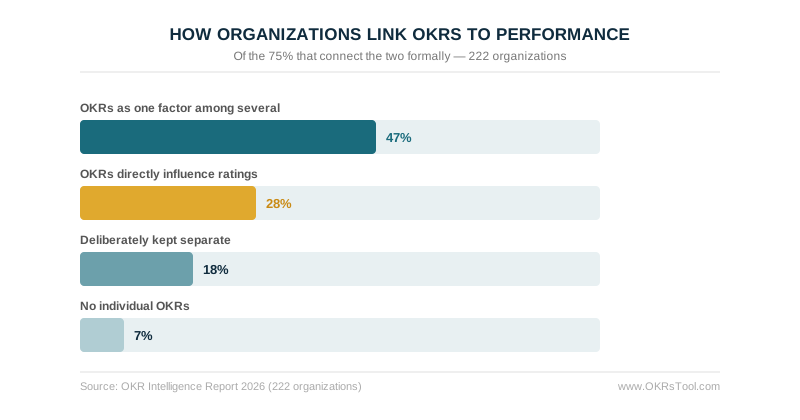
The OKR Intelligence Report 2026 found that 75% of organizations have now formally linked OKR outcomes to performance decisions — 47% as one factor among several, 28% with OKRs directly influencing ratings. Connecting goal delivery to performance assessment has become the norm rather than the exception, which makes how a tool ties reviews to OKR scoring the more consequential choice.
This guide evaluates OKR software through one lens: does it connect performance reviews to real execution data — without enterprise HR overhead?
What Good Looks Like for OKR-Aligned Performance Reviews
For execution-focused teams at the 50–200 person stage, the bar is clear. Reviews should be simple and quarterly — self-assessment, manager assessment, shared summary. OKR delivery data should pull directly into the conversation without manual compilation.
There should be no peer reviews, calibration rounds, or HR bureaucracy for teams that don't need it. And the output should be a clear narrative — not a scorecard.
Most tools miss this entirely. A few don't.
These three tools represent distinct approaches to performance reviews: execution-first, enterprise governance, and engagement-led. The right choice depends on whether your reviews are meant to sharpen quarterly delivery, enforce consistency at scale, or strengthen coaching and feedback.
The 10 Best OKR Software Tools for Performance Reviews
The tools below stand out because they approach performance reviews as a structured reflection on execution - not an HR-driven process or engagement exercise.
1. OKRs Tool
Best overall for OKR-aligned 1:1 performance reviews in growth-stage teams
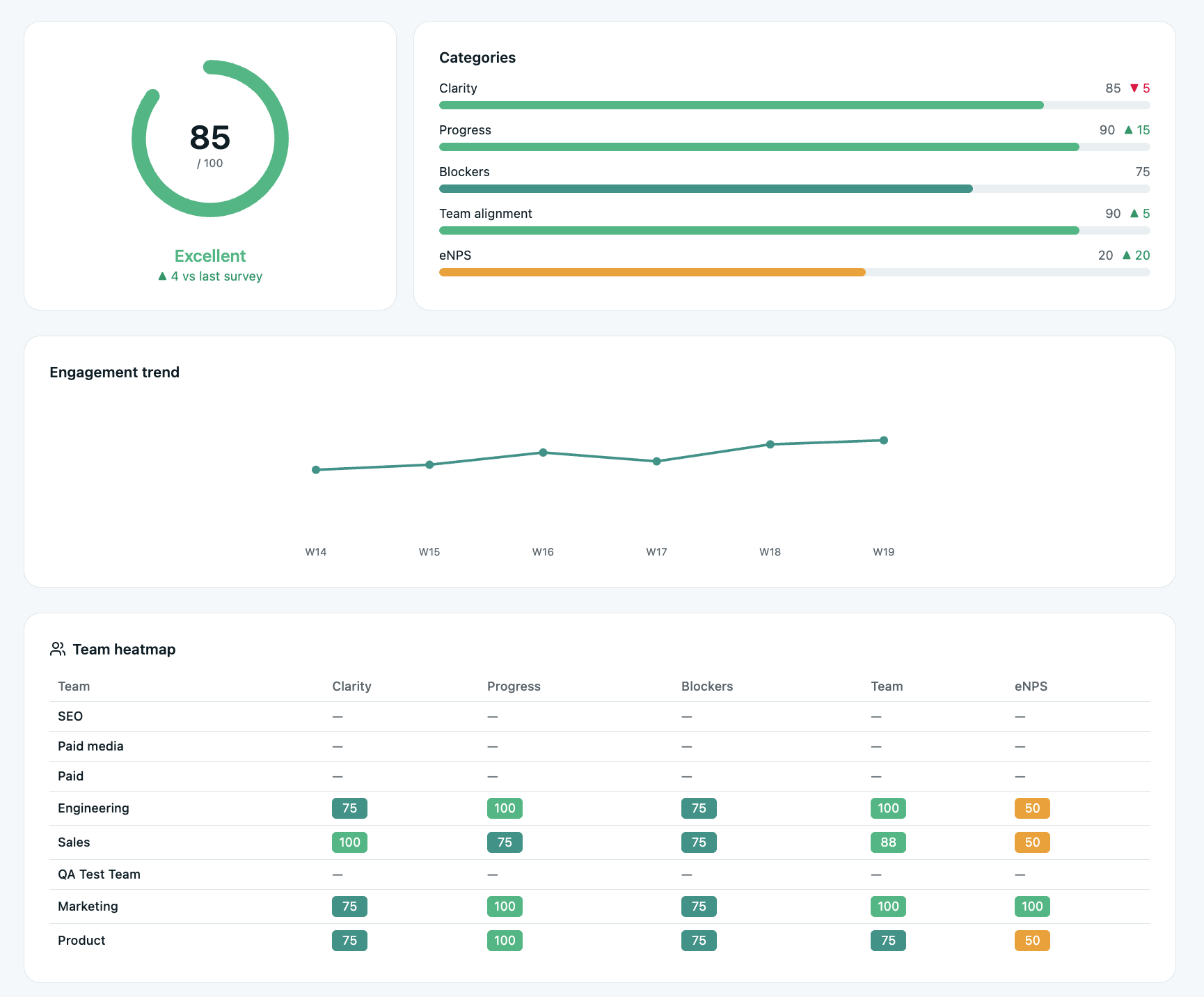
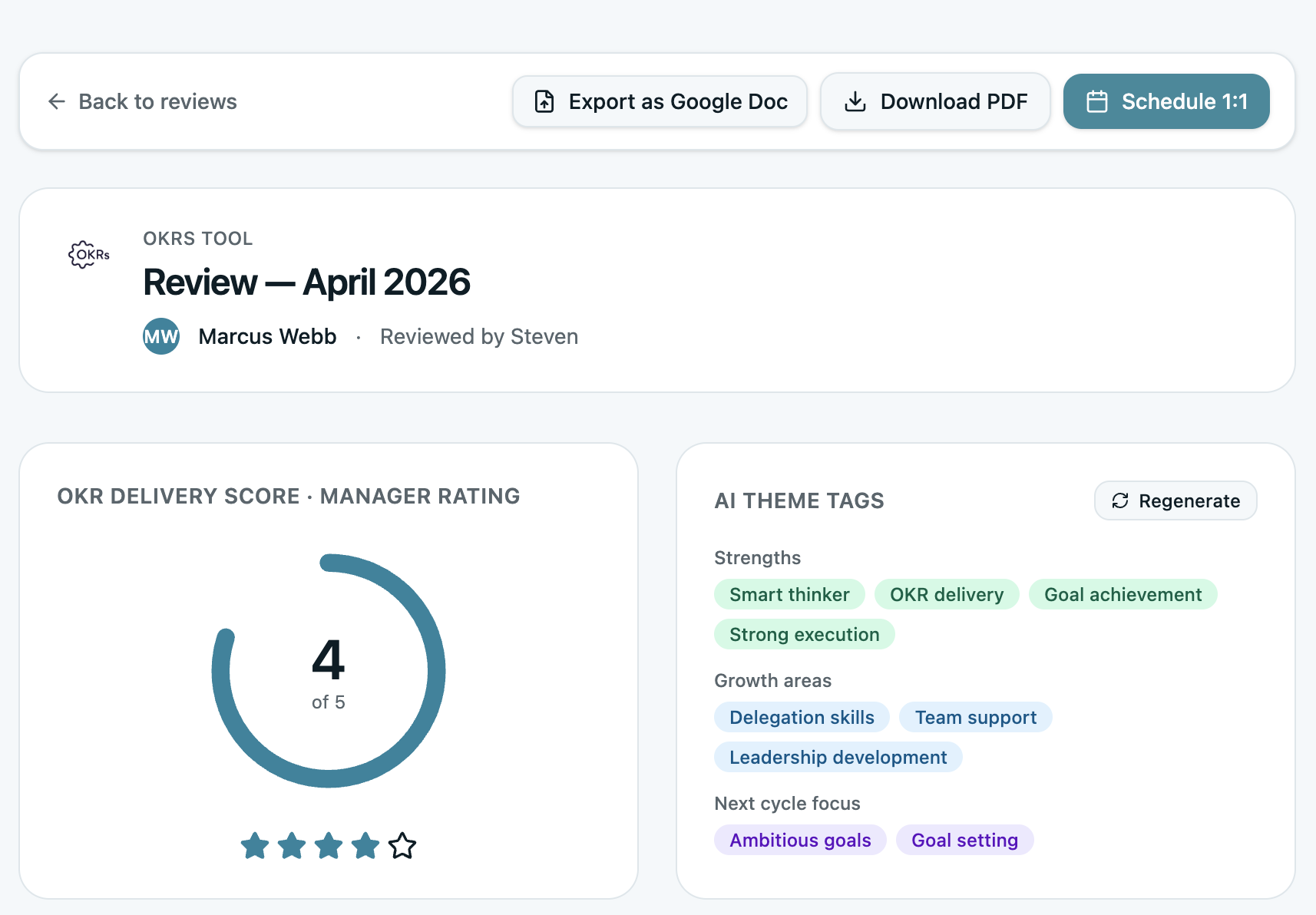
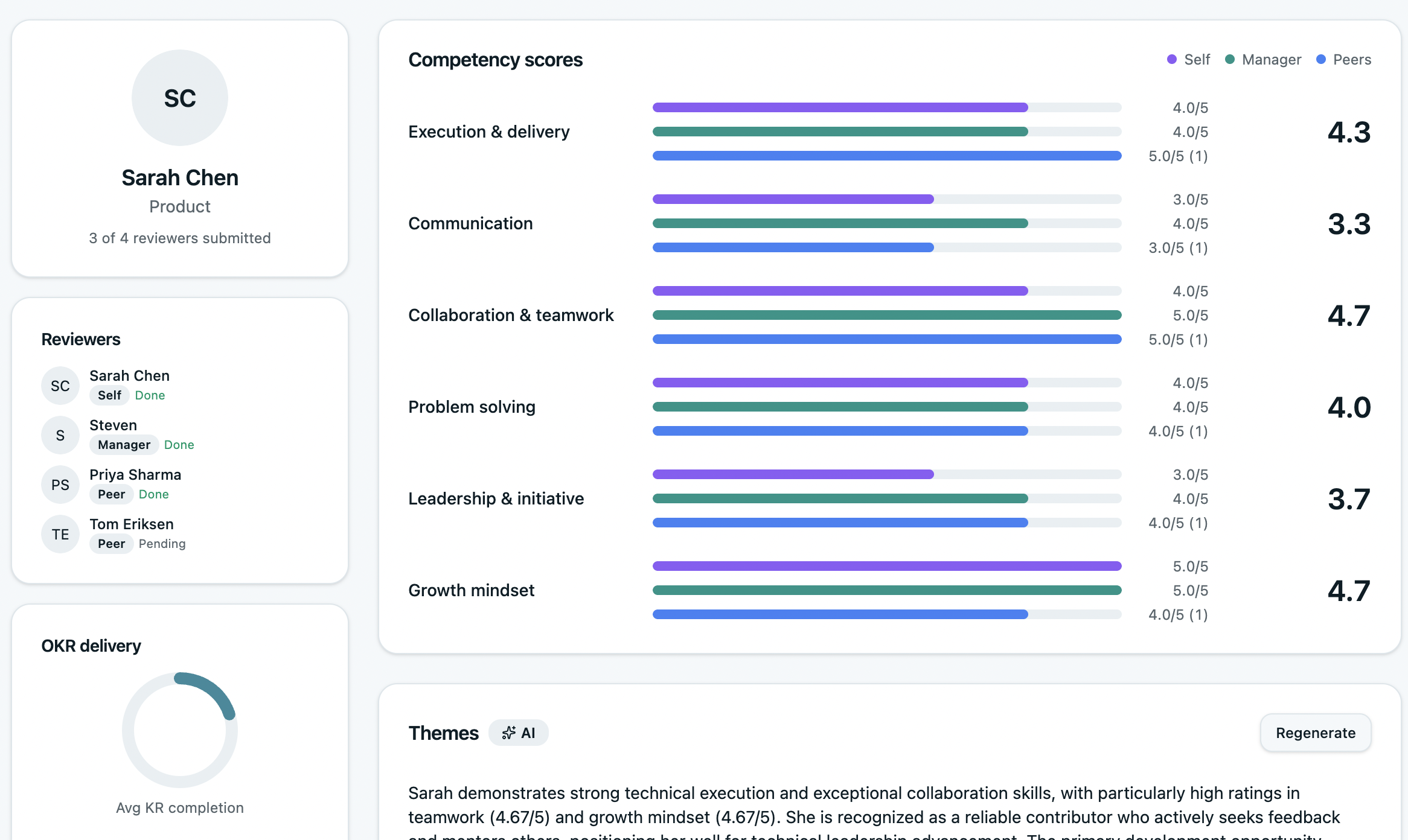
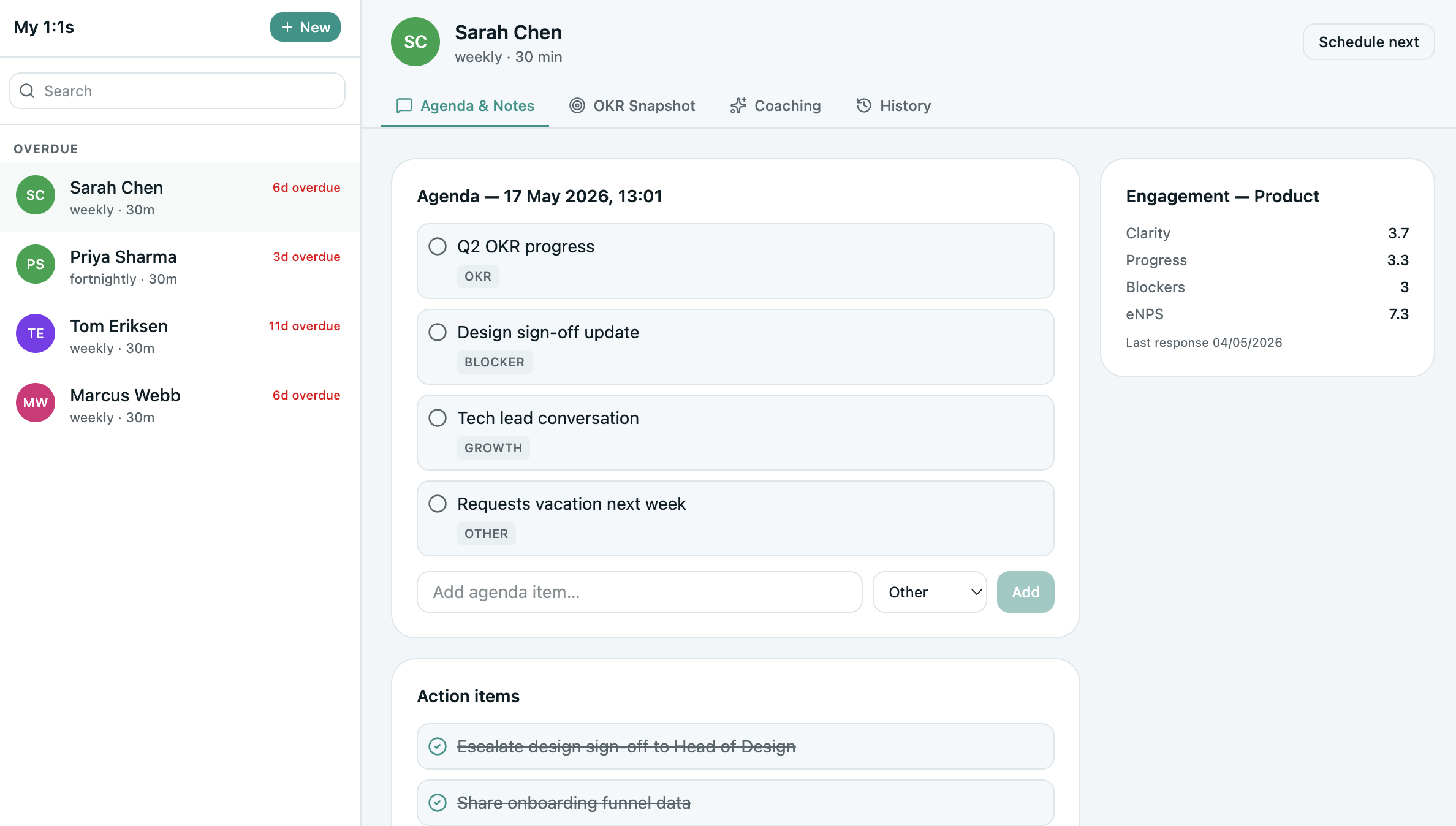
OKRs Tool is built for the VP, or department head who needs OKRs running properly this quarter — without enterprise complexity, IT approval, or a consultant.
Set up your org structure, connect your teams, assign ownership, and invite your people in one afternoon. Weekly nudges keep the team updating without being chased. You get visibility without status meetings.
Used by leaders at 51–200 person companies across cybersecurity, fintech, logistics, asset management and B2B services.
Why it’s #1
OKRs Tool goes beyond goal tracking to close the full loop between strategy and execution:
Best for
Leaders at 51–200 person companies who are already running OKRs and want performance reviews to close the loop between execution and reflection — without a separate HR process or enterprise overhead.
2. Lattice
Best for HR-led organizations where performance reviews sit inside people operations
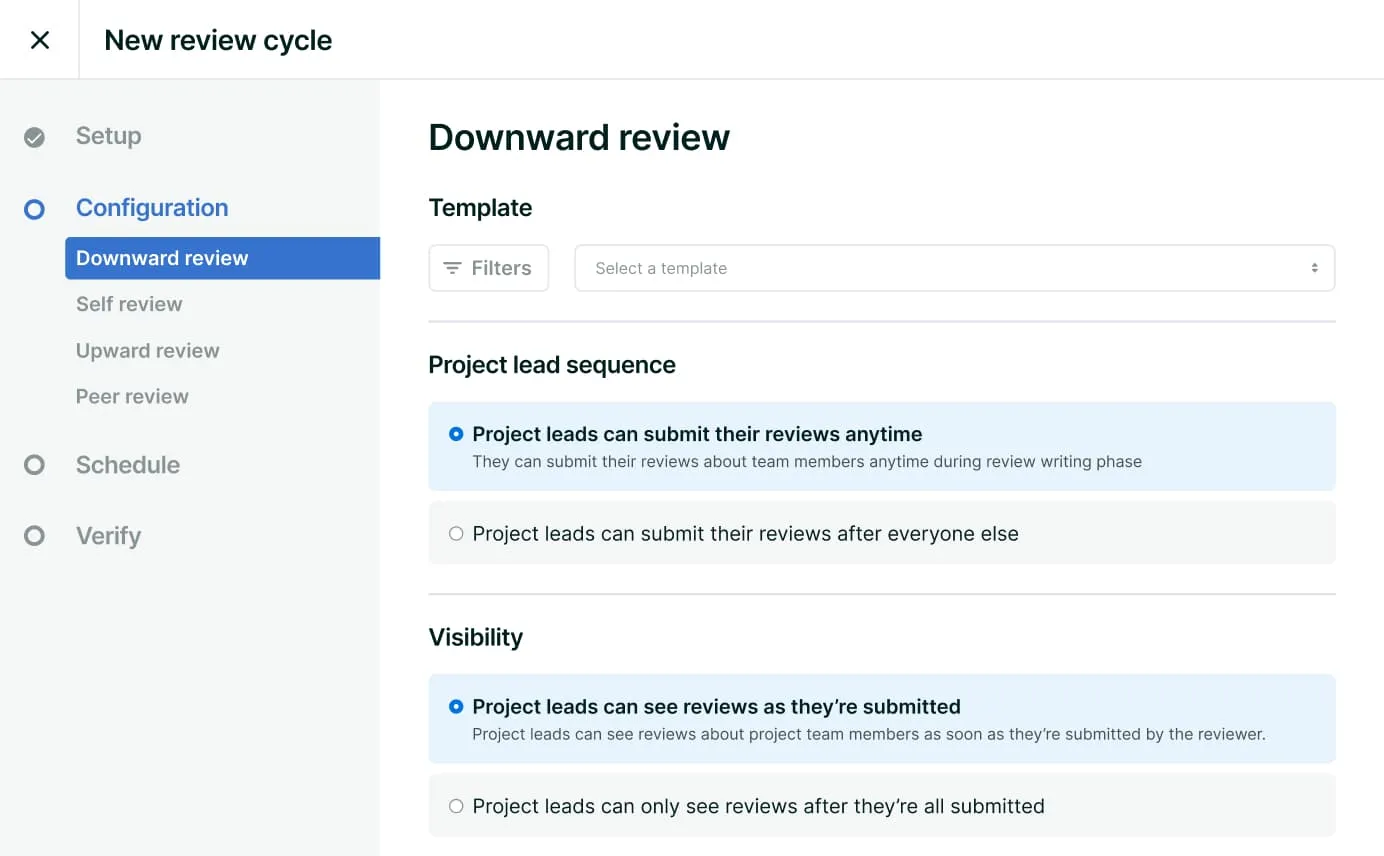
Lattice approaches performance reviews as part of a broader people system. Reviews live alongside engagement surveys, feedback, career frameworks, and compensation planning. This makes Lattice powerful - but also very clearly HR-owned.
Performance reviews are structured, configurable, and polished. Managers can reference goals during reviews, but OKRs are not the backbone of the conversation. Instead, reviews tend to center on competencies, feedback themes, and development narratives.
For organizations where People Ops runs performance cycles, this works well. For execution-heavy teams expecting reviews to reflect quarterly OKR delivery, the connection can feel indirect.
What you’ll like
- Mature, well-designed review workflows
- Strong visibility for HR and leadership
- Tight integration with engagement and feedback
What you might not like
- Reviews feel process-heavy
- OKRs are secondary, not central
- Less suited to founder- or manager-led review cycles
Best for
HR-driven companies (100+ employees) where performance reviews are part of a formal people program, not an execution checkpoint.
3. Profit.co
Best for structured performance reviews tied to OKRs and KPIs
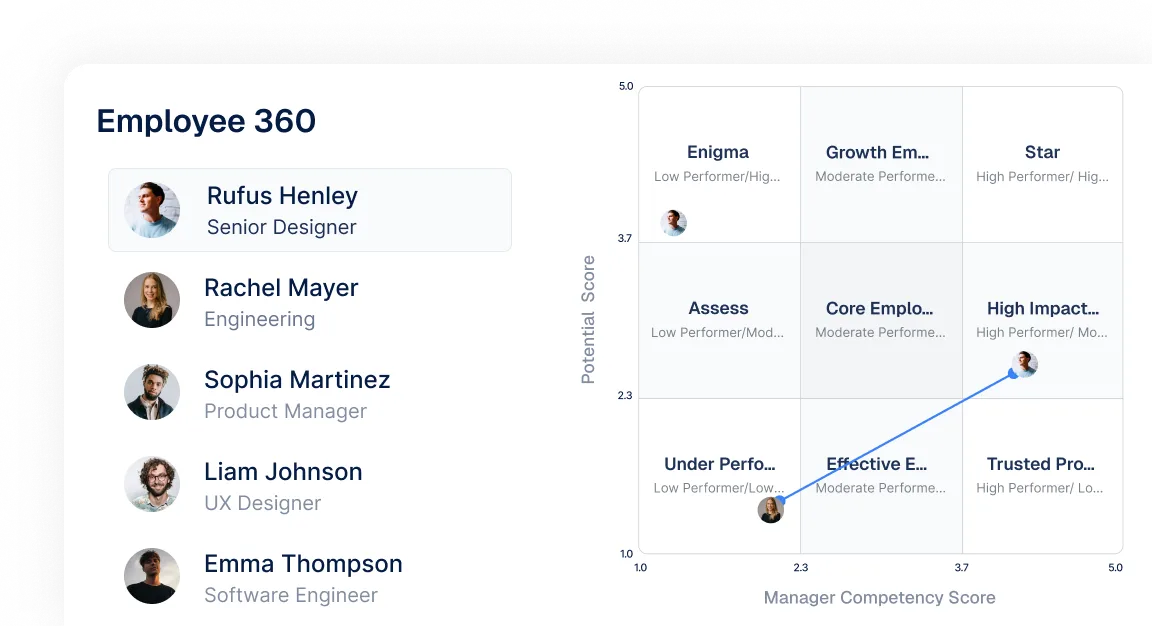
Profit.co treats performance reviews as one layer in a comprehensive execution and governance system. Reviews, OKRs, KPIs, tasks, and scorecards all live in the same ecosystem.
Performance conversations here are data-heavy. Managers can reference historical OKR delivery, KPI trends, and initiative progress directly inside reviews. This creates strong accountability - but also raises the bar for process maturity.
The tradeoff is speed and simplicity. Review cycles involve more configuration, and conversations can feel evaluative rather than reflective. It’s less “What should we do differently next quarter?” and more “How did you perform against the system?”
What you’ll like
- Strong linkage between OKRs, KPIs, and reviews
- Historical performance visibility
- Clear ownership and structure
What you might not like
- Heavy setup for review cycles
- Less conversational, more procedural
- Overkill for lean leadership teams
Best for
Process-mature scale-ups that want performance reviews grounded in metrics and formal accountability.
4. Leapsome
Best for performance reviews connected to growth and development
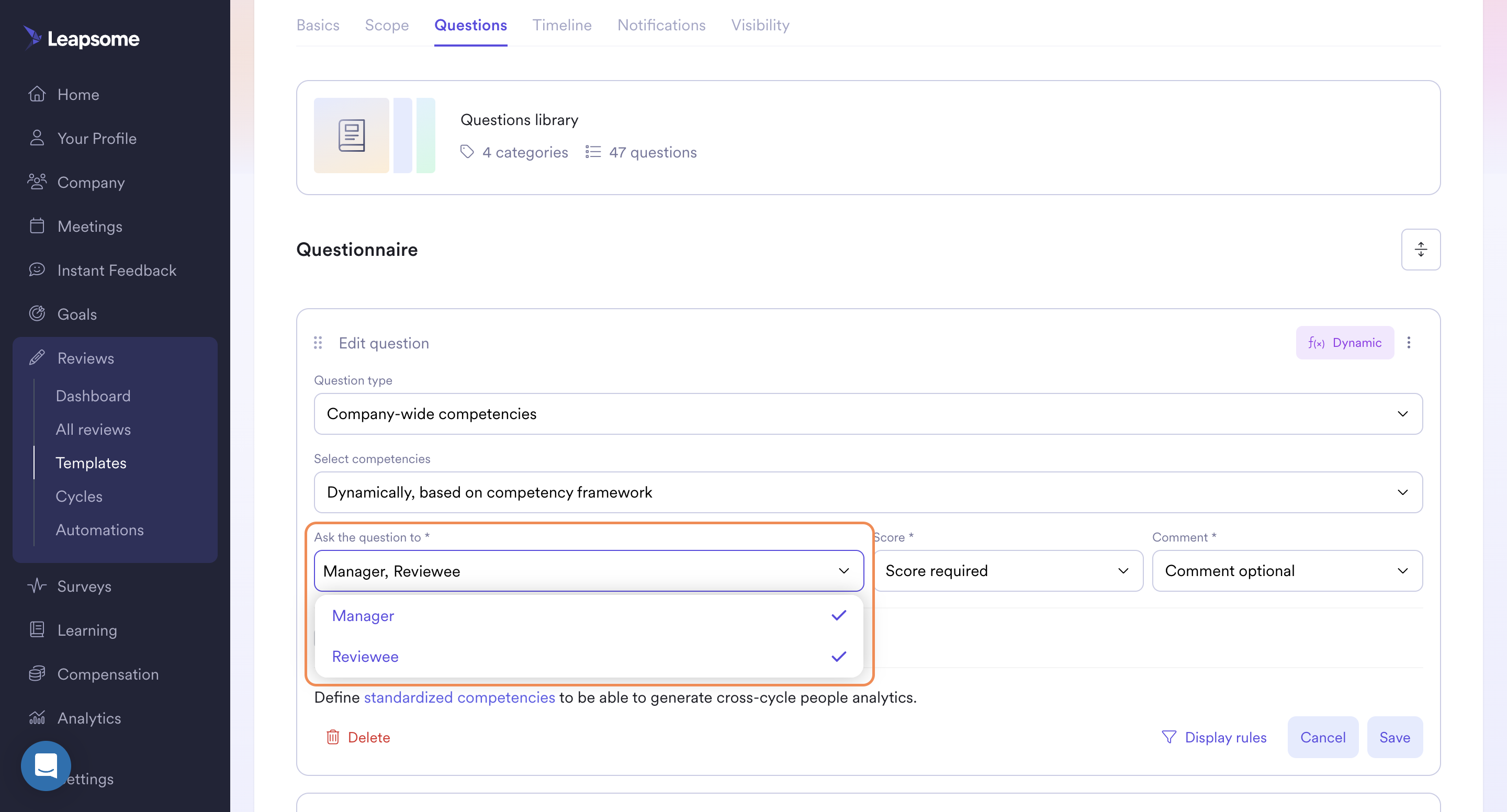
Leapsome positions performance reviews as part of employee development, not execution control. Reviews connect to feedback, learning paths, and career growth - with OKRs acting as contextual input rather than the core frame.
Managers can reference goals during reviews, but the emphasis is on skills, strengths, and progression. This makes reviews supportive and people-focused, but less effective as a hard reflection on quarterly delivery.
For teams where OKRs are primarily a planning tool - and reviews are about coaching - Leapsome fits well. For execution-driven orgs that want reviews to sharpen focus and accountability, it can feel soft.
What you’ll like
- Clean, intuitive review experience
- Strong development and feedback tooling
- Balanced manager–employee conversations
What you might not like
- OKRs aren’t the central review lens
- Limited sense of execution signal
- More people-ops than operator-focused
Best for
Organizations prioritizing growth, learning, and manager coaching over tight OKR-driven execution reviews.
5. WorkBoard
Best for executive-level performance reviews at scale
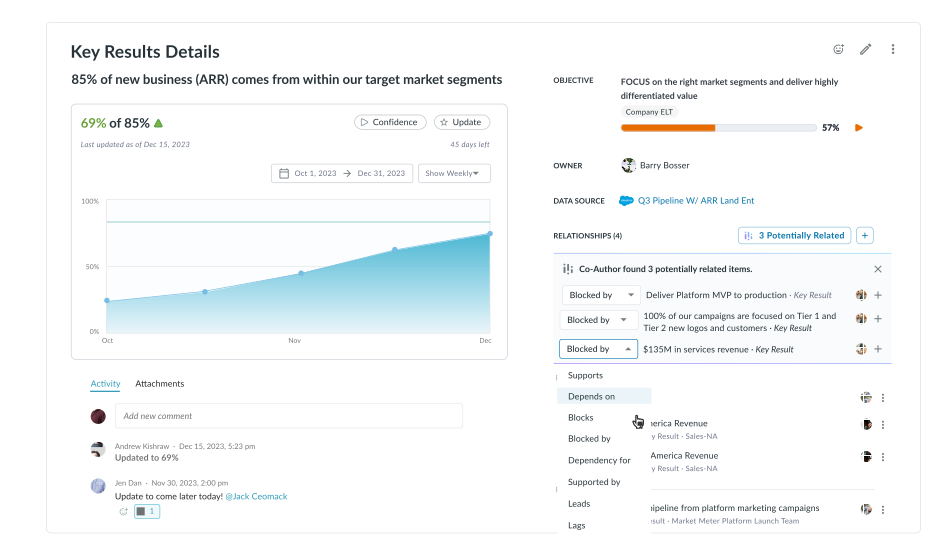
WorkBoard is built for organizations where performance reviews are part of a leadership operating system. Reviews tie tightly into OKRs, initiatives, and enterprise execution cadence.
At scale, this is powerful. Leaders can see how delivery ladders up across teams, and performance discussions are grounded in outcomes. But the experience assumes maturity, discipline, and tolerance for process.
Reviews feel formal and structured - designed for consistency across hundreds of employees, not lightweight manager conversations. For smaller teams, this can feel like too much machinery for too little signal.
What you’ll like
- Strong OKR-to-performance linkage
- Executive and board-level visibility
- Enterprise governance and rigor
What you might not like
- Significant setup and overhead
- Less flexible for managers
- Not designed for lean teams
Best for
Large organizations (200+ employees) where performance reviews reinforce enterprise execution discipline.
6. Perdoo
Best for performance reviews tied to strategy and long-term alignment
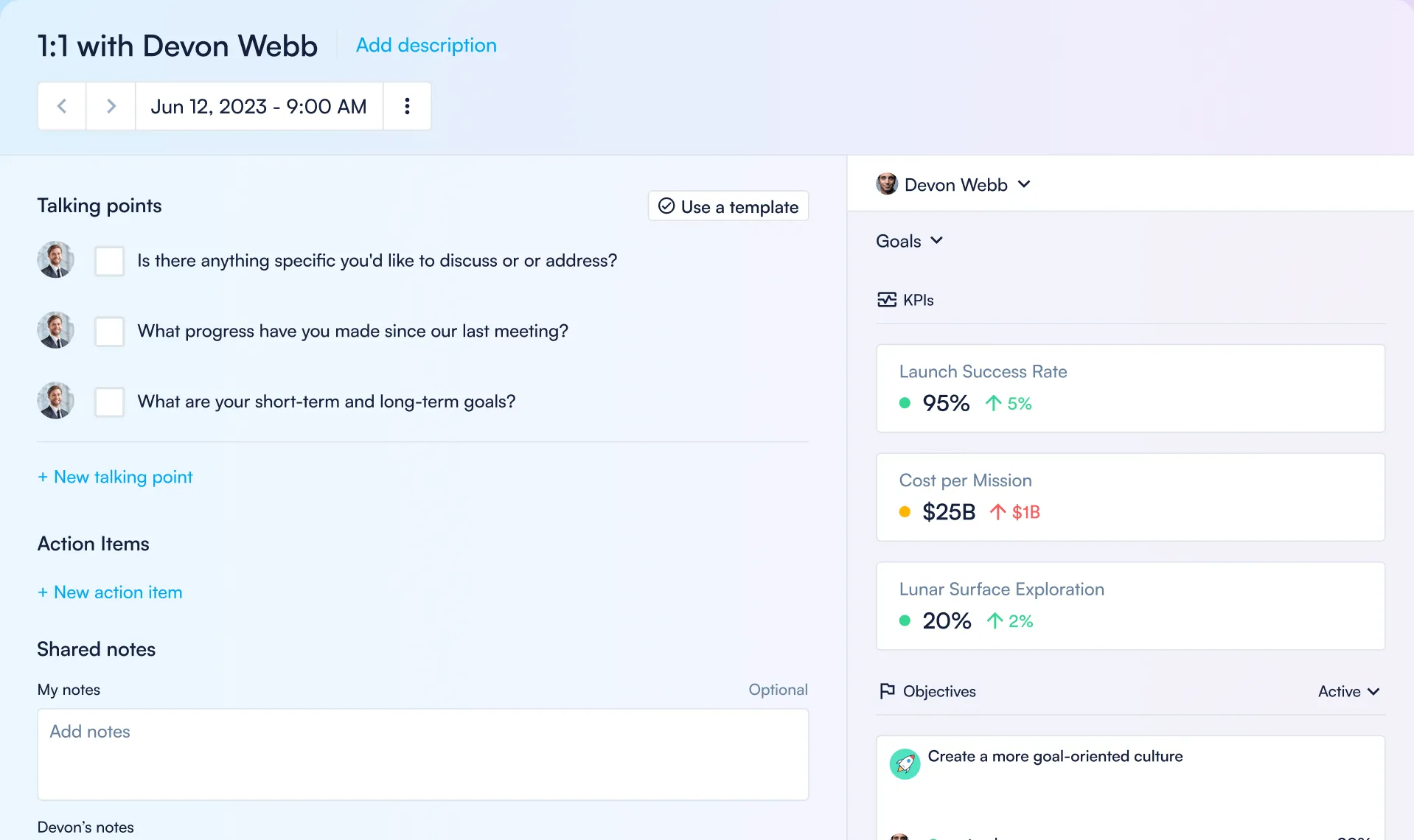
Perdoo emphasizes the relationship between vision, strategy, OKRs, and KPIs. Performance reviews reflect this philosophy - focusing on how individual and team delivery supports long-term direction.
Reviews are less about quarter-by-quarter execution and more about strategic contribution. This is valuable for leadership alignment, but slower and less tactical than many teams need.
For founders looking to connect performance conversations to “where we’re going,” Perdoo helps. For teams needing sharp execution feedback each quarter, it can feel indirect.
What you’ll like
- Strong strategy-to-performance narrative
- Clear linkage between goals and outcomes
- Useful for leadership discussions
What you might not like
- Less operational focus
- Slower cadence
- UI and workflows feel dated
Best for
Leadership teams that want performance reviews to reinforce strategic alignment over short-term execution.
7. Betterworks
Best for formal, enterprise-grade performance review programs with OKRs
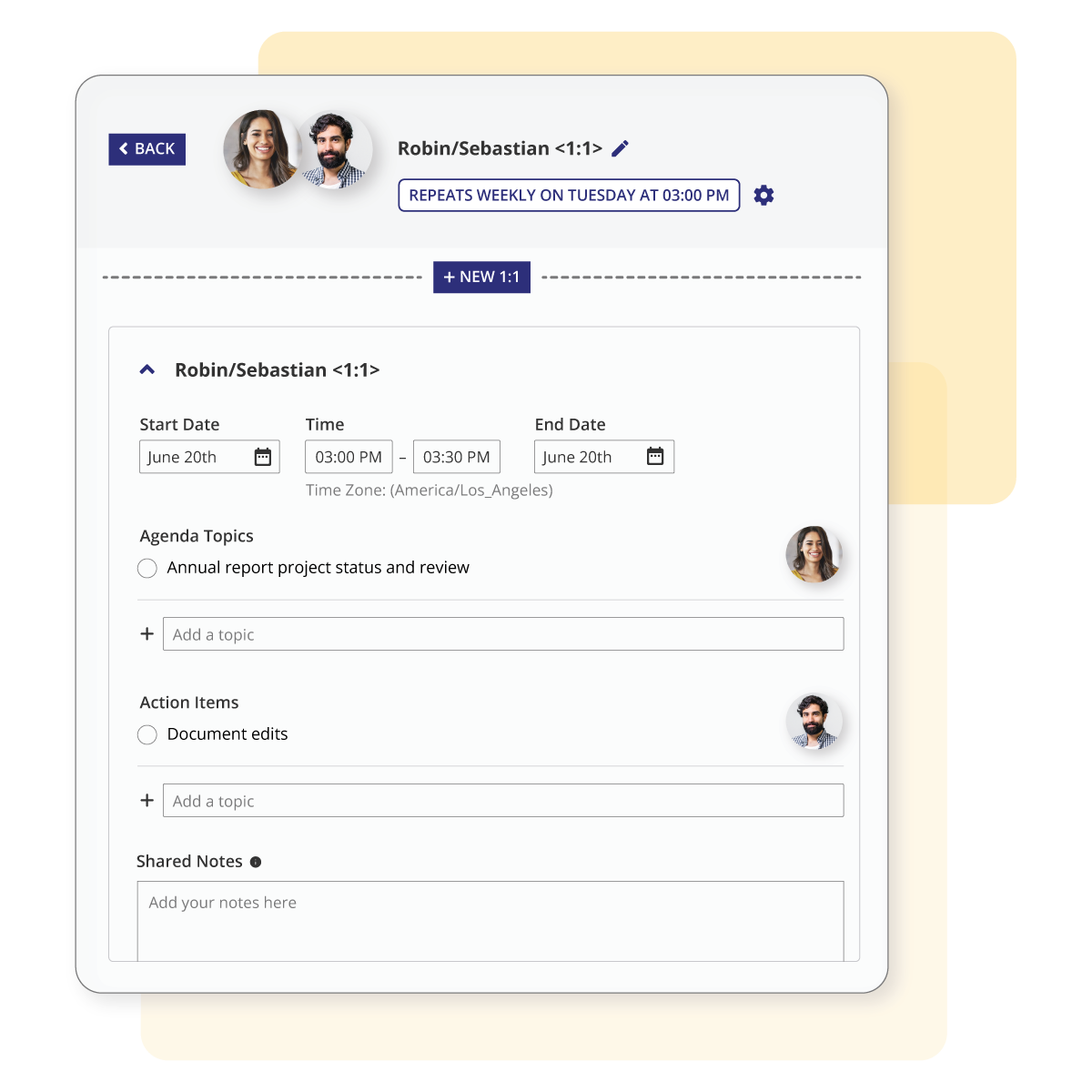
Betterworks approaches performance reviews as a controlled, system-wide process. Reviews are deeply structured, heavily configurable, and designed to support consistency across large organizations.
OKRs play a meaningful role in reviews, but they’re embedded inside a broader performance framework that includes competencies, continuous feedback, and formal cycles. This creates rigor and comparability - but also distance from day-to-day execution.
For leadership teams managing hundreds or thousands of employees, this structure is a feature. For growth-stage teams, it often becomes friction. Review cycles require configuration, alignment across stakeholders, and buy-in from HR. Conversations can feel evaluative rather than reflective.
What you’ll like
- Strong OKR visibility inside reviews
- Enterprise-ready governance and compliance
- Consistent review standards across teams
What you might not like
- Heavy setup and configuration
- Reviews feel process-led, not manager-led
- Overbuilt for fast-moving teams
Best for
Large organizations where performance reviews must scale consistently across many teams and regions.
8. 15Five
Best for engagement-focused performance conversations, not execution reviews
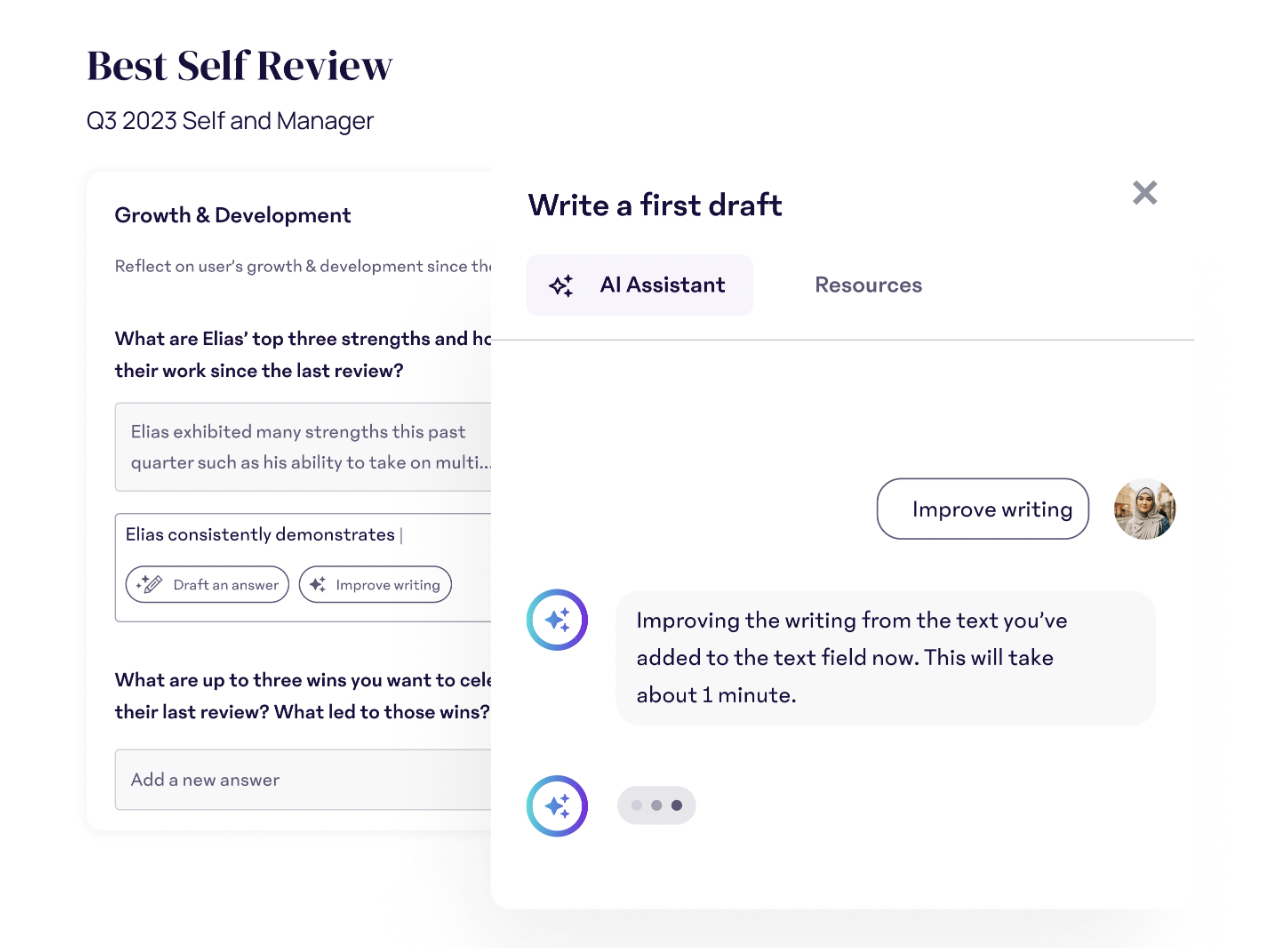
15Five centers performance reviews around engagement, feedback, and manager effectiveness. The system is designed to improve communication quality and employee sentiment - with reviews acting as extensions of weekly check-ins.
OKRs exist, but they are not the backbone of the review conversation. Reviews focus more on how someone feels, how supported they are, and how the manager is showing up - rather than what was delivered and why.
This makes 15Five effective for morale, coaching, and culture. It is far less effective as a quarterly execution reflection tied to OKRs.
For teams running OKRs as a control system, reviews here can feel disconnected from reality on the ground.
What you’ll like
- Strong manager coaching tools
- Regular feedback loops
- Positive, human review experience
What you might not like
- Weak linkage between OKRs and reviews
- Limited delivery accountability
- Less useful for execution-heavy environments
Best for
Organizations prioritizing engagement and manager development over OKR-driven execution clarity.
9. BambooHR
Best for basic performance reviews inside an HR system
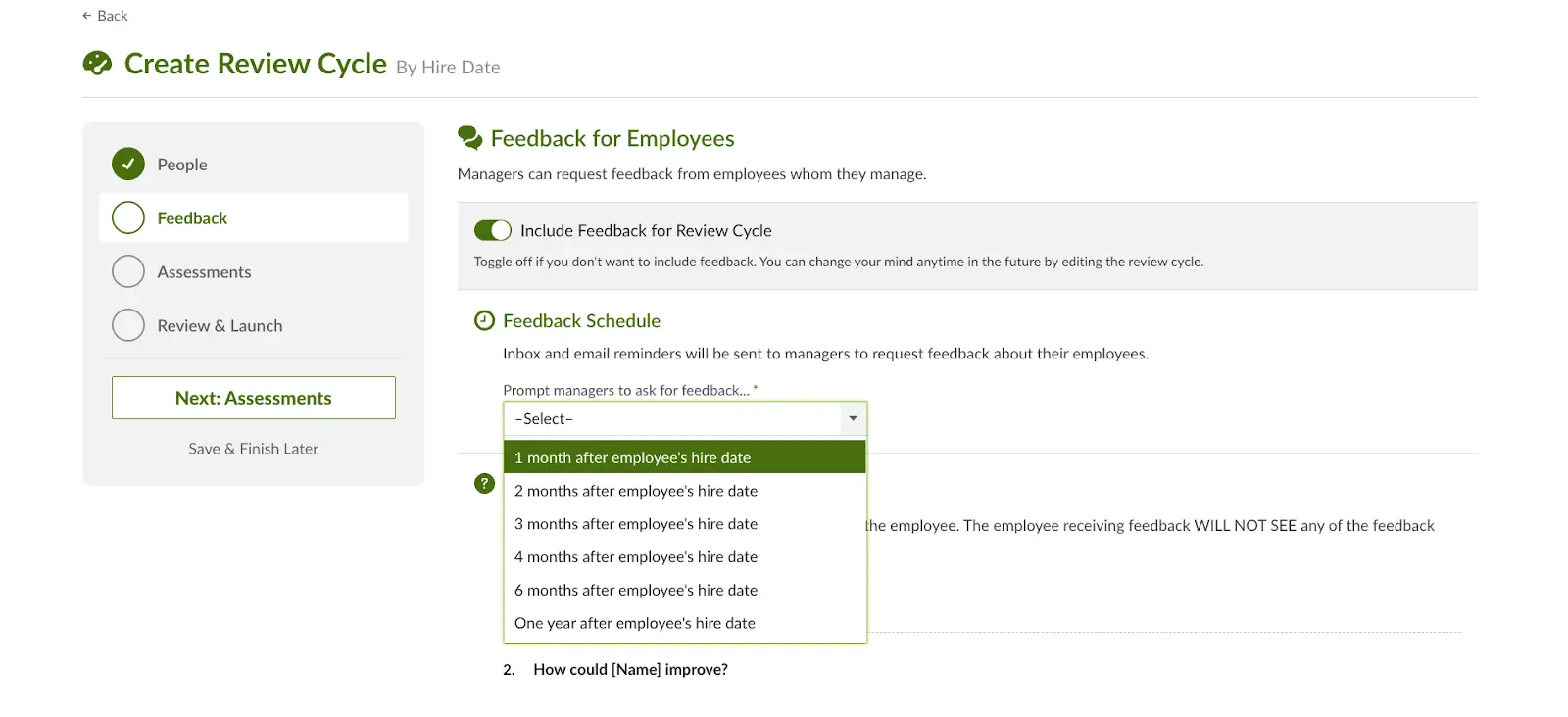
BambooHR offers performance reviews as a lightweight feature inside its HRIS. Review cycles are easy to launch, easy to complete, and easy to store - which is exactly the point.
However, performance reviews here are administrative by design. OKRs are not first-class objects, and reviews are not structured around execution outcomes. Conversations tend to focus on general performance, role expectations, and documentation rather than quarterly delivery.
For teams that see reviews as compliance or record-keeping, BambooHR works fine. For teams using OKRs to steer execution, it provides almost no signal.
What you’ll like
- Extremely simple setup
- Familiar HR-centric workflow
- Centralized employee records
What you might not like
- No meaningful OKR integration
- Reviews feel generic and shallow
- Little value for managers driving execution
Best for
Small teams that need basic reviews for HR purposes, not OKR-aligned performance reflection.
10. Small Improvements
Best for feedback-first cultures with lightweight review needs
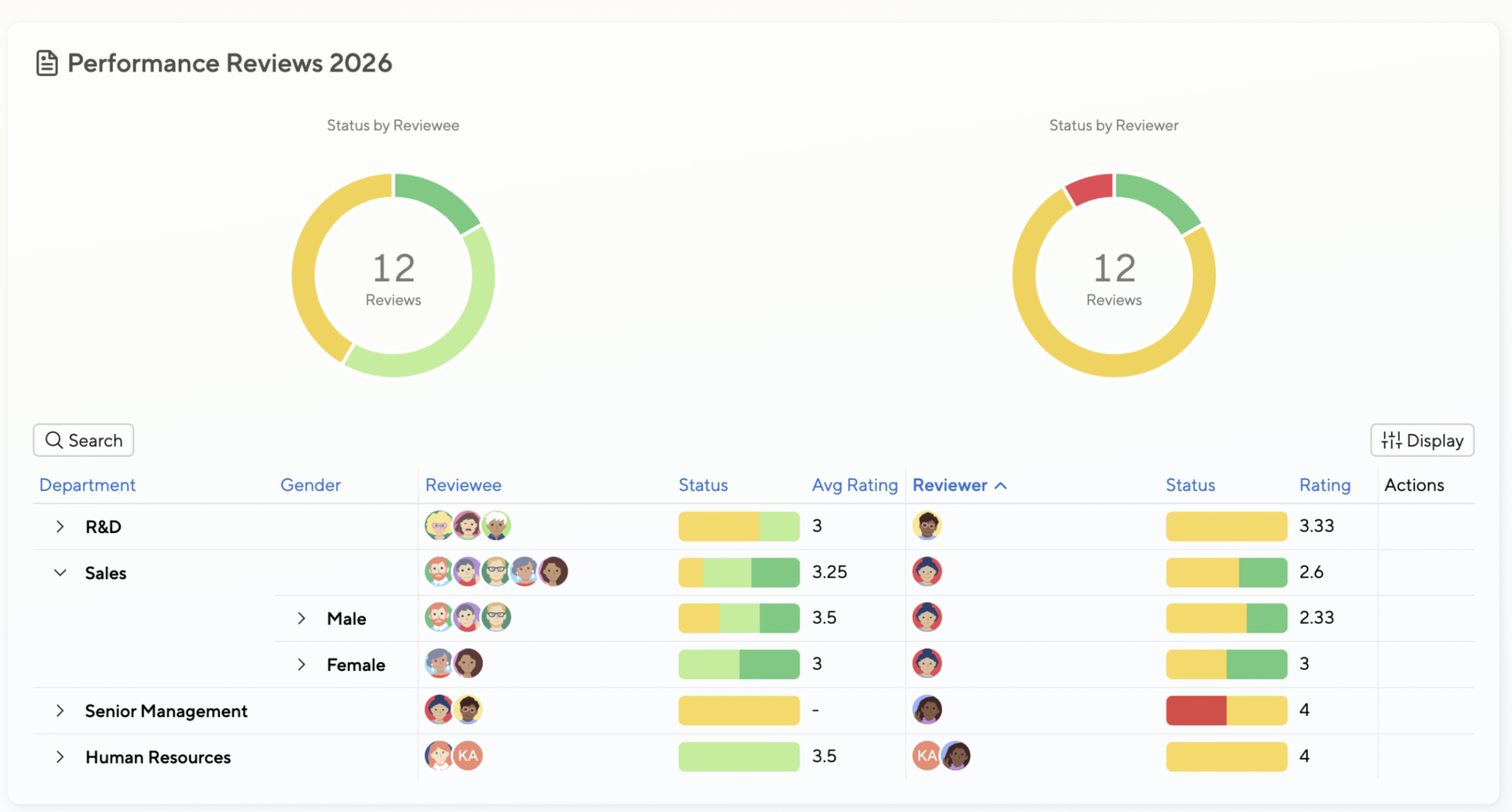
Small Improvements focuses on continuous feedback and flexible performance conversations. Review templates are customizable, cycles are lightweight, and the tone is intentionally informal.
OKRs can be referenced, but they are not central to how reviews are structured. Performance discussions tend to emphasize communication, collaboration, and growth rather than delivery against concrete outcomes.
This works well in cultures where feedback is frequent and execution pressure is lower. In execution-heavy environments, reviews can lack teeth - they surface how people feel, not what changed.
What you’ll like
- Clean, flexible review templates
- Strong feedback workflows
- Low friction for managers
What you might not like
- OKRs are peripheral to reviews
- Limited accountability signal
- Less clarity on execution impact
Best for
Teams with strong feedback cultures that value conversation over tight OKR-driven execution review.
How These Platforms Compare for Performance Reviews
The table below summarizes how each platform approaches performance reviews in practice - not just what features exist, but how reviews actually feel and function inside an OKR-driven team. Pricing is included to make tradeoffs clearer for growth-stage companies.
Rating reflects how well reviews reinforce execution clarity and OKR outcomes, not feature volume.
Use this table to quickly narrow your options based on how tightly performance reviews connect to execution in your team. If reviews need to influence next-cycle priorities and OKRs, prioritize tools where outcomes and delivery sit at the center of the conversation, not just documentation.
Performance Reviews Only Work When They Reflect Execution
Most performance review software wasn't designed for teams running OKRs as an execution system — it was built for HR cycles, engagement tracking, or long-term development programs. Each of those serves a real purpose, and each tends to miss the moment that matters most for growing teams: the end-of-quarter retrospective on what really moved, and what didn't.
That’s not wrong - but it often misses the moment that actually matters for growing teams:
The end-of-quarter reflection on what really moved (or didn’t).
For teams in the 50–200 employee range, performance reviews shouldn’t introduce new frameworks, new scoring systems, or new processes.
They should close the loop on the work that already happened. What did we commit to? What outcomes changed? Where did execution break down? What should we do differently next cycle?
That’s why the distinction in this guide matters. Some tools are excellent at people operations. Others excel at engagement or governance. Very few treat performance reviews as a natural extension of the OKR rhythm - a structured conversation rooted in real delivery.
The best choice comes down to one question: do your reviews sharpen execution, or just document it? For a team running OKRs, the review that reflects real delivery is the one that makes the next cycle better — see how OKRs Tool connects reviews to KR completion data.
Data: The OKR Intelligence Report 2026 (222 organizations).