Teamflect vs Perdoo
I tested both in a real account — same objective, same Key Results, same owners and check-in setup — and scored them on what makes goals get hit. One lives inside Microsoft Teams; the other is a dedicated OKR framework.

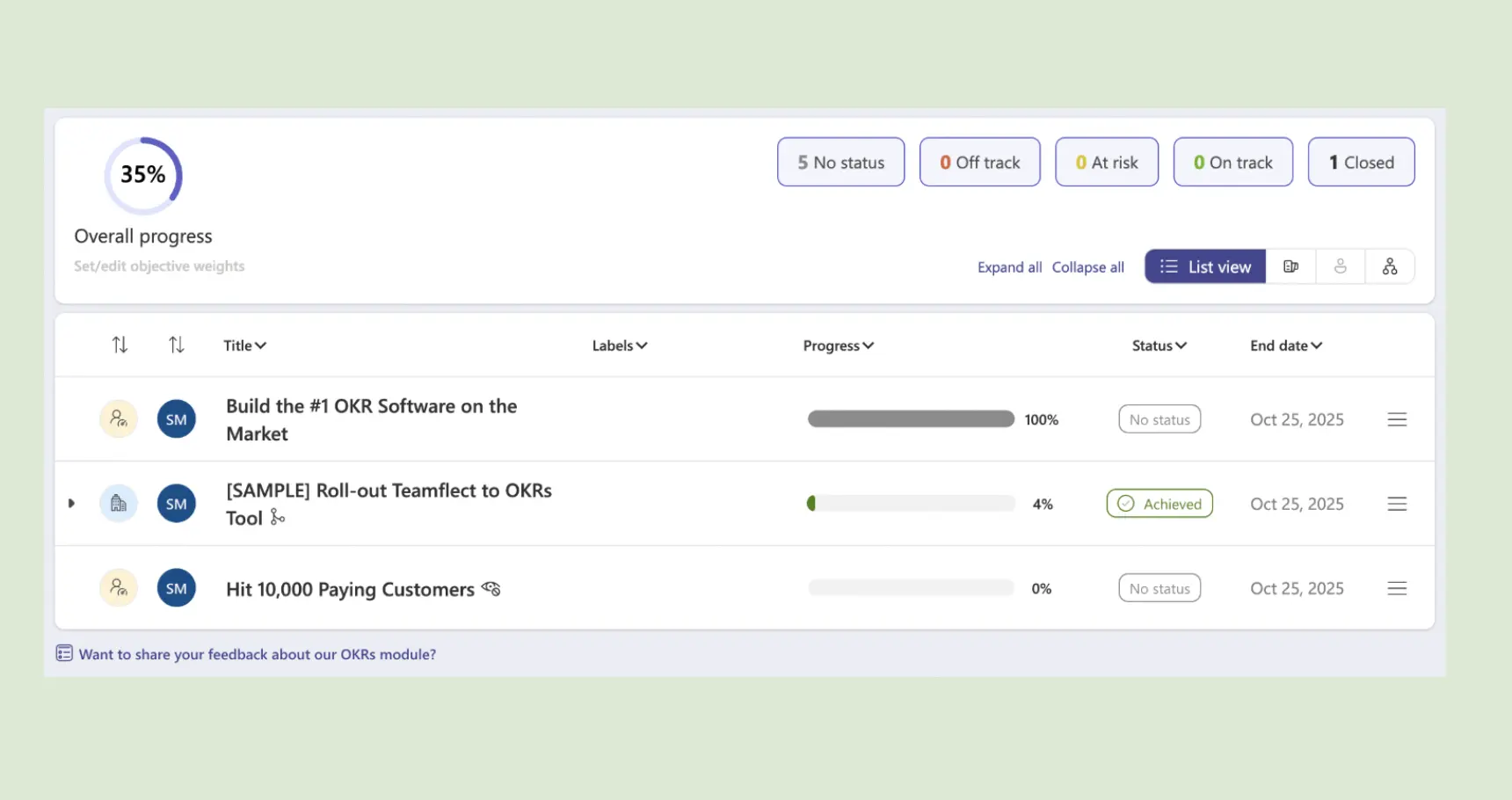
A performance and OKR suite that runs natively inside Microsoft Teams, so goals, reviews and 1:1s live where the work already happens. Ownership stays optional, and OKRs are one part of a broader suite.
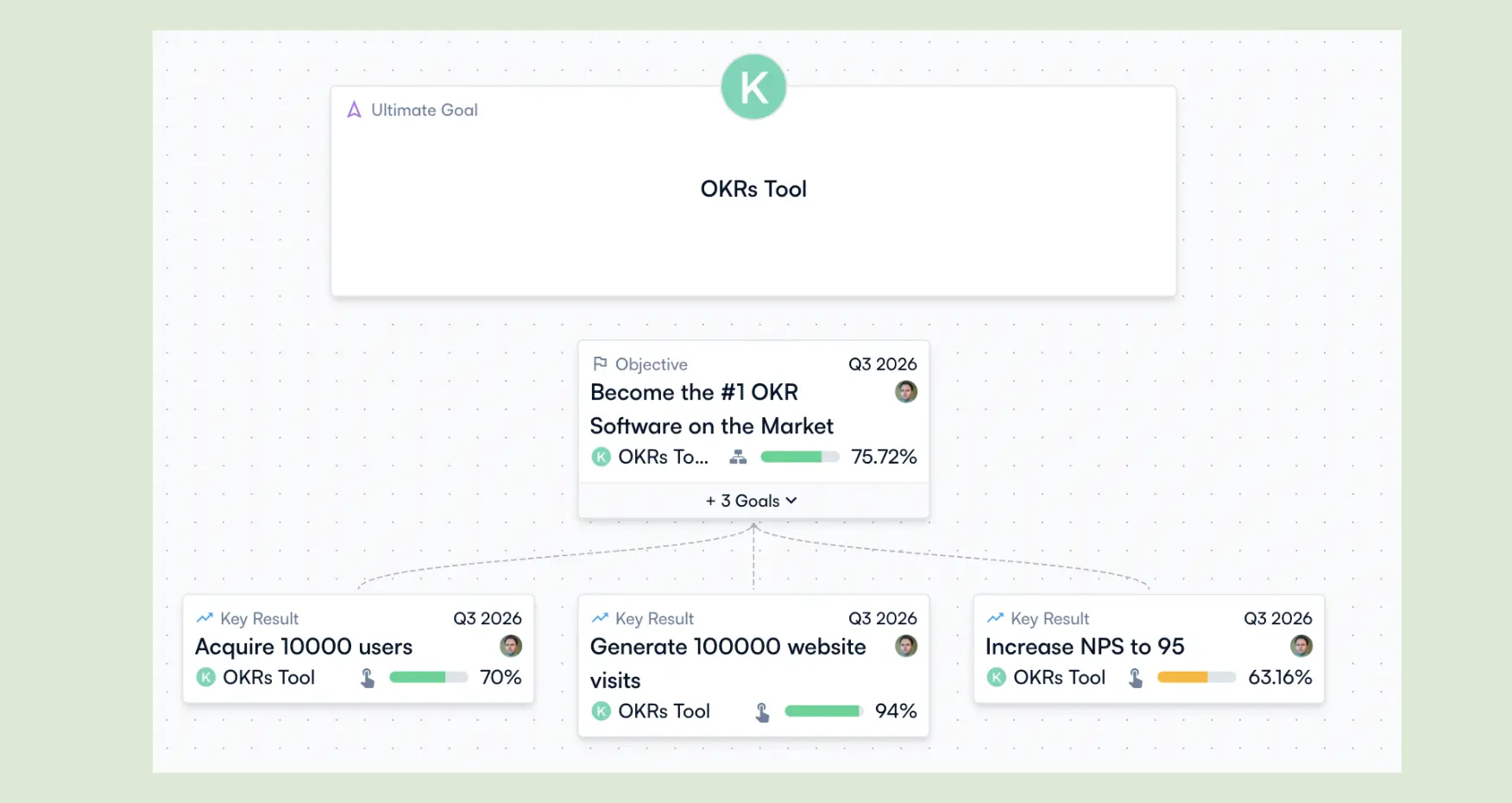
Ties OKRs, KPIs and a strategy roadmap into one dedicated framework with a strong alignment view and AI drafting. The UX takes more clicks, and ownership stays optional.
A third option, in the interest of full disclosure: I build OKRs Tool (4.2 on this same rubric), the one tool here that requires a named owner on every Key Result, at a flat $129 a month for the whole organisation, for 50–200 person teams — I say where it falls short lower down.
The deciding question is where OKRs should live: inside your Microsoft Teams workflow, or in a dedicated OKR framework? Teamflect folds goals into a performance suite inside Teams; Perdoo is a standalone OKR-plus-KPI tool. Neither makes you assign an owner.
I opened a real account in each, created the same objective with two Key Results, assigned owners, and set up the check-in flow. The scoring comes from that, plus platform data across 3,527 organizations that shows which habits move the odds of hitting a goal.
The Short Answer
Pick Teamflect if your company runs on Microsoft 365 and you want OKRs alongside reviews and 1:1s inside Teams. Pick Perdoo if you want a dedicated OKR framework with KPIs and a roadmap, independent of your chat tool. If you want the ownership habit enforced either way, at 50 to 200 people, that's the gap OKRs Tool fills.
Neither makes you assign an owner.
Teamflect and Perdoo both leave ownership optional, so a Key Result can go live with nobody's name on it — the single habit most tied to teams that hit their goals (65% with it, 17% without). OKRs Tool requires it. Between these two, the real choice is Teams-native versus a dedicated OKR framework.
Feature by Feature
Everything below I checked in a live account, not from a pricing page.
| Capability | Teamflect | Perdoo |
|---|---|---|
| Named owner required on every KR | Optional | Optional |
| Runs natively inside Microsoft Teams | Yes, native | Integration only |
| Reviews, 1:1s, feedback built in | Full suite | OKR-focused |
| KPIs + roadmap in the framework | Basic | Yes, built in |
| AI features | Limited | Drafting + coaching |
| Entry price | From $7/user/mo (annual) | Free up to 5, then ~€6.40/user |
| Free plan | Free up to 10 users | Free up to 5 users |
Checked in a live account. Feature availability and pricing shift — confirm current terms with each vendor before you buy.
Where Each One Wins
Teamflect wins on
- Native to Microsoft Teams, nothing new to open
- Reviews, 1:1s and feedback in one suite
- Adoption comes with the Teams habit
- Free up to 10 users
Perdoo wins on
- OKRs, KPIs and a roadmap in one framework
- Strong alignment map
- AI drafting and coaching
- Free up to 5 users
Where Each One Falls Short
Teamflect's trade-offs
- Little reason to use it outside Microsoft 365
- Cascade view is basic
- Ownership and scoring stay optional
Perdoo's trade-offs
- UX takes more clicks
- Ownership stays optional
- Per-seat cost climbs as you roll out
If You're Between the Two
Teams asking me this are often 50 to 200 people choosing between a Teams-native suite and a dedicated OKR framework, and wanting the habits enforced rather than left optional. That middle is why I built OKRs Tool. It requires a named owner and a score on every Key Result, runs automated check-ins across Slack, Teams and email, keeps one flat price as you grow, and holds data in the EU by default.
Where it falls short, and I'll say it plainly: it isn't a full performance suite with reviews and 1:1s the way Teamflect is, and it doesn't bundle KPIs and a roadmap the way Perdoo does. It's scored on the same rubric as both tools here — 4.2 to Teamflect's 3.7 and Perdoo's 3.2.
Questions Buyers Ask Me
Does either enforce ownership?
Neither. Both leave a named owner optional. Of the 34 tools I tested, only OKRs Tool and Workboard require it.
We run on Microsoft 365 — which fits?
Teamflect, in most cases. It lives inside Teams, so OKRs, reviews and 1:1s sit where your team already works. Perdoo is the stronger dedicated OKR framework, but it's a separate tool to open.
Which is more of a true OKR tool?
Perdoo. It's a dedicated OKR-plus-KPI framework with a roadmap and alignment map. Teamflect handles OKRs as one part of a broader performance suite.
Between the two? See the middle option
OKRs Tool enforces a named owner and a score on every Key Result, at one flat price. Open a free trial and try it.
Benchmark figures from The OKR Benchmark Report. Feature scoring from a live account test of both tools.