Tability vs Teamflect
I tested both in a real account — same objective, same Key Results, same owners and check-in setup — and scored them on what makes goals get hit. One runs anywhere; the other lives inside Microsoft Teams.

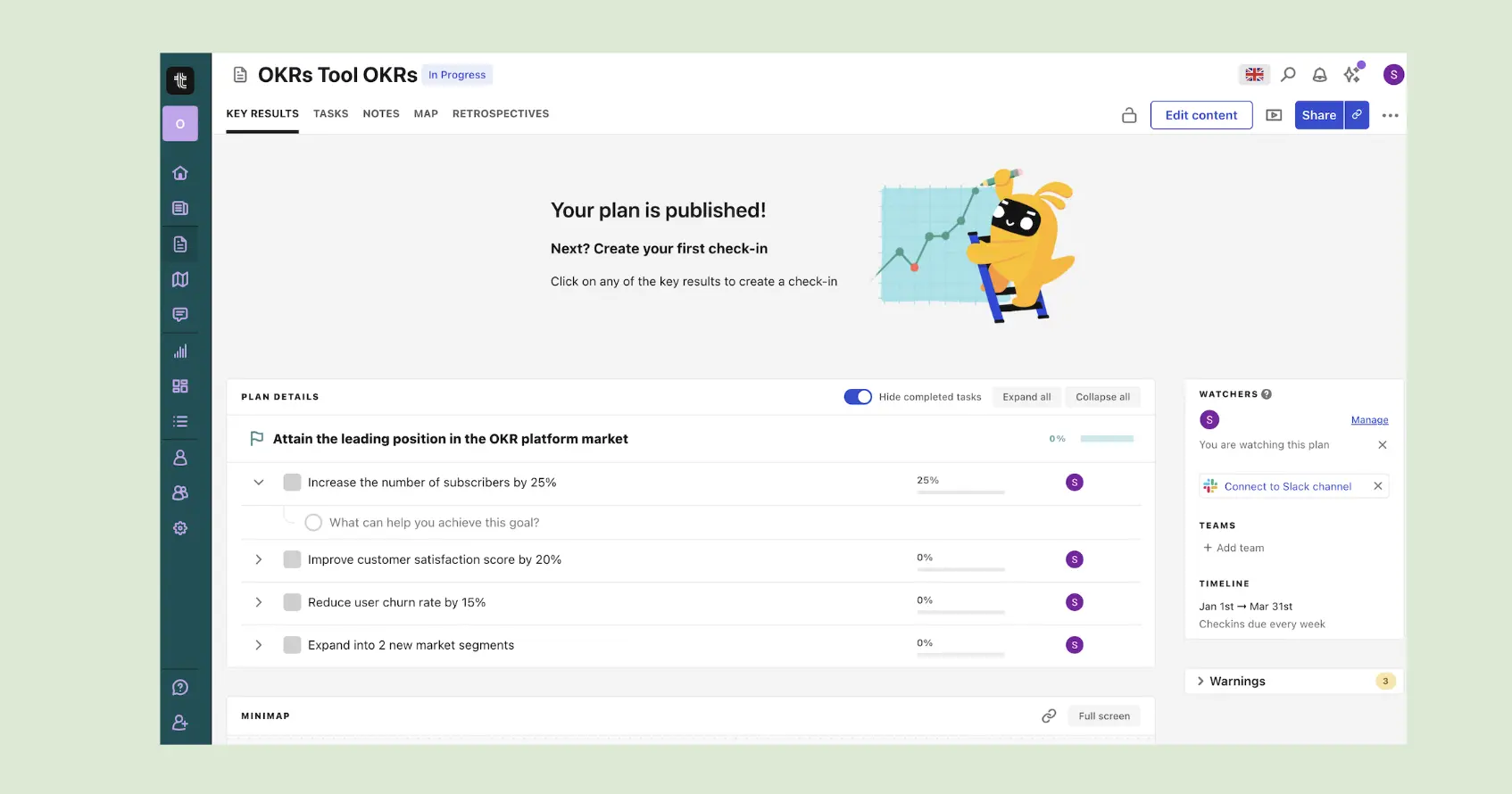
A lightweight, platform-agnostic tool with a clean check-in habit, now leaning AI-native. Fast to start and works with any stack; ownership stays optional and there are no performance reviews.
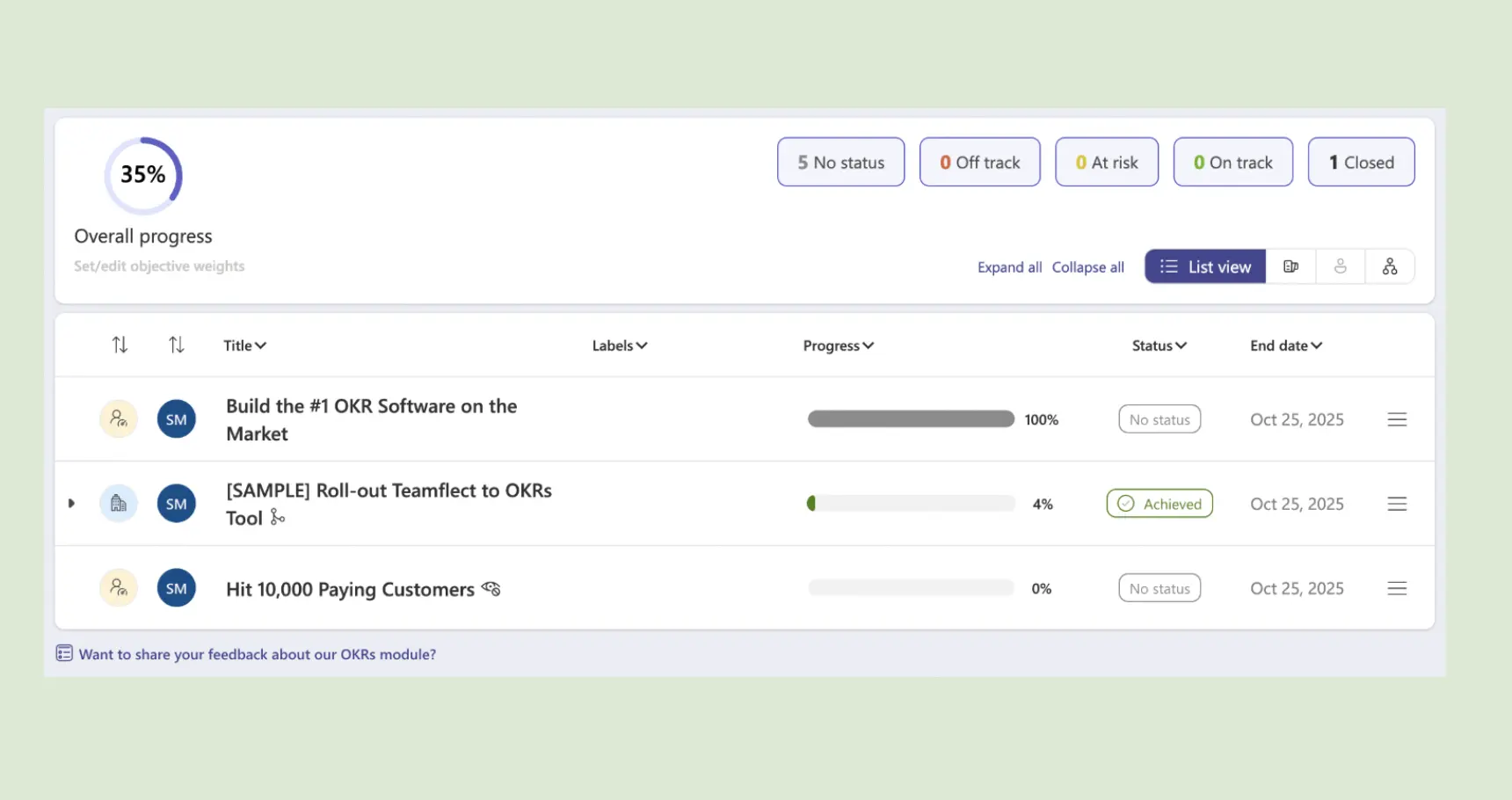
OKRs, reviews, 1:1s and feedback living natively inside Microsoft Teams, free up to 10 users. Clunky progress-update flow, and it only earns its keep if you're all-in on Microsoft.
A third option, in the interest of full disclosure: I build OKRs Tool (4.2 on this same rubric). It's the one tool here that requires a named owner on every Key Result, at a flat price, for 50–200 person teams — I say where it falls short lower down.
These two barely compete on the same ground. Tability is the answer when you want a fast, standalone tool that works with any stack; Teamflect is the answer when your company lives in Microsoft Teams and wants reviews and 1:1s there too. The deciding question is whether you run everything through Microsoft 365.
I opened a real account in each, created the same objective with two Key Results, assigned owners, and set up the check-in flow. The scoring comes from that, plus platform data across 3,527 organizations that shows which habits move the odds of hitting a goal.
The Short Answer
Pick Teamflect if your organization already runs on Microsoft 365 and you want OKRs, reviews and 1:1s inside Teams without adding a separate platform. Pick Tability if you want a lightweight, fast tool that isn't tied to one ecosystem. If you're between the two and want ownership enforced either way — roughly 50 to 200 people — that's the gap OKRs Tool is built for.
Neither makes you assign an owner.
Tability and Teamflect both leave ownership optional, so a Key Result can go live with nobody's name on it — the single habit most tied to teams that hit their goals (65% with it, 17% without). OKRs Tool requires it. Between these two, the real choice is standalone versus Microsoft-native.
Feature by Feature
Everything below I checked in a live account, not from a pricing page.
| Capability | Tability | Teamflect |
|---|---|---|
| Works outside Microsoft 365 | Yes, anywhere | Built for Teams |
| Named owner required on every KR | Optional | Optional |
| Automatic check-in reminders | Slack + email | In Teams |
| Performance reviews & 1:1s | None | Full suite |
| AI features | AI-native + agents | AI Agent |
| Update flow | Clean async | Clunky pop-up |
| Free plan | 14-day trial, no card | Free up to 10 users |
| Entry price | From $6/user/mo | From $7/user/mo |
Checked in a live account. Feature availability and pricing shift — confirm current terms with each vendor before you buy.
Where Each One Wins
Tability wins on
- Works with any stack, not just Microsoft
- Fastest setup of the two
- AI-native direction with agent workflows
- Clean async update flow
Teamflect wins on
- World-class Microsoft Teams integration
- OKRs, reviews, 1:1s and feedback in one
- Free tier up to 10 users
- Private/public visibility toggle
Where Each One Falls Short
Tability's trade-offs
- Ownership and scoring stay optional
- No performance reviews or KPI layer
- No free plan, only a 14-day trial
Teamflect's trade-offs
- Only earns its keep inside Microsoft 365
- Clunky, cluttered update pop-up
- Ownership stays optional; per-seat climbs
If You're Between the Two
The teams asking me this are often 50 to 200 people that want the habits enforced without locking into Microsoft or giving up performance reviews entirely. That middle is why I built OKRs Tool. It requires a named owner and a score on every Key Result, runs automated check-ins across Slack, Teams and email, and keeps one flat price as you grow.
Where it falls short: it's not as deep a Microsoft 365 experience as Teamflect, it has no free tier (a 14-day trial instead), and it's built for 50–200 people rather than 500+ rollouts. It's scored on the same rubric as both tools here — 4.2 to Tability's 3.8 and Teamflect's 3.7.
Questions Buyers Ask Me
We're on Microsoft 365 — Teamflect or Tability?
If you want OKRs, reviews and 1:1s all living inside Teams, Teamflect is purpose-built for that. If you'd rather a lightweight standalone tool that doesn't tie you to Microsoft, Tability. Note that OKRs Tool also sends check-ins into Teams and requires an owner on every Key Result, which neither of these does.
Which one enforces ownership?
Neither. Both Tability and Teamflect leave a named owner optional, so goals can go live unowned. Of the 34 tools I tested, only OKRs Tool and Workboard require it.
How far apart are they on price?
Close at the start. Teamflect is free up to 10 users, then about $7 a user; Tability has no free plan but starts at $6 a user. Both are per seat, so the bill climbs as you hire.
Did you test both hands-on, or read the feature pages?
Hands-on. I set up the same OKR in each — signup, an objective, two Key Results, owners and the check-in flow. I also build OKRs Tool, scored on the same rubric, and I flag where it falls short above.
Between the two? See the middle option
OKRs Tool enforces the habits either tool leaves optional, at a flat price. Open a free trial and try it.
Benchmark figures from The OKR Benchmark Report. Feature scoring from a live account test of both tools.