Tability vs Mooncamp
I tested both in a real account — same objective, same Key Results, same owners and check-in setup — and scored them on what makes goals get hit. One is the fastest start; the other has the clearest cascade.

The fastest setup of the two and now AI-native, built around a clean check-in habit. Ownership stays optional and the strategy map is basic next to Mooncamp's.
The clearest strategy map in the category and the cleanest migration path off Viva Goals, in a modern interface. No AI yet, a cluttered sign-up, and per-seat pricing that climbs.
A third option, in the interest of full disclosure: I build OKRs Tool (4.2 on this same rubric), the one tool here that requires a named owner on every Key Result, at a flat price, for 50–200 person teams — I say where it falls short lower down.
Two modern mid-market tools, pulling in different directions. Tability optimises for the lightest possible start and an AI-native workflow; Mooncamp optimises for the clearest strategy cascade and a smooth path off Viva Goals. The choice is speed versus structure.
I opened a real account in each, created the same objective with two Key Results, assigned owners, and set up the check-in flow. The scoring comes from that, plus platform data across 3,527 organizations that shows which habits move the odds of hitting a goal.
The Short Answer
Pick Mooncamp if the strategy map is the thing you care about most — a clean visual cascade from company goals to team level — or if you're migrating off Viva Goals and want the smoothest path. Pick Tability if you want the fastest, lightest start and an AI-native direction, and you don't need an elaborate cascade. If you want ownership enforced either way, at 50 to 200 people, that's the gap OKRs Tool fills.
Neither makes you assign an owner.
Tability and Mooncamp both leave ownership optional, so a Key Result can go live with nobody's name on it — the single habit most tied to teams that hit their goals (65% with it, 17% without). OKRs Tool requires it. Between these two, the real choice is a fast start versus the clearest cascade.
Feature by Feature
Everything below I checked in a live account, not from a pricing page.
| Capability | Tability | Mooncamp |
|---|---|---|
| Named owner required on every KR | Optional | Optional |
| Automatic check-in reminders | Yes | Yes |
| Strategy map / cascade | Basic strategy map | Clearest in the category |
| Viva Goals migration | Not a focus | Cleanest path |
| AI features | AI-native + agents | None yet |
| Setup experience | Fastest, polished | Modern, cluttered sign-up |
| Pricing model | From $6/user/mo | From €7/user/mo (min 5) |
| Free plan | 14-day trial, no card | 14-day trial, no card |
Checked in a live account. Feature availability and pricing shift — confirm current terms with each vendor before you buy.
Where Each One Wins
Tability wins on
- Fastest setup of the two
- AI-native direction with agent workflows
- Clean, polished async updates
- No ecosystem lock-in
Mooncamp wins on
- The clearest strategy map in the category
- Cleanest Viva Goals migration path
- Modern, fast interface
- EU hosting (German company)
Where Each One Falls Short
Tability's trade-offs
- Basic strategy map next to Mooncamp
- Ownership and scoring stay optional
- No free plan, only a 14-day trial
Mooncamp's trade-offs
- No AI yet
- Cluttered sign-up, pre-filled sample data
- Ownership optional; per-seat climbs (~€350/mo at 50)
If You're Between the Two
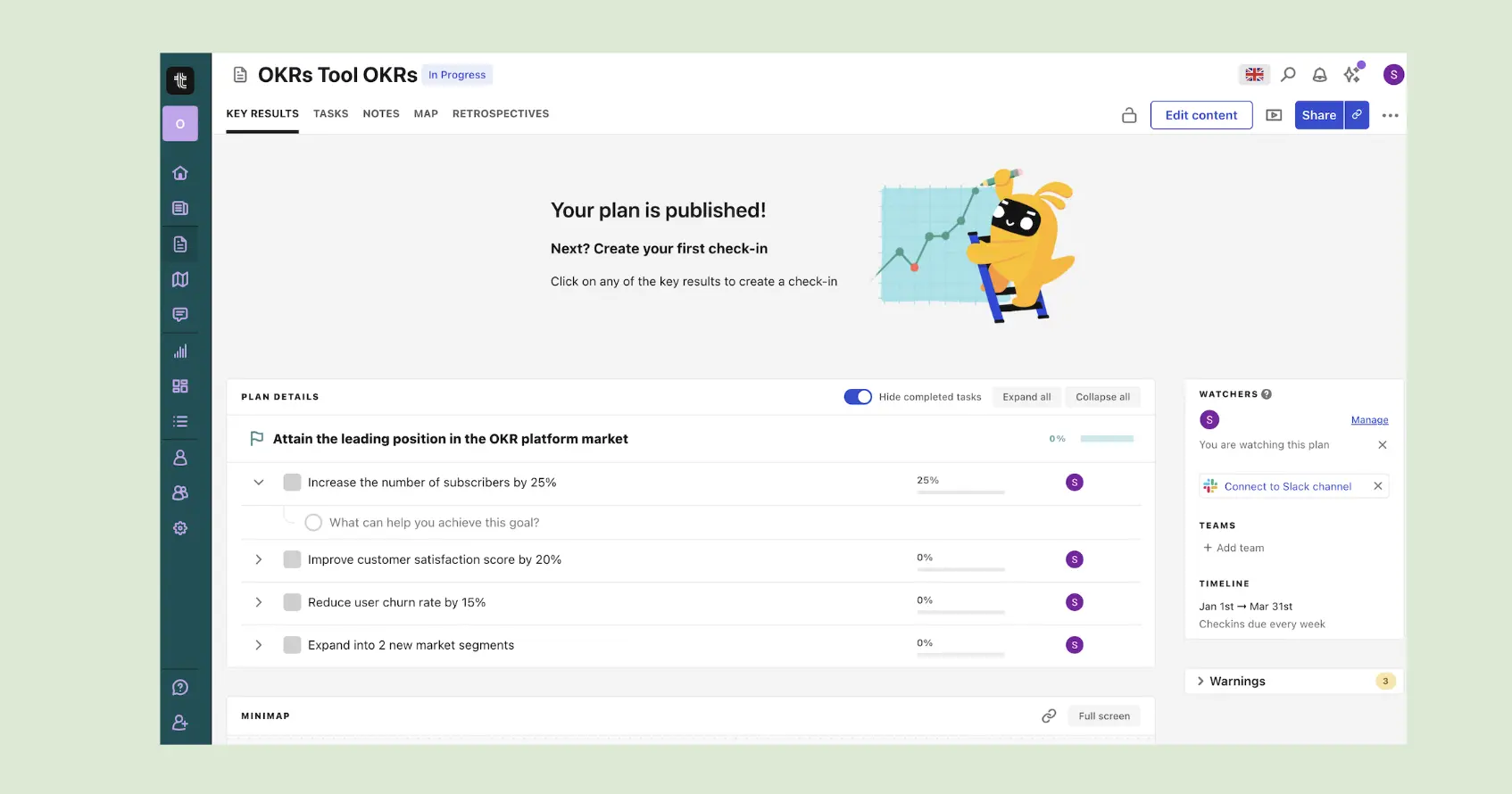
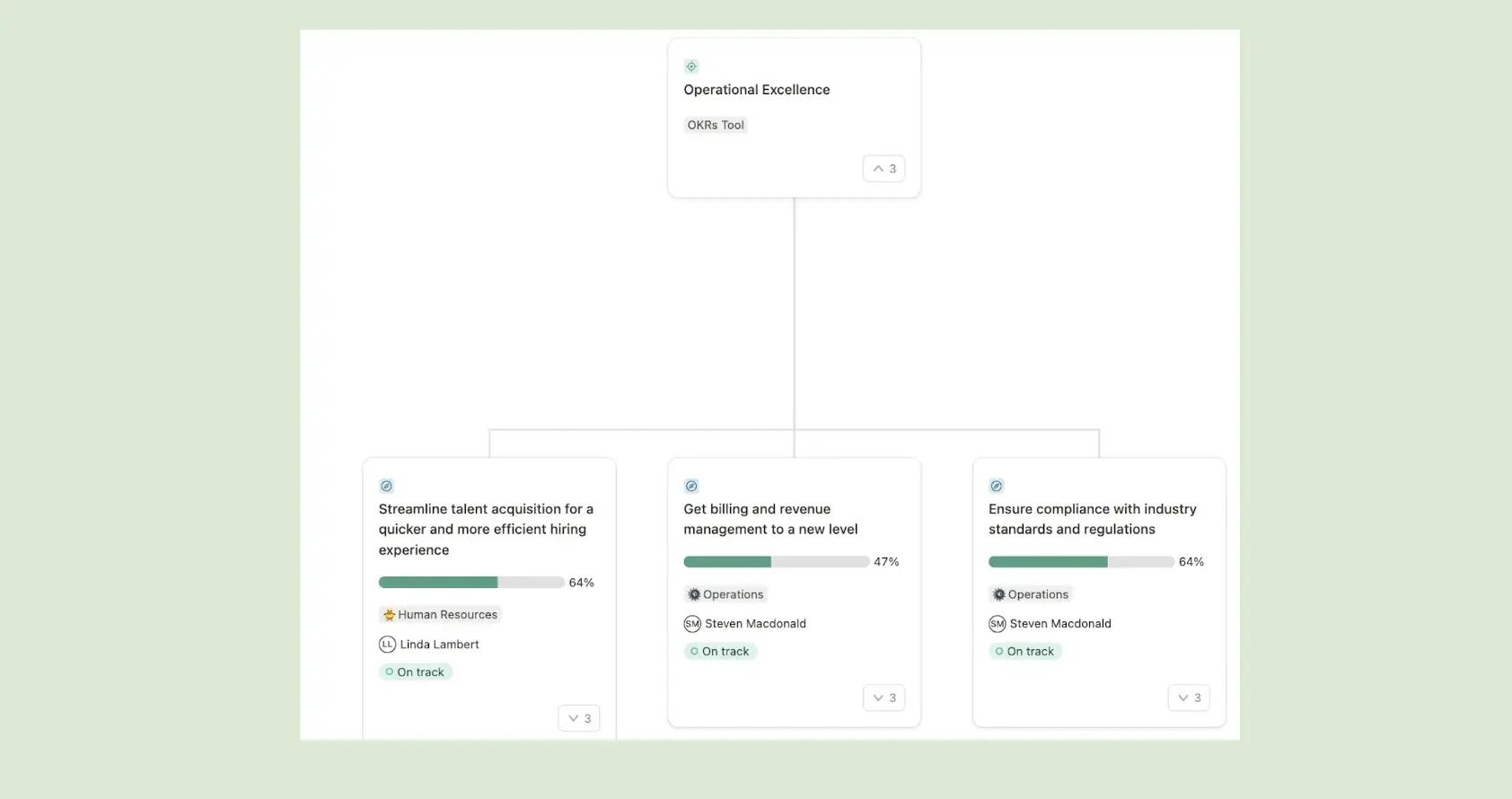
Teams asking me this are often 50 to 200 people that want a clear cascade and a fast start, but also want the habits enforced. That middle is why I built OKRs Tool. It requires a named owner and a score on every Key Result, runs automated check-ins, gives you an org-wide alignment map, and keeps one flat price as you grow.
Where it falls short: its cascade is cleaner than it is elaborate, it has no free tier (a 14-day trial instead), and it's built for 50–200 people rather than 500+ rollouts. It's scored on the same rubric as both tools here — 4.2 to Tability's 3.8 and Mooncamp's 3.7.
Questions Buyers Ask Me
We're migrating off Viva Goals — which is better?
Mooncamp built its migration path for exactly that audience and keeps the strategy-map feel those users expect, so it's the smoother move of these two. Tability is lighter and faster but less of a like-for-like. OKRs Tool also imports a spreadsheet of OKRs in one click and enforces ownership from the start.
Which one has AI?
Tability. It has leaned hard into AI and agent workflows, while Mooncamp has said it will ship AI only when it improves the workflow — and as of November 2026 there's none in the product.
Which enforces ownership?
Neither. Both leave a named owner optional. Of the 34 tools I tested, only OKRs Tool and Workboard require it on every Key Result.
Did you test both hands-on, or read the feature pages?
Hands-on. I set up the same OKR in each — signup, an objective, two Key Results, owners and the check-in flow. I also build OKRs Tool, scored on the same rubric, and I flag where it falls short above.
Between the two? See the middle option
OKRs Tool enforces the habits either tool leaves optional, at a flat price. Open a free trial and try it.
Benchmark figures from The OKR Benchmark Report. Feature scoring from a live account test of both tools.