Perdoo vs Workboard
I tested both in a real account — same objective, same Key Results, same owners and check-in setup — and scored them on what makes goals get hit. One is a mid-market framework; the other an enterprise platform.

Ties OKRs, KPIs and a strategy roadmap into one framework with a strong alignment view and AI drafting. Affordable to start, though the UX takes more clicks and ownership stays optional.
An enterprise strategy-execution platform with a full cascade and an AI-agent suite that requires a named owner on every Key Result. It demands a guided rollout, real admin and a five-figure quote.
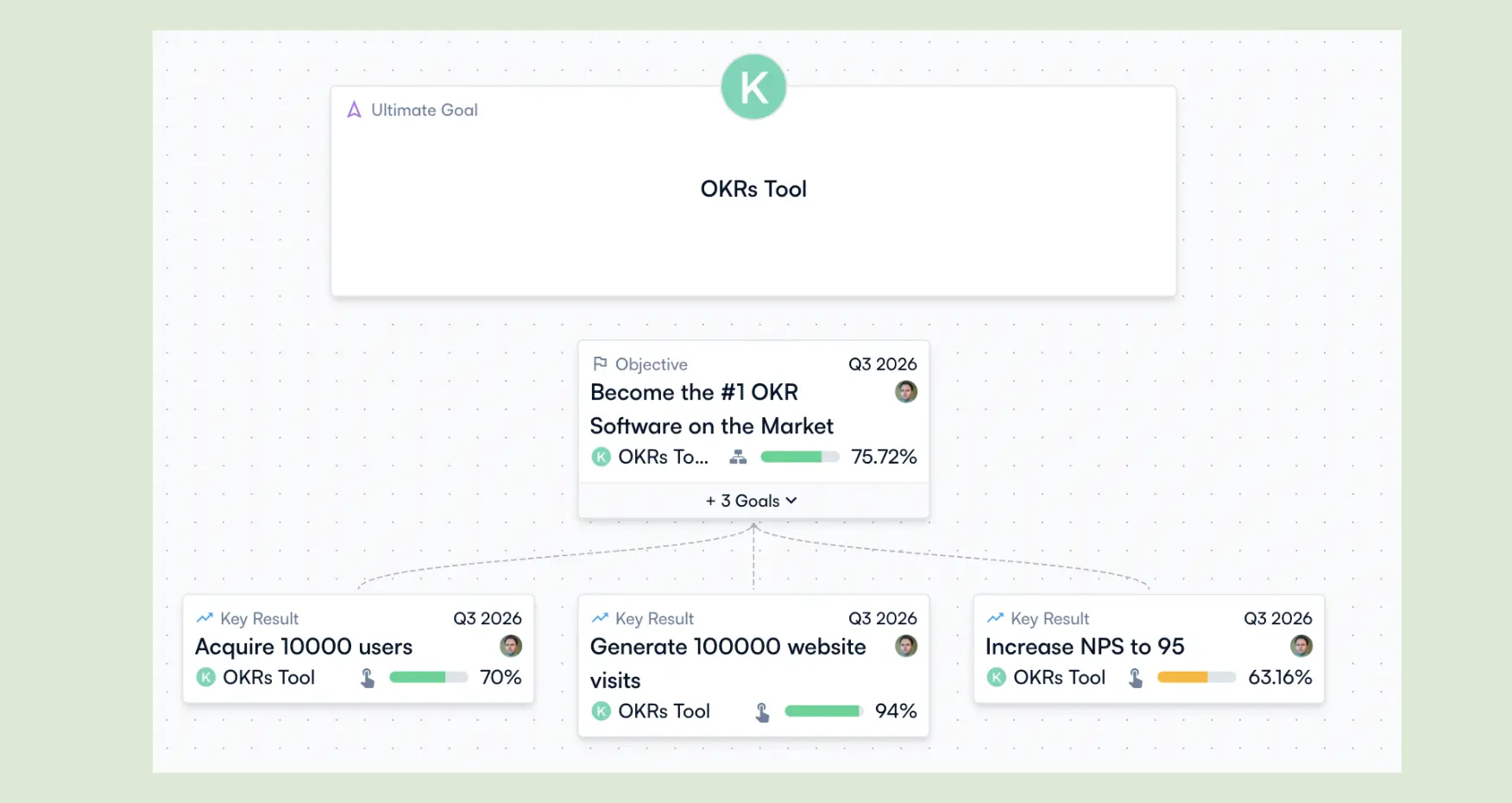
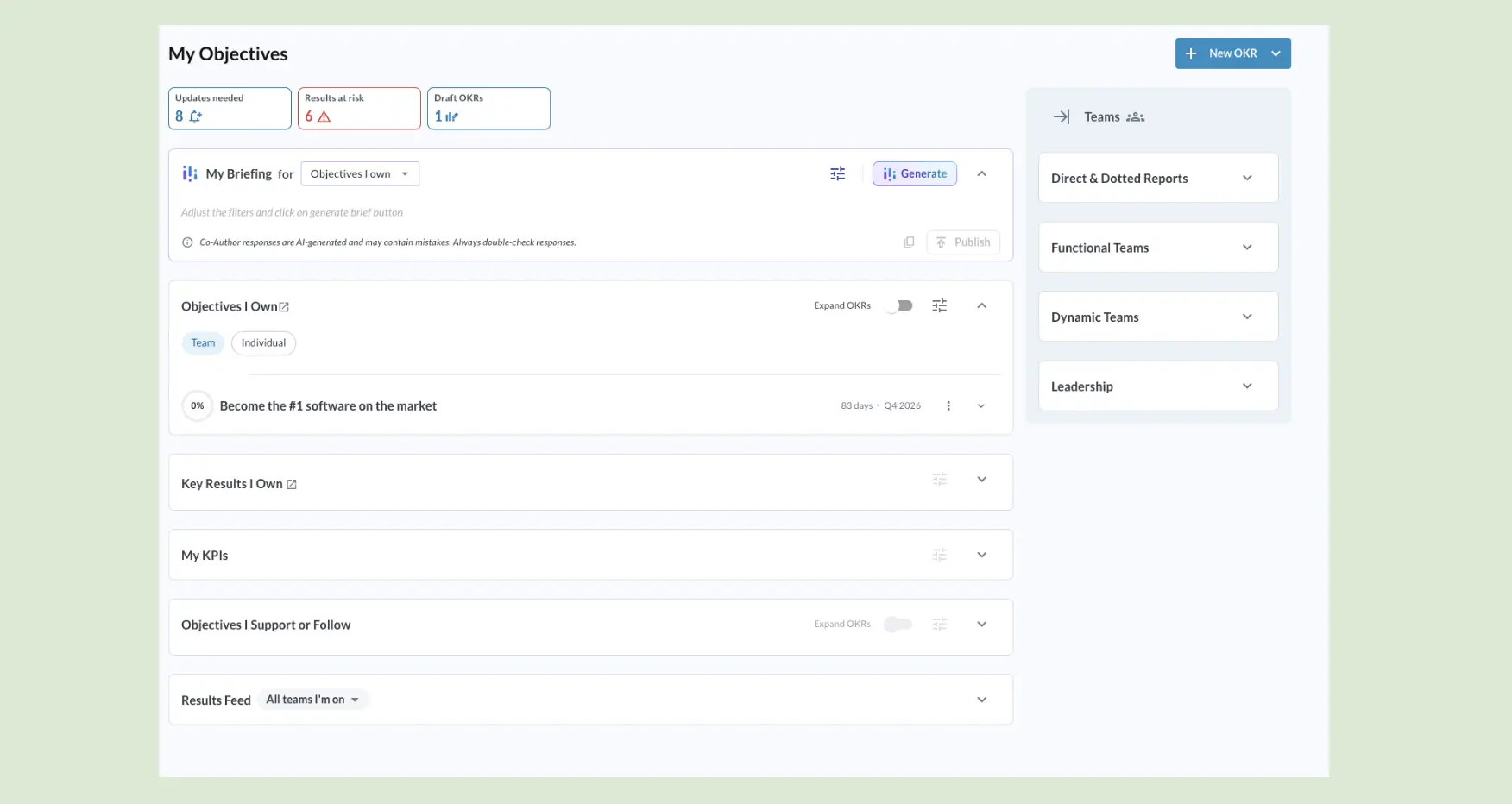
A third option, in the interest of full disclosure: I build OKRs Tool (4.2 on this same rubric). Like Workboard, it requires a named owner on every Key Result — but at a flat $129 a month for the whole organisation, built for 50–200 person teams rather than 500+ rollouts. I say where it falls short lower down.
The deciding question is scale: a mid-market OKR-plus-KPI framework, or an enterprise platform that enforces ownership? Perdoo is affordable and self-serve; Workboard is built for 500+ rollouts and makes you name an owner on every Key Result.
I opened a real account in each, created the same objective with two Key Results, assigned owners, and set up the check-in flow. The scoring comes from that, plus platform data across 3,527 organizations that shows which habits move the odds of hitting a goal.
The Short Answer
Pick Perdoo if you're a mid-market team that wants OKRs, KPIs and a roadmap at a public price. Pick Workboard if you're a large organisation that wants the ownership habit enforced and the reporting depth to match. If you want that enforced habit without the five-figure quote, at 50 to 200 people, that's the gap OKRs Tool fills.
Only one of these makes you name an owner.
Workboard requires a named owner on every Key Result — the single habit most tied to teams that hit their goals (65% with it, 17% without). Perdoo leaves it optional. Of the 34 tools I tested, only Workboard and OKRs Tool enforce it.
Feature by Feature
Everything below I checked in a live account, not from a pricing page.
| Capability | Perdoo | Workboard |
|---|---|---|
| Named owner required on every KR | Optional | Required |
| KPIs + roadmap in the framework | Yes, built in | Enterprise cascade |
| Multi-level reporting | Good, simpler | Strong |
| AI features | Drafting + coaching | Agent suite |
| Time to roll out | Fast, self-serve | Guided, weeks |
| Entry price | Free up to 5, then ~€6.40/user | Quote-only (five-figure) |
| Free plan | Free up to 5 users | No |
Checked in a live account. Feature availability and pricing shift — confirm current terms with each vendor before you buy.
Where Each One Wins
Perdoo wins on
- OKRs, KPIs and a roadmap in one framework
- Strong alignment map
- AI drafting and coaching
- Free up to 5 users
Workboard wins on
- Requires a named owner on every KR
- Full enterprise cascade
- AI-agent suite
- Depth for 500+ organisations
Where Each One Falls Short
Perdoo's trade-offs
- UX takes more clicks
- Ownership stays optional
- Per-seat cost climbs as you roll out
Workboard's trade-offs
- Five-figure quote, no public price
- Needs a guided rollout and real admin
- Overkill below a few hundred people
If You're Between the Two
Teams asking me this are often 50 to 200 people who want Workboard's enforced ownership but not its five-figure quote, and more discipline than Perdoo enforces on its own. That middle is why I built OKRs Tool. It requires a named owner and a score on every Key Result, runs automated check-ins across Slack, Teams and email, keeps one flat price as you grow, and holds data in the EU by default.
Where it falls short, and I'll say it plainly: it isn't built for 500+ rollouts the way Workboard is, and it doesn't bundle KPIs and a roadmap the way Perdoo does. Small teams also start cheaper on Perdoo's free tier. It's scored on the same rubric as both tools here — 4.2 to Workboard's 3.5 and Perdoo's 3.2.
Questions Buyers Ask Me
Which one enforces ownership?
Workboard does — a named owner is required on every Key Result. Perdoo leaves it optional. Of the 34 tools I tested, only Workboard and OKRs Tool enforce it.
We're a mid-market team — is Workboard overkill?
Often, yes. Workboard's depth and five-figure quote are built for 500+ organisations. At mid-market, Perdoo is far more affordable and self-serve, though it won't enforce ownership.
How far apart are they on price?
A long way. Perdoo is free up to five users, then about €6.40 a user; Workboard is quote-only and typically a five-figure annual contract.
Between the two? See the middle option
OKRs Tool enforces a named owner and a score on every Key Result, at one flat price. Open a free trial and try it.
Benchmark figures from The OKR Benchmark Report. Feature scoring from a live account test of both tools.