Personal OKR experience. Organizational OKR debut.
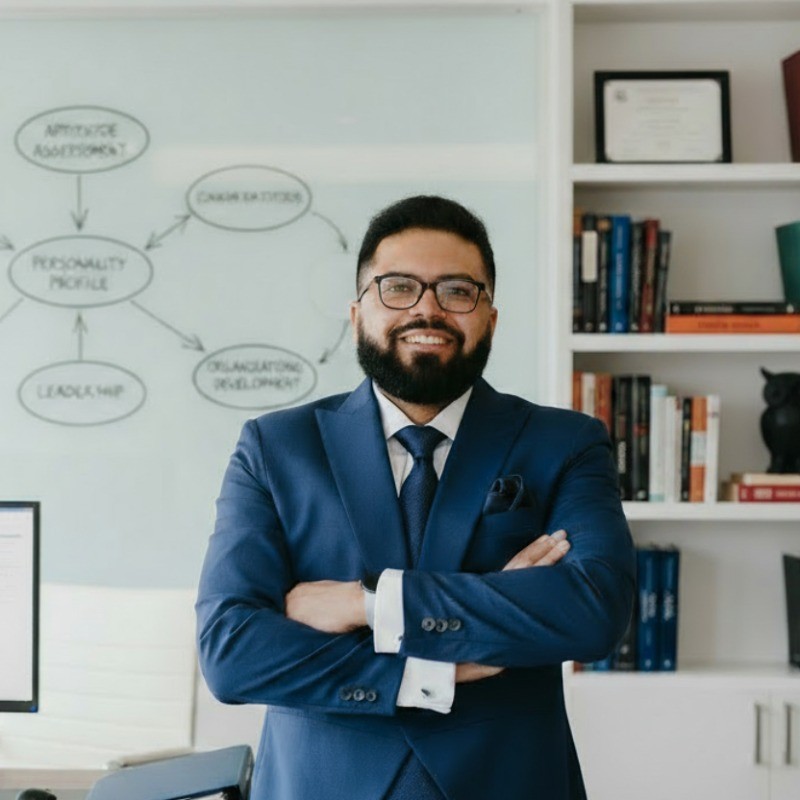
Luis Puertas is the Coordinador de Desarrollo e Innovación del Talento Humano at PUCE — the team responsible for talent development and innovation inside Ecuador's first private university. Before joining PUCE, he had personally and professionally tracked OKRs using spreadsheets and other platforms.
But PUCE itself had never formally adopted the framework. There was no enterprise platform, no shared cadence, no central place where objectives and key results lived for the whole team. If OKRs were going to work here, someone had to start small and prove the model first.
Pick the tool that won't scare the pilot team.
Luis didn't need a platform built for 10,000-person enterprises. He needed one that wouldn't make OKRs feel intimidating to a team trying the framework for the first time. Complexity was the real risk — not feature gaps. If the platform demanded weeks of training or a procurement cycle to roll out, the pilot would stall before it started.
OKRs Tool fit because the criteria for a pilot are the opposite of the criteria for a full enterprise rollout. Simple onboarding. No mandatory training. A platform clean enough that the framework — not the tool — gets the team's attention.
Pilot launched inside Human Talent. Structure is forming.
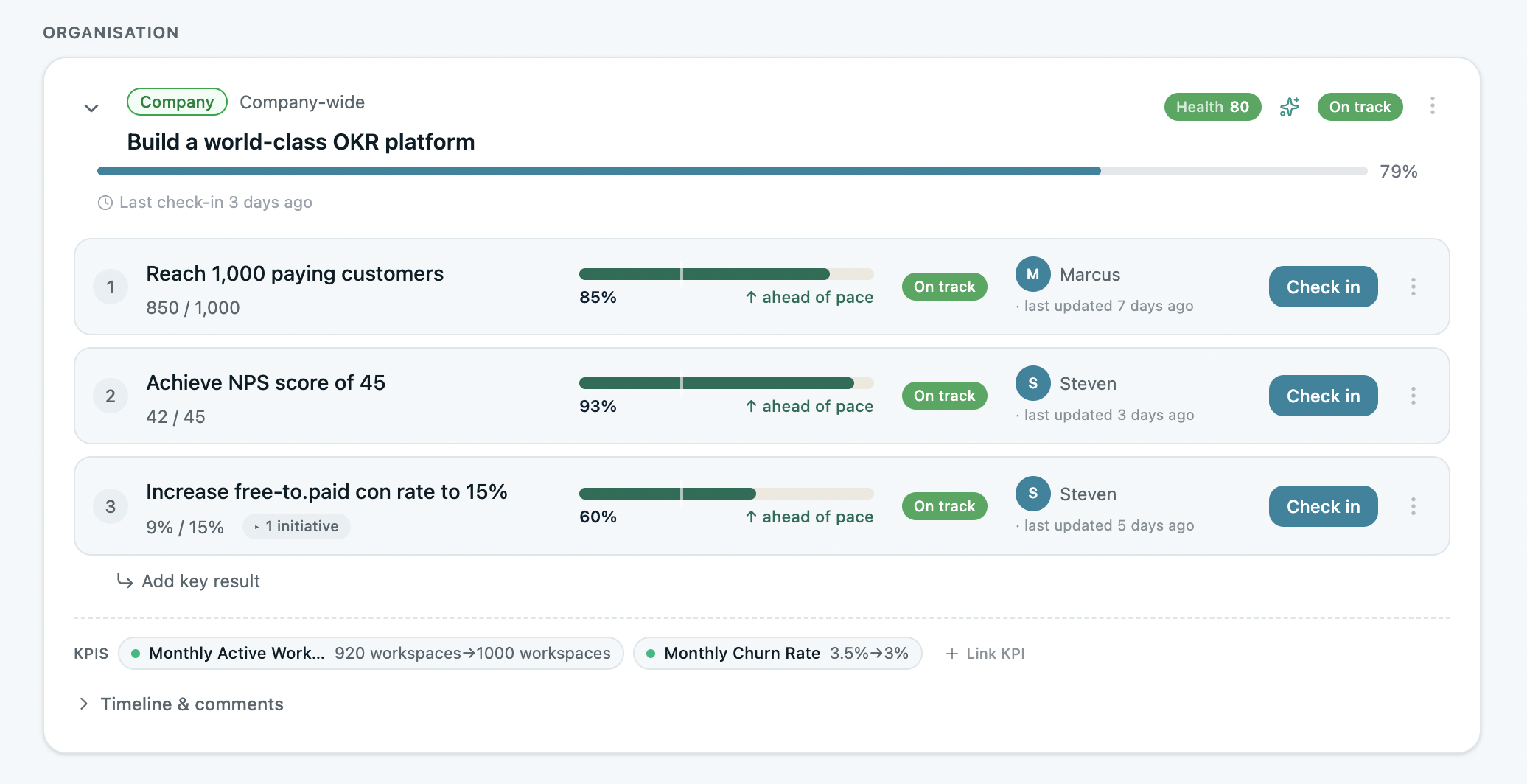
Luis is leading the pilot inside PUCE's Human Talent area. The team is building structure around objectives, key results, and follow-up conversations — three things that previously lived in scattered spreadsheets, individual notes, and informal check-ins.
The biggest unlock so far isn't a feature. It's that the platform doesn't make people feel like they need to be OKR experts to start using it. Team members can engage with the framework without first studying it. That changes adoption math entirely — the cost of trying OKRs drops to almost nothing.
A pilot that's actually working.
Most internal OKR pilots fail at the second cycle. Either the platform is too complex for non-experts to use, or the framework gets bolted onto teams without them ever buying in. Luis's pilot avoided both failure modes: by picking a simple tool that lets people learn OKRs as they use them, the team got past the introductory phase without losing momentum.
The pilot model also gives Luis a real evidence base. If Human Talent succeeds with the structure, the case for expanding beyond the department is grounded in working examples — not theory.