Management hadn't defined goals. One trained person changed that.
Cardok has been building premium parking systems out of Switzerland for two decades — Carlifts, turntables, custom underground installations for luxury properties around the world. The engineering is exceptional. The internal goal-setting was not.
When Bertrand Späth joined, he noticed the gap immediately. Goals weren't formally defined, and what little did get set never got followed up on. He'd been trained on OKRs at a previous role and had seen what disciplined goal-tracking does for an organization. So he didn't wait for the change to come from above — he pushed for it from inside.
Push the framework first. Then pick the tool that won't kill it.
Bertrand had two problems to solve. The first was cultural — convincing Cardok's management that formal goal-setting was worth doing at all. The second was practical — finding a platform that wouldn't become the reason adoption stalled.
An internal champion has limited political capital. Spend it on the framework, not on defending a complicated tool. The platform needed to disappear so management could focus on whether OKRs themselves were working — not on whether the software they'd been asked to use was worth the investment.
Management bought in. Now the whole team is next.
Bertrand got management to commit. Goals are now formally defined. Progress is followed up on. The behavior the company had been missing for years is finally happening — and OKRs Tool is the platform holding it together.
The rollout is now expanding to the whole team. What started as one trained person pushing from inside is becoming the standard operating cadence for how Cardok sets and tracks priorities. The before-and-after is stark: from no formal goal-setting at all, to a structured framework with regular check-ins.
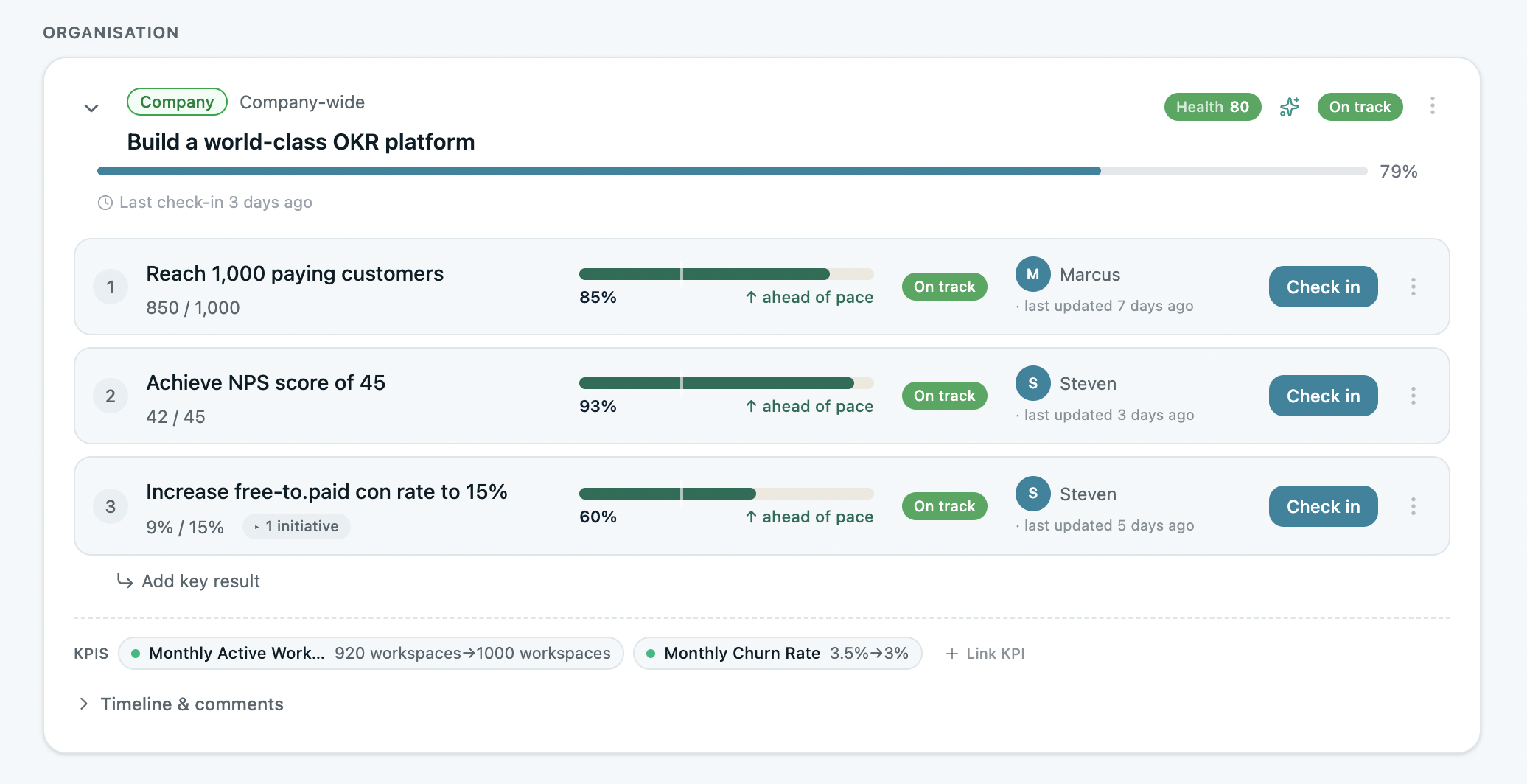
Focus. Priorities. Check-ins.
Bertrand summarizes the change in three things OKRs Tool helps the team do: keep focus on what truly matters, prioritize activities and decisions, and regularly check in on progress. Three things that sound obvious — until you've worked at a company that didn't do them.
The internal-change-agent story is the hardest one to pull off in business. Most attempts to introduce structure from below stall before they reach the executive team. Bertrand's didn't — and that's as much about how he framed it as about the tool he picked. A simple platform was the difference between "another bureaucratic initiative" and "something the team can actually use."