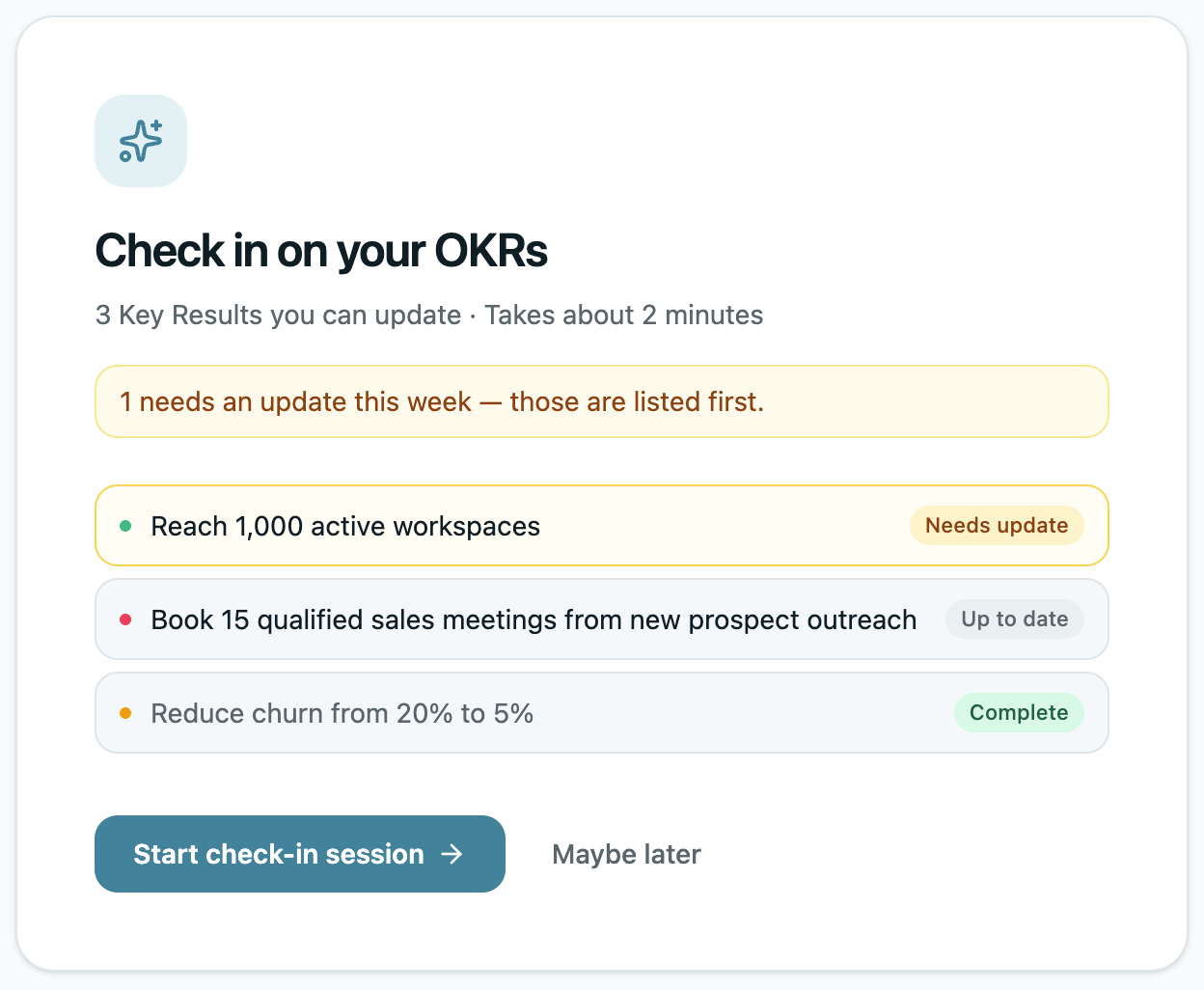
Track progress, check in weekly.
Update each key result when the number moves, and check in once a week, every week of the quarter. This is the rhythm that holds the other habits together.
The sign something's wrong is reconstruction — someone building a review slide the night before, because progress lived in inboxes until then. A weekly touch keeps every owner looking at their number while there's still time to act on it.
A check-in isn't a meeting
The habit fails when teams turn it into a standing meeting nobody wants, so they skip it. A check-in is three questions, answered async: where's the number, how confident are you, what's in the way. Done at each owner's desk in two minutes — no calendar block, no round-the-room status read.
Weekly is the floor because stalls are quiet. A goal that stops moving doesn't announce it; it just sits. At a weekly cadence you catch it within days. Monthly, it's three weeks dead before anyone looks — and by then the window to act has usually closed.
Live tracking kills the pre-review scramble
When progress updates as the number moves, there's nothing to reconstruct. No chasing people the night before, no stitching a deck from inboxes — the current picture is always already there. The weekly check-in feeds it, so the review is a read, not a rebuild.
OKRs Tool runs the weekly check-in for you
A prompt every week, a check-in that's three questions, and a picture that stays current — so the rhythm happens without you chasing it.
Every owner gets prompted weekly
OKRs Tool nudges each owner for their check-in — in-app, email, Slack or Teams — so the weekly cadence runs on its own. You're not the reminder anymore.
Three questions, two minutes, async
The check-in session asks where the number is, how confident they are, and what's blocking it. Answered at their desk — no standing meeting to schedule or sit through.
The picture updates itself
Each check-in feeds the live view, so status is always current. When the review comes, it's a read, not a rebuild — no deck stitched together the night before.