A named owner on every OKR.
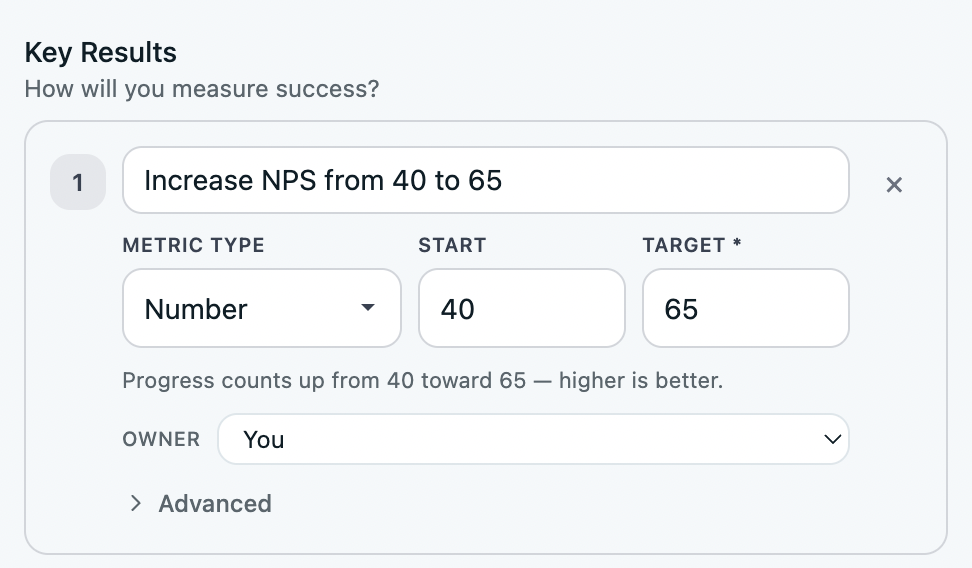
Put one name on every objective and every key result, set at the moment it's created. Not a team, not two people — one owner who is accountable for moving the number.
It sounds like a formality. It's the single habit that moves the odds most: when a key result has an owner, someone notices the week it stalls. When it doesn't, everyone assumes someone else is watching.
A goal everyone owns is a goal no one updates
Shared ownership feels fair, but it's how key results go quiet. With two names on a goal, each assumes the other is updating it — and the week it stalls, neither flags it. A goal owned by "the team" is owned by no one; there's no single person whose job it is to notice.
Naming an owner is the cheapest accountability you can put in place. It costs nothing at planning time and saves the chasing work later: instead of you emailing around to find out where a goal stands, there's one person to ask — and more often, one person already watching it without being asked.
Set it when the goal is created, not after
Ownership assigned in planning week sets accountability for the whole quarter. Assigned later — once a goal is already drifting — it reads as blame. The fix is to make the owner part of writing the goal, so a key result without a name never makes it onto the board in the first place.
OKRs Tool won't let a goal go unowned
Ownership isn't a field people forget to fill in. It's required when a key result is created, stays visible all quarter, and routes every check-in to the one person accountable.
An owner is required at creation
You can't save a key result without naming the person accountable for it. Ownership is set as the goal is written, in planning week — not bolted on once it's already drifting.
Ownership stays visible all quarter
Every key result shows its owner on the board — no digging to find who's accountable. If someone changes roles mid-cycle, OKRs Tool flags the goals they owned so you reassign before anything goes quiet.
The owner gets the weekly nudge
Because every goal has one name, the check-in prompt goes straight to the person accountable — not a broadcast nobody answers. Accountability set once in planning runs itself all quarter.